
Smarter Business Guide: Strategies for Success in 2025
In 2025, business leaders face a world where the pace of change is relentless. Embracing a smarter business approach is no longer a choice, but a necessity to outpace disruption from AI and automation.
This guide provides actionable, data-driven strategies to help organizations thrive. You will discover the core pillars of smarter business, including AI integration, data-driven decision-making, hybrid cloud adoption, operational efficiency, and leadership for the future.
Expect proven tactics, real-world case studies, and practical insights that unlock operational excellence and innovation. Use these strategies to future-proof your smarter business and gain a true competitive advantage in the year ahead.
The Smarter Business Imperative: Why 2025 Demands a New Approach
The business landscape in 2025 is defined by rapid technological advancement. Artificial intelligence, automation, and digital transformation are no longer distant concepts but immediate forces reshaping every industry. Companies face unprecedented expectations from boards, leadership, and shareholders to innovate faster and operate smarter. The urgency to adopt a smarter business approach is clear, as organizations that fail to adapt risk being outpaced by more agile competitors. According to AI statistics shaping business in 2025, more businesses than ever are investing in AI, automation, and intelligent systems to remain competitive.
Yet, amid this urgency, it is crucial to distinguish between hype and actionable strategy. Many leaders feel pressure to jump on the latest trend, but smarter business is not about following fads. Instead, it means deeply embedding intelligence into the core of operations. This includes using AI to streamline processes, automate tasks, and generate meaningful insights. A smarter business leverages technology to drive efficiency, agility, and innovation, turning disruption into opportunity rather than risk.
Consider the tangible results achieved by industry leaders like IBM. By integrating AI and automation, IBM resolved customer service issues up to 70% faster and improved productivity by as much as 75% across procurement, supply chain, finance, and HR. The table below highlights key outcomes from smarter business initiatives:
| Function | Productivity Improvement | Speed Enhancement |
|---|---|---|
| Customer Service | Up to 70% faster | |
| Procurement | Up to 75% | |
| Supply Chain | Up to 75% | |
| Finance | Up to 75% | |
| HR | Up to 75% |
IBM projects USD 4.5 billion in productivity gains by the end of 2025 as a direct result of these smarter business strategies. These data-driven outcomes demonstrate that integrating intelligence is not just theoretical—it delivers measurable value.
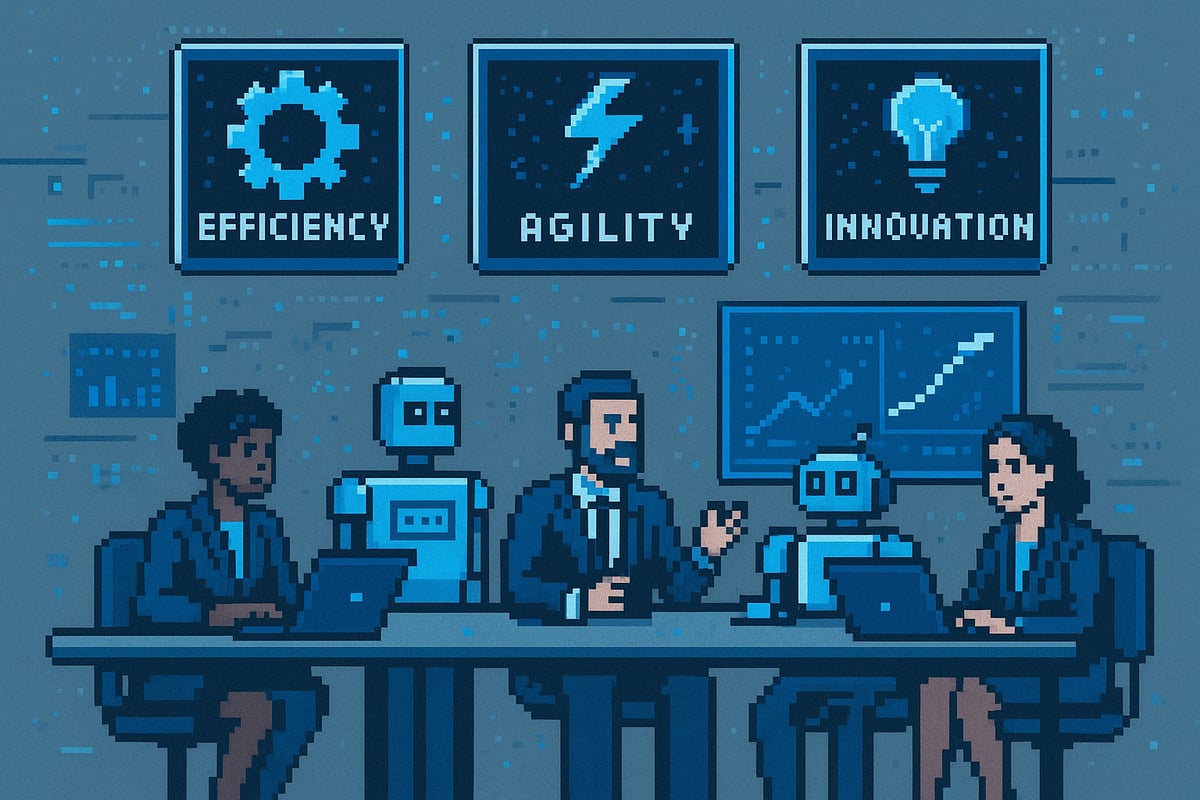
However, the journey toward smarter business is not without risk. Surface-level fixes and disconnected technology investments can add complexity rather than solve real problems. Sustainable transformation requires a systemic approach, aligning technology with business objectives and culture. The true foundation of smarter business rests on three pillars:
- Efficiency: Streamlining operations to reduce waste and optimize resources.
- Agility: Enabling rapid adaptation to shifting market and technological trends.
- Innovation: Fostering a culture that encourages experimentation and creative problem-solving.
In 2025, embracing these pillars positions organizations to thrive, not just survive. Smarter business is the key to unlocking lasting competitive advantage in a world where change is the only constant.
Step 1: Integrate AI Agents for Productivity and Innovation
Artificial intelligence agents are rapidly becoming the backbone of smarter business strategies in 2025. These autonomous systems are not just tools—they are intelligent partners that design and execute workflows to achieve specific business goals. By leveraging AI agents, organizations can automate complex processes, improve decision-making, and unlock new levels of productivity.
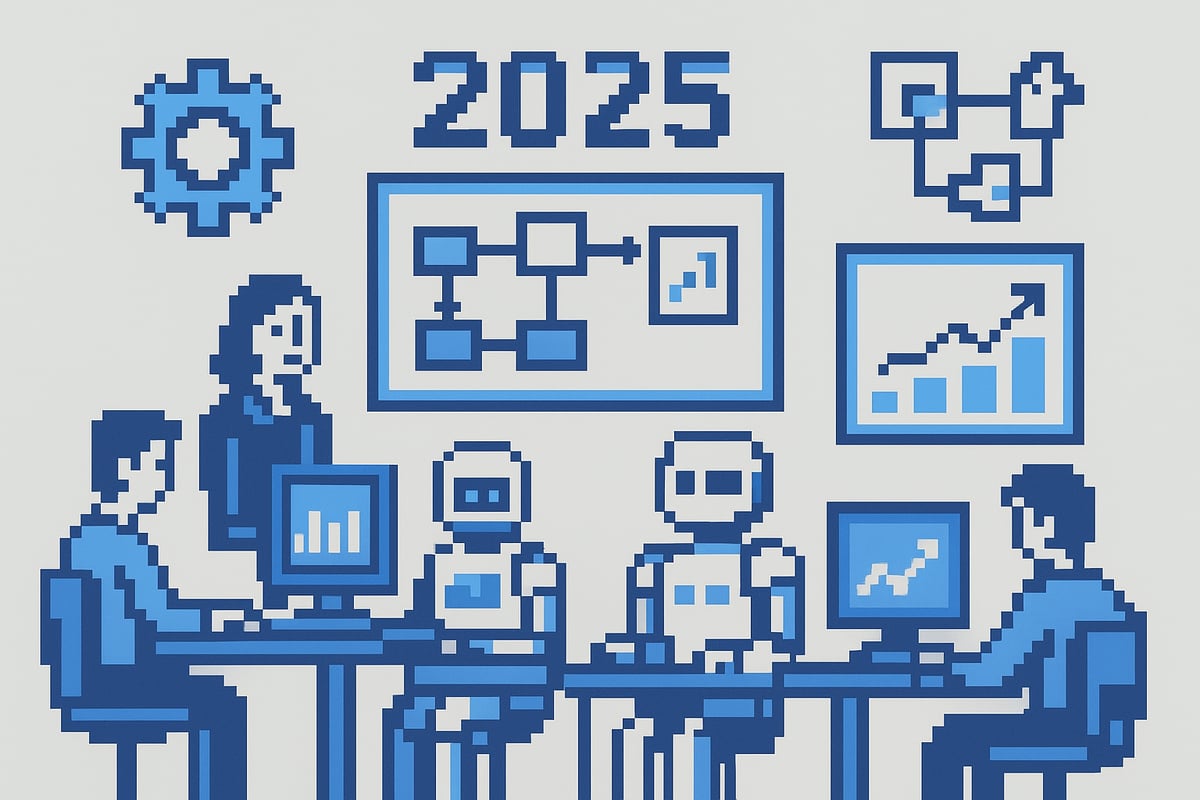
For a smarter business to thrive, integration is key. Many companies fall into the trap of deploying isolated AI solutions that do not communicate with existing applications, data, or models. This approach often leads to increased complexity, inefficiency, and missed opportunities. The smarter business of the future depends on AI agents working seamlessly across departments, unifying workflows and data streams.
Consider the example of Avid Solutions, which implemented AI agents to streamline its customer onboarding process. The result was a 25% reduction in onboarding time, along with higher employee engagement. Across industries, up to 60% of DevOps and IT content generation is now automated, boosting both quality and delivery speed. These improvements underscore why smarter business initiatives are gaining momentum.
The benefits of integrating AI agents include:
- Freeing teams from repetitive, manual tasks
- Allowing staff to focus on strategic, creative work
- Improving customer satisfaction with faster, more consistent service
- Enabling real-time insights and proactive problem-solving
However, pitfalls also exist:
- Disconnected AI tools can create silos and increase operational risk
- Lack of integration may lead to compliance and data consistency issues
- Overlapping solutions can drive up costs and reduce ROI
| Benefits | Pitfalls |
|---|---|
| Increased productivity | Complexity from siloed tools |
| Enhanced customer satisfaction | Data inconsistency risks |
| Strategic focus enabled | Higher costs from tool overlap |
| Real-time insights | Compliance challenges |
To maximize the value of AI agents, organizations must align these systems with business objectives and orchestrate their use across the enterprise. This means developing a clear integration plan, investing in employee training, and continuously measuring impact. For leaders interested in hands-on implementation, this guide to building a custom AI agent provides practical steps for rapid deployment and adoption.
A smarter business does not happen by accident. It is the result of intentional strategies that harness the full potential of AI agents—moving beyond disconnected tools to a unified, intelligent ecosystem. By prioritizing integration, companies can unlock productivity, drive innovation, and secure a sustainable competitive edge in 2025.
Step 2: Maximize Value from Enterprise Data
Unlocking the full power of enterprise data is essential for building a smarter business in 2025. With the explosion of both structured and unstructured information, organizations that strategically harness data gain a decisive edge. Unifying data across operations fuels AI, drives operational excellence, and enables leaders to make confident, evidence-based decisions.
The Strategic Value of Enterprise Data
Data is the foundation of every smarter business initiative. When organizations treat data as a core asset, they unlock the ability to automate processes, personalize customer experiences, and accelerate innovation. However, data must be accessible, accurate, and well-governed to realize these benefits.
A common challenge is the fragmentation of information across departments and legacy systems. This fragmentation creates silos, making it difficult to extract actionable insights or deploy AI effectively. Leading companies prioritize breaking down these barriers to create a unified source of truth that powers smarter business decisions.
Breaking Down Data Silos: Lessons from Lockheed Martin
Consider Lockheed Martin’s transformation journey. By consolidating 46 separate data systems, they created a scalable infrastructure that supports enterprise-wide AI adoption. This effort did not only streamline workflows, but also empowered teams to access timely, relevant insights.
The result? Faster decision-making, improved collaboration, and the flexibility to respond to shifting market demands. For any organization aiming to become a smarter business, integrating disparate data sources is a critical first step.
Turning Data into a Smarter Business Advantage
Once data silos are eliminated, companies can leverage advanced analytics and AI to generate actionable insights. Tailoring these insights to specific business contexts fuels competitive differentiation and continuous improvement.
However, maximizing value from data comes with its own set of challenges:
- Data privacy and security concerns
- Compliance with evolving regulations
- Managing both structured and unstructured data at scale
To overcome these hurdles, organizations should:
- Conduct comprehensive data mapping
- Implement robust governance frameworks
- Invest in modern data integration platforms
- Utilize cloud and edge computing to enable real-time access
For inspiration, explore AI-driven industry applications and use cases to see how leading companies are turning enterprise data into real results.
In 2025, the smarter business is defined by its ability to unify, protect, and activate its data assets. Those who master this will see faster innovation, sharper decision-making, and a sustainable competitive advantage.
Step 3: Unlock Flexibility and Scale with Hybrid Cloud
Hybrid cloud is rapidly becoming the backbone of smarter business strategies in 2025. As organizations seek agility and scalability, hybrid cloud enables seamless integration between on-premises infrastructure, public cloud, and edge environments. This flexibility allows smarter business leaders to deploy AI and analytics wherever data resides, ensuring optimal performance and compliance.
Hybrid cloud empowers companies to break down silos, unify operations, and support real-time decision-making. By combining private and public resources, businesses gain the freedom to experiment and scale AI-driven solutions without being limited by legacy systems or vendor lock-in.
Hybrid Cloud in Action: Real-World Impact
The US Open tennis tournament is a prime example of smarter business innovation powered by hybrid cloud. By leveraging a hybrid cloud infrastructure, organizers deliver real-time analytics and engaging digital experiences to millions of fans worldwide, not just those attending in person.
This approach enhances operational efficiency and customer engagement, enabling smarter business teams to adapt quickly and personalize content delivery. For instance, workloads can shift dynamically based on demand, reducing latency and ensuring consistent performance across platforms.
Securing and Optimizing Hybrid Cloud
Security and compliance are top priorities for any smarter business adopting hybrid cloud. Because data moves between environments, robust encryption, access controls, and compliance monitoring are essential.
Best practices include:
- Conducting thorough workload assessments to determine optimal placement
- Implementing centralized cloud orchestration for seamless management
- Engaging in proactive vendor management to ensure service reliability and regulatory alignment
By focusing on these areas, organizations maintain data integrity, minimize risk, and maximize the value of their hybrid cloud investments.
Evolving Trends: Cloud-Smart for Smarter Business
In 2025, the industry is shifting from a cloud-first to a cloud-smart approach. This evolution means smarter business leaders prioritize flexibility, cost optimization, and innovation when designing cloud strategies. Hybrid architectures support rapid experimentation and scaling of AI solutions, crucial for staying competitive.
According to AI adoption and market growth insights, enterprises are investing in smarter business models that leverage hybrid cloud to unlock advanced AI and automation capabilities. This trend positions organizations to respond swiftly to market changes, regulatory requirements, and emerging technologies.
Hybrid cloud is no longer just a technical upgrade. It is a strategic enabler for smarter business, driving resilience, efficiency, and growth in an ever-changing digital landscape.
Step 4: Streamline Operations with Automation
Operational efficiency is at the core of any smarter business strategy. As organizations face mounting pressure to do more with less, automation emerges as a powerful lever for reducing risk, minimizing costs, and accelerating workflows. In 2025, companies that embrace automation are not just improving processes, they are positioning themselves for long-term success in a smarter business landscape.
Why Automation Matters for Smarter Business
Automation is no longer about adding isolated tools to patch specific problems. The smarter business imperative requires a holistic approach, where automation is woven into the very fabric of daily operations. When unified across departments, automation reduces manual effort, eliminates redundant tasks, and ensures information flows seamlessly between systems.
Selecting the right solutions is crucial. For example, affordable chatbot solutions for business can streamline customer interactions, automate routine inquiries, and boost operational efficiency without adding complexity. This approach empowers teams to focus on strategic initiatives while maintaining a consistent customer experience.
Automation in Action: Real-World Results
The impact of unified automation is best illustrated by real-world results. Samsung SDS America leveraged automation to achieve an 11% reduction in cloud spending, demonstrating how smarter business strategies can directly affect the bottom line.
Beyond cost savings, automation drives productivity across core functions. In finance, HR, and supply chain, organizations have reported up to 75% improvements in process efficiency. Automation also powers use cases such as invoice validation, facilities maintenance, and IT managed services, all of which free employees from repetitive work and enable a sharper focus on value creation.
Navigating Change and the Future of Operations
Despite the clear benefits, resistance to automation remains a challenge. Effective change management is essential for smarter business adoption. Leaders must engage stakeholders early, communicate the advantages, and provide training to ensure a smooth transition.
Looking ahead, the future of smarter business lies in autonomous operations and self-healing systems. As technology advances, businesses will rely on automation not just for efficiency, but for resilience and adaptability. By investing in unified, AI-powered automation today, organizations can ensure they are prepared for whatever tomorrow brings.
Step 5: Future-Proof Your Business—Leadership, Skills, and Sustainability
Sustaining growth in 2025 means leaders must move beyond traditional management and embrace the smarter business mindset. As technology reshapes every industry, the most successful organizations will foster leadership that is facilitative rather than directive. Today, smarter business leaders guide teams through uncertainty, champion innovation, and make data-driven decisions that align with both strategy and purpose.
Evolving Leadership for Smarter Business
In smarter business, leadership is not about commanding from the top but about enabling agile responses to rapid change. Leaders set a vision for AI adoption, empower teams to experiment, and build trust across functions. A facilitative approach ensures that ideas flow freely, and employees feel valued as contributors to transformation.
Traditional vs. Smarter Business Leadership
| Aspect | Traditional Leadership | Smarter Business Leadership |
|---|---|---|
| Decision-making | Top-down | Collaborative, data-driven |
| Focus | Stability, control | Agility, innovation |
| Skill development | Role-specific | Continuous, cross-functional |
Smarter business leaders also set clear transformation goals and measure progress, ensuring alignment between technology, people, and sustainability.
Building Cross-Functional, AI-Literate Teams
Success in smarter business relies on teams that blend business, technology, and data expertise. Cross-functional collaboration breaks down silos, accelerates problem-solving, and encourages creative thinking. To future-proof your organization, prioritize hiring and developing talent with both domain knowledge and technical fluency.
Key Strategies:
- Develop mentorship programs pairing business and tech professionals.
- Encourage project rotations to build broader skill sets.
- Foster open communication channels for sharing AI and automation insights.
Upskilling and Reskilling for Smarter Business
The smarter business workforce is always learning. Upskilling and reskilling are essential as AI and automation redefine roles and responsibilities. Leaders must invest in continuous training, ensuring employees are equipped to collaborate with intelligent systems.
According to recent AI integration in business 2025 statistics, over 70% of enterprises are integrating AI agents into core processes, highlighting the urgent need for new skills.
Upskilling Priorities:
- Data literacy and analytical thinking
- AI and automation tool proficiency
- Change management and adaptability
By measuring and communicating productivity gains, organizations reinforce the value of smarter business transformation and motivate ongoing learning.
Embedding Sustainability into Smarter Business
Sustainability is now a core pillar of smarter business strategy. Leaders are embedding energy, waste, and resource management into operational workflows, often using AI and automation for real-time monitoring and reporting. For instance, some companies automate sustainability reporting, tracking emissions and resource use to meet regulatory and stakeholder expectations.
Sustainability Initiatives:
- Integrate carbon footprint monitoring into supply chain systems.
- Automate waste reduction tracking and reporting.
- Align sustainability metrics with business performance goals.
Agility, Well-Being, and Customer-Centric Innovation
Agility is crucial in smarter business. Leaders must help teams adapt quickly to regulatory, market, and technological changes. This means supporting employee well-being and fostering a culture that values experimentation and customer-centricity.
Best Practices:
- Provide flexible work arrangements and wellness programs.
- Establish feedback loops with customers to drive innovation.
- Recognize and reward adaptability and initiative.
Preparing for the Next Wave: Agentic AI, Quantum Computing, and Beyond
Smarter business is not static. Leaders must anticipate emerging trends such as agentic AI, quantum computing, and new forms of digital disruption. Investing in future-ready talent and technology ensures resilience and sustained competitive advantage.
Emerging Trends to Watch:
- Agentic AI driving autonomous decision-making
- Quantum computing solving complex business problems
- Expansion of AI-powered sustainability solutions
By embracing these pillars—leadership, skills, sustainability, and adaptability—organizations can future-proof their smarter business strategies and thrive in the ever-evolving landscape.
How AI Chatbots and Automation Tools Accelerate Smarter Business Success
AI chatbots and automation tools have become essential pillars for any smarter business looking to excel in 2025. With rapid advances in AI, companies now rely on these technologies to optimize operations, boost productivity, and improve customer engagement in ways that were not possible just a few years ago.
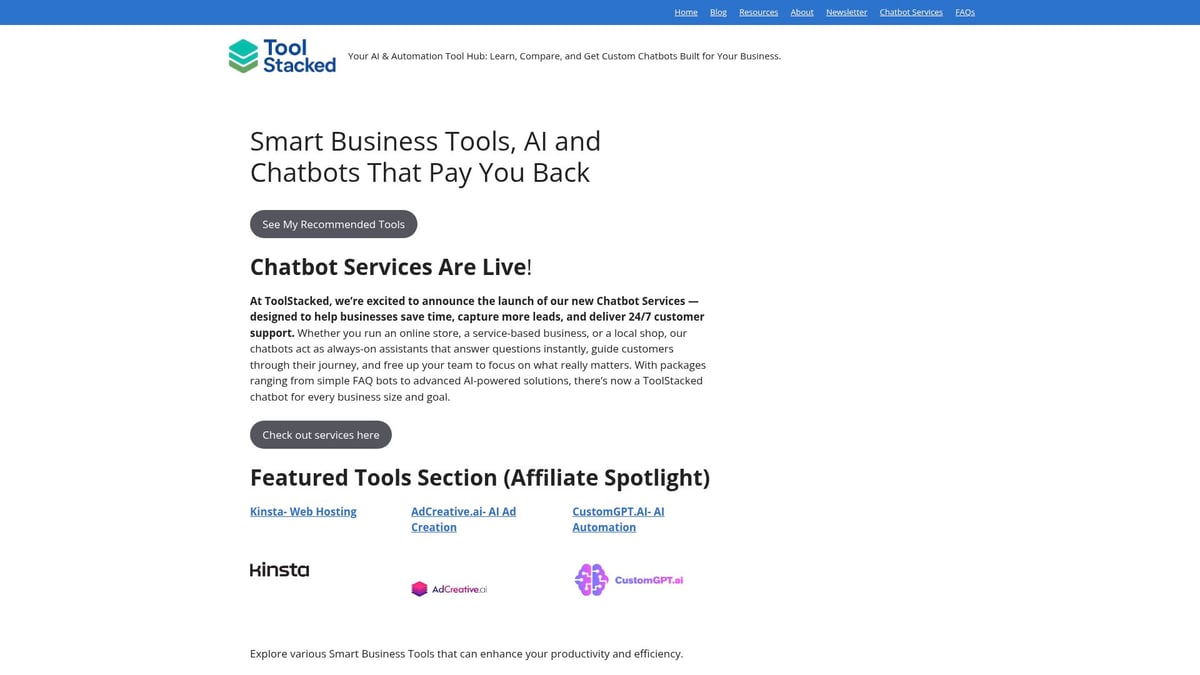
Custom chatbots are transforming the way businesses handle customer support and lead capture. By managing routine inquiries and resolving common issues, chatbots free up valuable staff time for higher-impact work. This not only accelerates response times but also enhances overall customer satisfaction.
Automation platforms are equally vital, allowing organizations to streamline repetitive processes and reduce operational costs. Businesses are able to scale quickly and adapt to changing demands by automating workflows across departments. For those seeking a smarter business edge, these platforms help maintain efficiency without sacrificing quality.
ToolStacked stands out as a trusted resource for selecting and implementing the right AI chatbot and automation solutions. Their expert reviews and tailored recommendations empower companies to navigate a crowded technology landscape with confidence. As a result, organizations leveraging ToolStacked’s guidance report significant time savings and measurable gains in customer experience.
In addition to solution reviews, ToolStacked offers educational resources and toolkits to support every stage of chatbot and automation deployment. This comprehensive support ensures that smarter business strategies are grounded in best practices and practical insights.
For any company committed to future-proofing operations and driving sustainable growth, adopting AI chatbots and automation tools is no longer optional. It is a competitive necessity for smarter business success in the digital era.