
The Essential Guide to Automation in 2026
Imagine a world where businesses thrive as routine tasks are handled automatically and human talent is free to focus on innovation. In 2026, automation is transforming this vision into a reality for organizations everywhere.
This essential guide reveals how automation is evolving, offering businesses and individuals new ways to boost efficiency, productivity, and growth. With the right knowledge, anyone can harness automation for a true competitive edge.
We will explore the fundamentals, the latest trends, industry applications, and the smart strategies you need. Ready to unlock the future? Let’s discover how automation in 2026 can shape your success.
Understanding Automation: Definitions, Types, and Evolution
Imagine a world where repetitive tasks are handled quietly in the background, freeing up humans to focus on creative and strategic work. This is the promise of automation, and in 2026, it is reshaping the way we live and do business.

What is Automation Today?
Automation is the use of technology to perform tasks with minimal human intervention. This can range from simple mechanical devices to advanced AI-powered systems. The concept is distinct from mechanization, which uses machinery to assist but not replace humans, and digitization, which converts information into digital formats without necessarily automating processes.
Historically, automation began with mechanical aids in the early industrial era. The Industrial Revolution marked a turning point, introducing machines that transformed manufacturing. In the 20th century, robotics brought programmable precision to factories. The late 20th and early 21st centuries saw software automation emerge, allowing businesses to automate data entry, scheduling, and communication.
Today, automation is present across nearly every industry. In manufacturing, robotic arms assemble vehicles with speed and accuracy. In customer service, AI chatbots handle inquiries around the clock. According to IBM, over 60% of global businesses have integrated some form of automation by 2025.
Automation is now central to digital transformation. As organizations seek greater efficiency and innovation, the intersection of artificial intelligence and automation is becoming even more significant. For a deeper exploration of this relationship, see AI and Automation Insights.
The path of automation is marked by key milestones:
- Mechanical weaving looms in the 18th century
- Assembly line robotics in the 1960s
- Software bots in the 2000s
- AI-driven solutions in the 2020s
Each leap has expanded the reach and capability of automation, making it foundational to modern digital strategies.
Types of Automation in 2026
As of 2026, automation is not a single technology but a spectrum of approaches, each suited to different needs. Here is a breakdown of the main types:
| Type | Description | Example |
|---|---|---|
| Basic automation | Streamlines repetitive, rule-based tasks | Employee onboarding checklists |
| Process automation | Automates multi-step workflows across systems | Invoice processing |
| Intelligent automation | Integrates AI and machine learning for decision-making | AI chatbots triaging support requests |
| Hyperautomation | Orchestrates multiple tools for end-to-end coverage | Enterprise-wide process monitoring |
| Low-code/no-code | Enables non-technical users to build automations | HR teams automating recruitment steps |
Basic automation focuses on tasks that are repetitive and predictable. Process automation takes this further by connecting systems and automating entire workflows. Intelligent automation leverages AI, making it possible to automate tasks that require learning or adaptation. Hyperautomation combines several tools to provide comprehensive coverage, often managed through orchestration platforms. Low-code and no-code automation allow business users to create solutions without needing programming skills.
For example, workflow automation platforms now enable HR departments to manage recruitment automatically, from posting jobs to scheduling interviews. The boundaries between these types are becoming less distinct as technologies converge and evolve.
Automation in 2026 is characterized by flexibility and adaptability. Businesses can select or combine types to fit their unique challenges. The convergence of technologies ensures that automation remains a driving force for innovation and growth.
Key Trends and Technologies Shaping Automation in 2026
The rapidly changing landscape of automation in 2026 is defined by a convergence of powerful technologies and evolving business needs. Companies are leveraging advanced tools to streamline operations, drive innovation, and stay ahead in a competitive market. Understanding these trends is essential for organizations aiming to harness the full potential of automation. For a comprehensive overview of the most impactful developments, see the Top 8 Automation Trends for 2026.
Artificial Intelligence and Machine Learning
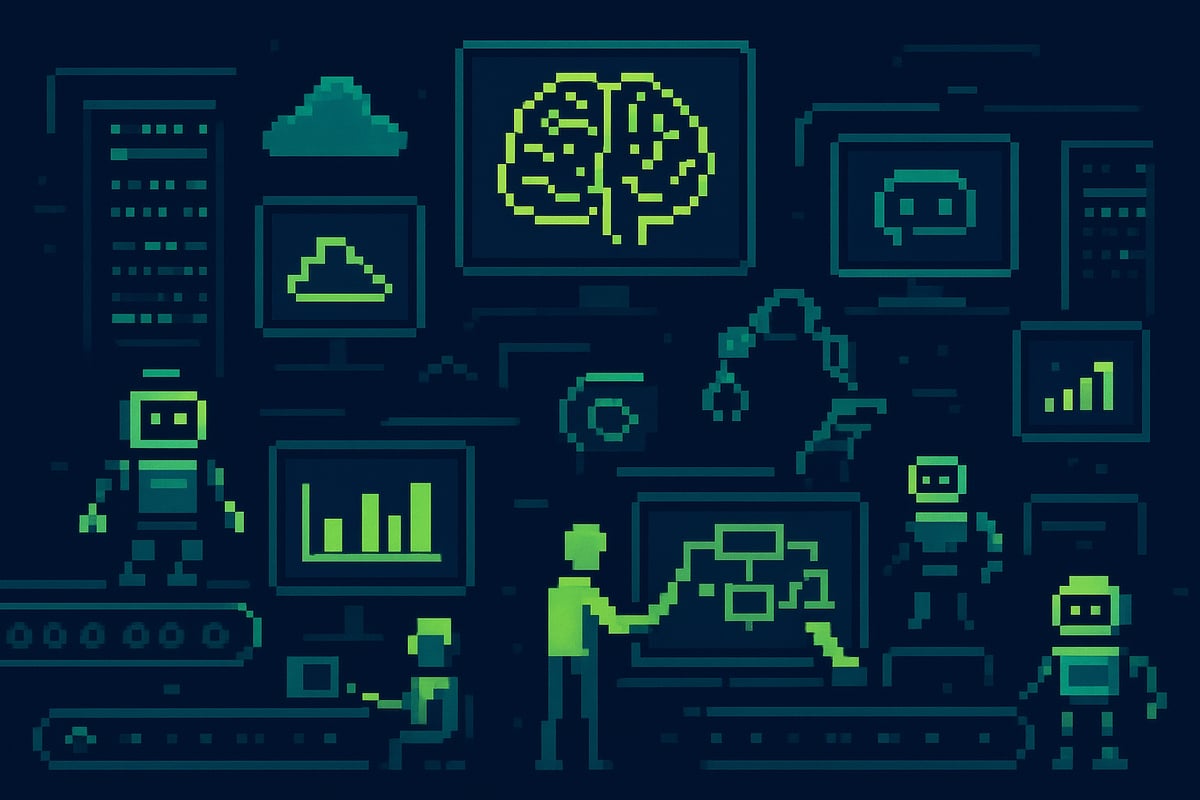
Artificial intelligence and machine learning are at the heart of modern automation. These technologies empower systems to interpret language, analyze images, and predict outcomes with remarkable accuracy. For example, natural language processing enables chatbots to handle customer inquiries, while computer vision inspects products on assembly lines.
Machine learning models continuously improve by learning from historical data. This allows for anomaly detection, process optimization, and adaptive decision-making. AI-driven automation is now common in sectors like healthcare, manufacturing, and logistics, enhancing both speed and quality.
Robotic Process Automation (RPA) and Intelligent Automation
Robotic process automation has evolved from simple task automation to sophisticated intelligent automation. RPA uses software bots to mimic repetitive human actions, such as data entry and report generation. When combined with AI, these bots can handle more complex workflows, adapt to changing conditions, and make decisions based on context.
Banks, for example, use RPA for automating compliance checks, while AI supports fraud detection by analyzing transaction patterns. Intelligent automation reduces manual effort, improves accuracy, and accelerates critical business processes.
Cloud, Edge, and Hybrid Automation
The adoption of cloud-based automation platforms has transformed how businesses scale and manage operations. Cloud automation offers flexibility, rapid deployment, and easy integration with other services. Companies can automate infrastructure provisioning, application updates, and data backups without heavy investments in physical hardware.
Edge automation brings processing power closer to devices or data sources, such as IoT sensors in smart factories. This reduces latency and supports real-time decision-making. Hybrid automation combines the advantages of both cloud and edge, delivering optimal performance for diverse environments.
Hyperautomation and Orchestration
Hyperautomation is a leading trend, representing the integration of multiple automation tools and technologies for comprehensive process coverage. Organizations use orchestration layers to manage, monitor, and optimize end-to-end workflows across departments.
Gartner predicts that by 2026, 70 percent of organizations will rely on hyperautomation for mission-critical operations. This approach enables seamless connectivity between different platforms, ensuring processes are efficient, resilient, and easily scalable. Hyperautomation is redefining how businesses achieve digital transformation with automation.
Low-Code/No-Code Platforms
Low-code and no-code platforms are democratizing automation by enabling business users to create automated workflows without extensive programming knowledge. These platforms use visual interfaces, drag-and-drop tools, and prebuilt templates to simplify automation development.
Marketing teams, for instance, can automate campaign launches and customer segmentation with minimal IT involvement. This accelerates deployment, reduces bottlenecks, and encourages innovation across the organization. Low-code/no-code automation also helps companies respond quickly to changing market demands.
Sustainability and Green Automation
Sustainability is becoming a core focus in automation strategies. Automated systems optimize energy usage, reduce waste, and support green IT initiatives. For example, data centers use automated resource allocation to minimize energy consumption, while smart grids adjust power distribution in real time.
According to IBM, automation can cut energy use by up to 30 percent in some operations. Green automation not only lowers operational costs but also contributes to corporate social responsibility goals, making it a priority for forward-thinking enterprises in 2026.
Industry Applications: How Automation Transforms Key Sectors
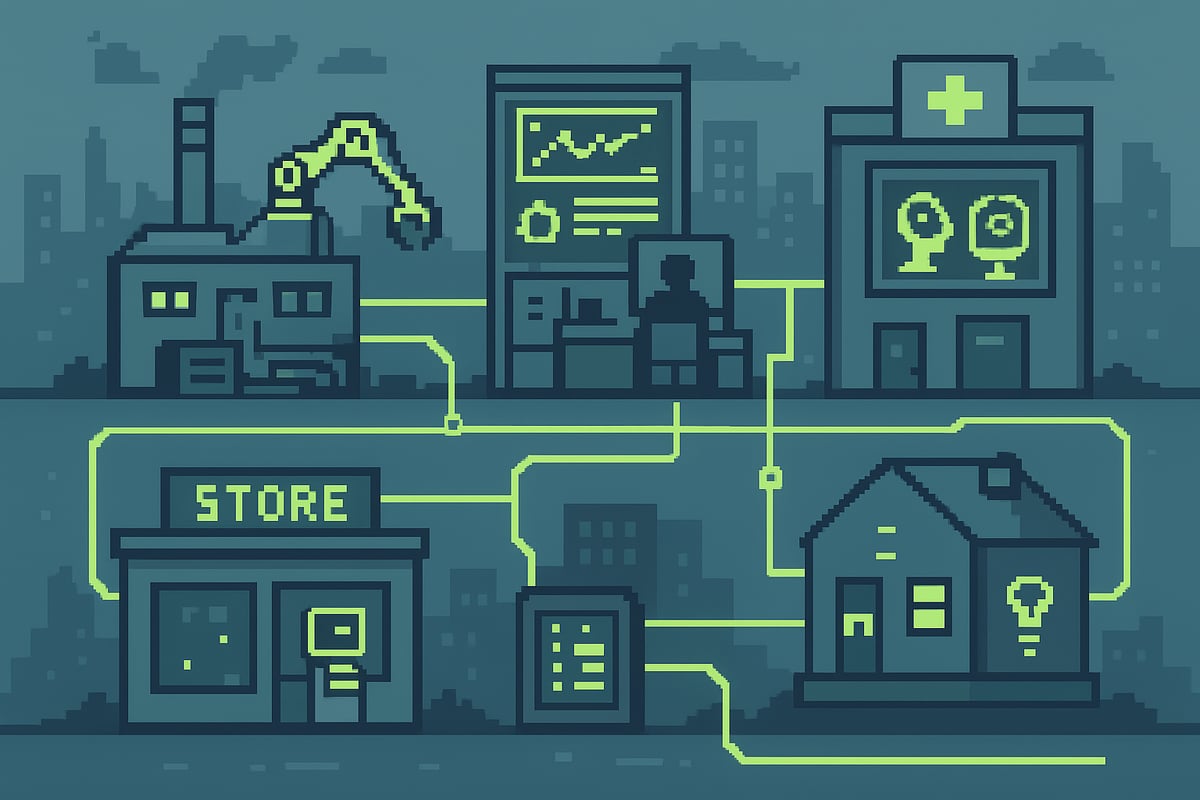
Automation is transforming industries at every level, shaping how organizations operate and deliver value. From factory floors to smart homes, automation streamlines complex processes, boosts productivity, and drives innovation. Let us examine how automation is revolutionizing key sectors in 2026.
Manufacturing and Industrial Automation
Manufacturing has always led the way in automation, evolving from simple conveyor belts to highly intelligent, interconnected systems. Today, smart factories use robotics, IoT sensors, and AI-driven quality control for unmatched efficiency. Automated production lines operate with minimal human oversight, enabling "lights-out" manufacturing where factories run around the clock.
Collaborative robots, or cobots, work alongside humans, handling tasks such as welding, assembly, and packaging. This synergy boosts safety and throughput while allowing workers to focus on higher-value activities. For example, automotive manufacturers now deploy cobots for precision assembly and real-time defect detection.
A key benefit of automation in manufacturing is scalability. Companies can quickly adjust production volumes in response to market shifts, reducing downtime and waste. As automation adoption grows, the sector is seeing significant gains in both output and quality.
Business Process Automation (BPA)
Business process automation is reshaping back-office functions across HR, finance, procurement, and customer service. By automating routine transactions, approvals, and document management, organizations can reduce manual errors and accelerate workflows.
For example, insurance companies leverage automation to process claims, cutting turnaround times from days to hours. HR departments use workflow automation for onboarding, payroll, and compliance tracking, freeing staff to focus on talent development.
The rise of low-code platforms allows business users to create automation tools without deep technical skills. This democratization of automation empowers teams to quickly address process bottlenecks. For small businesses, solutions highlighted in the AI Tools for Small Business guide offer practical entry points to automation, enabling them to compete with larger enterprises.
IT and Cloud Automation
IT and cloud automation are critical for managing complex digital infrastructure. Automated provisioning and scaling ensure that resources are always available to meet demand, optimizing both performance and cost. IT teams rely on automation for infrastructure monitoring, patch management, and security updates, reducing the risk of downtime.
AIOps—AI-powered IT operations—take automation further by analyzing system logs and performance data to predict and resolve incidents proactively. This shift from reactive to proactive management boosts uptime and reliability.
Cloud providers offer automation tools that streamline deployment and migration, making it easier for businesses to adopt new technologies. As organizations embrace hybrid and multi-cloud environments, automation becomes essential for maintaining consistency and compliance across platforms.
Healthcare and Life Sciences
Healthcare is experiencing a wave of automation that improves patient outcomes and operational efficiency. Automated diagnostics use AI to interpret medical images and lab results with remarkable accuracy, supporting faster, more precise decision-making.
Hospitals deploy chatbots for appointment scheduling, reminders, and patient follow-ups, enhancing engagement while reducing administrative burden. Automation also streamlines record management, ensuring that patient data is accurate and accessible when needed.
In laboratories, robotic systems handle sample processing and analysis, accelerating research and reducing human error. Automation in healthcare not only saves time but also enables professionals to focus on patient care and innovation.
Retail and E-commerce
Retailers and e-commerce platforms use automation to optimize inventory, supply chains, and customer experiences. Real-time tracking and demand forecasting help maintain optimal stock levels, reducing both shortages and excess inventory.
Automated order fulfillment systems speed up delivery, while AI-driven recommendation engines personalize shopping experiences. Chatbots handle customer inquiries and returns, providing 24/7 support without increasing headcount.
Self-checkout kiosks and automated payment solutions enhance convenience for shoppers. As competition intensifies, automation is a key differentiator that enables retailers to adapt quickly and meet evolving consumer expectations.
Home and Consumer Automation
Home automation continues to gain momentum, with smart devices making everyday life more convenient and efficient. Automated lighting, security, and climate control systems respond to user preferences and environmental conditions, optimizing comfort and energy use.
Voice assistants integrate with a wide array of IoT devices, allowing homeowners to control appliances, entertainment, and safety systems with simple commands. Automation platforms coordinate routines, such as adjusting thermostats when residents leave or return home.
By 2026, over 400 million smart home devices are expected to be automated, reflecting widespread adoption. Home automation not only enhances comfort but also supports sustainability by reducing energy consumption.
Emerging Fields: Agriculture, Construction, and More
Automation is rapidly expanding into sectors like agriculture and construction, bringing new efficiencies and capabilities. In agriculture, precision automation enables automated irrigation, fertilization, and pest control, guided by sensors and drones that monitor crop health.
Construction sites are adopting robotics for site surveying, bricklaying, and even 3D printing of building components. These technologies accelerate project timelines and improve safety by reducing manual labor in hazardous environments.
Resource extraction industries, such as mining, utilize automated equipment for drilling and transportation, increasing productivity and safety. As these fields embrace automation, they unlock new opportunities for growth and sustainability, shaping the future of work and industry.
The Business Case for Automation: Benefits, ROI, and Strategic Impact
Imagine unlocking new levels of productivity and innovation in your organization. In 2026, automation has become a cornerstone for forward-thinking businesses seeking measurable gains across every function. With automation, companies can streamline operations, reduce costs, and position themselves for sustainable growth.

Unlocking Productivity and Human Potential
The most immediate impact of automation is a significant boost in productivity. By delegating repetitive and time-consuming tasks to technology, employees can focus on creative problem-solving and strategic work. For example, automated data entry or scheduling frees up staff for more valuable initiatives.
This shift not only accelerates project timelines but also improves job satisfaction. Teams can dedicate their energy to tasks that require critical thinking, innovation, and collaboration.
Cost Reduction and Operational Efficiency
Automation is a proven driver of cost savings. When routine processes are automated, businesses minimize manual errors and reduce the need for additional labor. This translates into lower operational expenses and greater financial predictability.
Consider the reduction in processing time for invoices or the elimination of costly mistakes in data management. Over time, even small efficiencies add up to substantial savings. In fact, companies adopting intelligent automation report up to 40% improvement in operational efficiency according to IBM.
Enhancing Customer Experience
Modern customers expect fast, accurate, and personalized service. Automation enables organizations to meet these expectations by delivering 24/7 support, instant responses, and tailored solutions. Automated chatbots, for example, resolve common issues quickly, while intelligent routing ensures customers reach the right agent.
This approach not only drives higher customer satisfaction but also frees human agents to handle more complex or sensitive interactions.
Scalability Without Growing Pains
Growth often brings challenges, especially when scaling up operations. Automation allows companies to expand their capabilities without a proportional increase in headcount or infrastructure.
Automated systems handle surges in demand, process larger data volumes, and support new business models seamlessly. As a result, organizations remain agile and responsive, even as they grow.
Compliance, Risk Reduction, and Data-Driven Decisions
Staying compliant with regulations is non-negotiable in today's business environment. Automation supports regulatory adherence by ensuring consistent monitoring, accurate reporting, and auditable workflows.
Additionally, automation empowers leaders with real-time analytics for faster, more informed decision-making. Automated dashboards surface trends and anomalies, enabling proactive management of risks.
Here is a summary of the strategic benefits and ROI of automation:
| Benefit | Description | ROI Impact |
|---|---|---|
| Productivity | Frees staff for high-value work | Faster project delivery, higher output |
| Cost Reduction | Minimizes errors, reduces labor costs | Lower operational expenses |
| Customer Experience | Delivers fast, personalized, 24/7 service | Increased satisfaction, loyalty |
| Scalability | Supports growth without proportional resource increase | Efficient expansion |
| Compliance & Risk Reduction | Automates monitoring and reporting | Reduces legal risk, increases trust |
| Data-Driven Decisions | Real-time insights and analytics | Improved agility, better outcomes |
Strategic Impact and Competitive Differentiation
The organizations that invest in automation today are positioning themselves as leaders tomorrow. Strategic use of automation delivers a competitive edge by enabling faster adaptation to market changes, unlocking new revenue streams, and maximizing talent potential.
Businesses can reference resources like the Tools and Automation Guide to evaluate and implement the right solutions for their needs. By making informed decisions, companies ensure their automation investments deliver measurable returns.
Ultimately, automation is not just a trend. It is a transformative force that will define success for businesses in 2026 and beyond. Those who leverage its benefits will be best equipped to thrive in an increasingly digital world.
Implementing Automation in 2026: A Step-by-Step Guide
Adopting automation in 2026 requires a structured, strategic approach. Organizations must align technology with business objectives, ensure seamless integration, and prepare teams for change. Following a step-by-step methodology reduces risk, maximizes return on investment, and fosters sustainable growth.
Step 1: Assessing Needs and Setting Objectives
Successful automation begins with a clear understanding of where it delivers the most value. Identify processes that are repetitive, high-volume, or prone to errors. Engage cross-functional teams to gather input, ensuring all perspectives are considered.
Set measurable objectives for your automation initiative. Goals might include reducing processing time, improving accuracy, or enhancing scalability. Involving stakeholders early guarantees alignment and buy-in, which is critical for long-term success.
Step 2: Selecting the Right Technologies and Partners
Choosing the right automation technologies is vital. Evaluate platforms like robotic process automation, AI, or workflow tools based on your organization's requirements. Consider compatibility with existing systems and ensure the technology is scalable and secure.
For specialized solutions, such as customer engagement, explore providers like Chatbot Automation Services. These services can streamline communication and operational efficiency. Assess vendor support, integration capabilities, and long-term partnership potential before making decisions.
Step 3: Designing and Mapping Automated Workflows
Once technologies are selected, map out current workflows. Use process mapping tools to visualize each step, pinpointing opportunities for automation. Define clear rules, triggers, and exceptions for every automated process.
Collaborate with process owners to ensure all nuances are captured. This stage is crucial for minimizing disruptions and maximizing benefits from automation. Accurate mapping leads to more reliable and adaptable systems.
Step 4: Building, Testing, and Deploying Automation
Begin development by creating scripts, bots, or automated workflows tailored to your mapped processes. Pilot these automations in a controlled environment to test functionality and measure initial results.
Iterate based on feedback, resolving issues before full deployment. Gradually expand automation across departments, maintaining oversight and documentation. Monitoring during rollout ensures smooth transitions and sustained performance.
Step 5: Change Management and Workforce Enablement
Effective change management is essential for automation success. Communicate the benefits clearly and provide training to help employees adapt. Address concerns about job displacement by focusing on upskilling and new opportunities.
According to Manufacturers’ Automation Adoption Challenges, many organizations still struggle with adoption due to cultural resistance. Proactive engagement and continuous support foster a positive transition and maximize the impact of automation.
Step 6: Measuring Success and Scaling Up
Define key performance indicators, such as process speed, error rates, and cost savings, to track automation outcomes. Regularly review results and seek feedback from users to identify areas for improvement.
Successful pilots can be scaled across more processes or departments. Continuous optimization ensures automation remains aligned with evolving business goals and delivers sustained value.
Step 7: Ensuring Security, Compliance, and Governance
Prioritize security and compliance throughout your automation journey. Implement robust access controls and maintain detailed audit trails. Stay informed about regulatory requirements for data and process automation.
Regularly review and update security protocols to protect automated systems from emerging threats. Governance frameworks help maintain accountability and ensure ethical, compliant automation practices.
Challenges, Risks, and the Future of Automation
As automation continues to transform industries, organizations must address new challenges, manage risks, and prepare for what lies ahead. The journey is not without obstacles, yet those who plan strategically can turn potential barriers into opportunities for growth.
Overcoming Common Barriers
Adopting automation presents several hurdles for businesses in 2026:
- Integrating new solutions with legacy systems and siloed data.
- Managing growing complexity as automation scales across departments.
- Addressing gaps in technical expertise, especially around AI and process automation.
Organizations typically overcome these barriers by investing in robust integration tools, fostering a culture of continuous learning, and engaging multidisciplinary teams. Recognizing these challenges early allows leaders to address them proactively and maximize the value of automation.
Navigating Workforce Transformation
Automation inevitably impacts the workforce. While there are concerns about job displacement, many roles shift or evolve rather than disappear. Companies that focus on reskilling and redeploying staff can unlock new opportunities. For example, automation creates demand for roles in oversight, data analysis, and digital process management.
Recent studies, such as AI’s Impact on Job Creation and Wages, show that automation can drive job growth in emerging fields, particularly for those willing to adapt. By investing in upskilling, organizations empower employees to thrive in an automated environment.
Security, Privacy, and Ethical Considerations
Security and privacy risks grow as automation expands. Automated systems can be vulnerable to cyber threats, and AI-driven decision-making brings challenges around transparency and bias. Regulatory compliance is also increasingly complex.
To address these issues, many businesses adopt strong access controls, audit trails, and regular security reviews. In smart manufacturing, Cybersecurity in Smart Manufacturing highlights the integration of AI to bolster cybersecurity and protect automated processes. Ethics boards and clear guidelines are essential for responsible automation.
The Paradox and Limitations of Automation
Despite its benefits, automation is not without limitations. Human oversight remains crucial for handling exceptions and ensuring quality. Technical challenges such as edge cases, unstructured data, and system downtime can impact performance.
| Limitation | Impact |
|---|---|
| Edge cases | Require manual intervention |
| Data quality | Affects output reliability |
| Change management | Slows adoption |
A recent survey found that 72 percent of organizations cite change management as the primary barrier to automation success. A balanced approach that combines technology with human expertise is vital.
Looking Ahead: The Next Wave of Automation
The future of automation will be shaped by emerging technologies like autonomous systems, quantum computing, and advanced AI. Trends point toward greater personalization, collaborative automation, and seamless human-AI teaming.
Organizations that embrace continuous learning and adaptation will not only keep pace but also lead in the evolving landscape of automation. The next wave promises even more transformative potential for those ready to innovate and evolve.




2 Comments