
10 Best Automation Tools for Business Success in 2026
Business automation is advancing at lightning speed in 2026, reshaping how companies operate and compete. In this dynamic landscape, selecting the right automation tools for business is more important than ever for those aiming to stay ahead.
This guide will walk you through the top 10 automation solutions that empower organizations to streamline HR, marketing, IT, finance, and customer engagement. Whether you run a startup or a large enterprise, you will find actionable insights suited to your needs.
Ready to unlock new levels of efficiency and growth? Discover the best tools to future-proof your business strategy today.
The Rise of Business Automation in 2026
The business world in 2026 is defined by rapid advances in automation tools for business. These tools have evolved far beyond simple task automation. Today, automation tools for business are intelligent platforms that use AI, machine learning, and seamless integration to handle everything from HR onboarding and payroll to marketing campaigns and customer support.
Unlike traditional automation, which only handled repetitive tasks, modern automation tools for business leverage AI to adapt, learn, and improve processes. They connect with CRM, ERP, and cloud applications, creating unified workflows that save time and reduce manual effort. For example, businesses now automate customer inquiries, employee onboarding, invoice processing, and IT ticketing with ease.
Defining Automation Tools in the Modern Business Landscape
Automation tools for business in 2026 are shaped by several key trends. AI and machine learning advancements drive smarter, context-aware automation. Hyper-personalization allows workflows to adapt to individual roles or customer segments. No-code and low-code platforms empower non-technical staff to build automations, while cloud-based solutions enable remote teams to collaborate in real time.
Security and compliance remain top priorities, with tools offering granular controls and audit trails. To stay ahead, organizations track the latest tools and automation insights to ensure their strategies remain competitive.
Key Trends Shaping Automation in 2026
The benefits of automation tools for business are significant. Companies report improved efficiency and productivity, with some saving 40+ hours per month on manual tasks. Automation reduces errors, lowers costs, and enhances both employee and customer experiences. Businesses can scale operations quickly, adapting to growth without hiring additional staff.
Real-world examples show that up to 80 percent of onboarding tasks can be automated, freeing teams to focus on higher-value work. This adaptability ensures organizations remain agile and resilient in a changing market.
Benefits of Automation for Businesses
Despite the advantages, adopting automation tools for business presents challenges. Change management, integration complexity, and upfront investment often slow progress. Selecting scalable, secure, and user-friendly solutions is essential. To overcome hurdles, businesses should pilot new tools, engage stakeholders, and prioritize training.
By addressing these considerations, organizations can unlock the full value of automation and position themselves for long-term success.
10 Best Automation Tools for Business Success in 2026
Choosing the right automation tools for business is essential in 2026, as companies seek to streamline processes, enhance productivity, and stay ahead of the competition. The landscape is rich with innovative options, each designed to tackle specific business challenges. Below, we explore ten standout solutions that address HR, marketing, IT, finance, and customer engagement needs, helping organizations of every size unlock efficiency and drive growth.
ToolStacked Custom Chatbot Services
ToolStacked Custom Chatbot Services leads the way in accessible automation tools for business, offering tailored AI chatbots designed for customer support, lead capture, and workflow automation. Pricing is flexible, with multiple packages available, allowing businesses to request customized solutions directly via the Chatbot Services page.
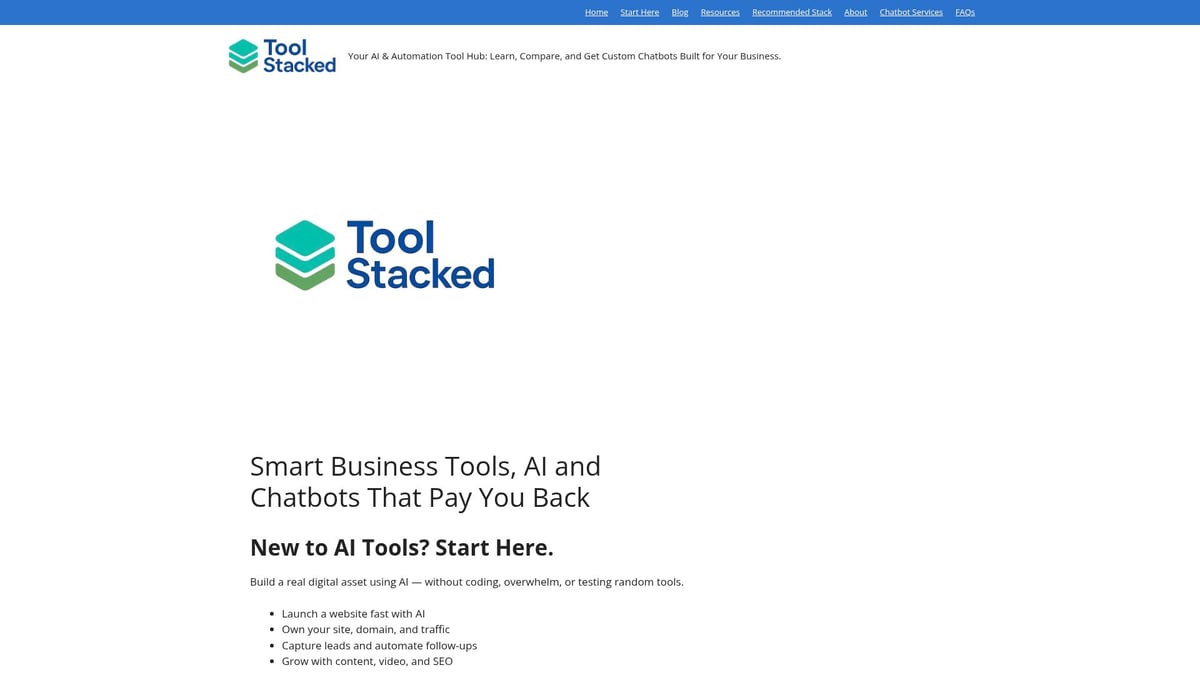
Key features include:
- No-code deployment for rapid setup
- 24/7 customer engagement
- Automated lead qualification and onboarding
This platform is ideal for SMBs, e-commerce sites, and service providers, particularly those without technical staff. The major pros are beginner-friendly interfaces, scalable architecture, and dedicated support. However, pricing transparency is limited, and the tool focuses primarily on chatbot-based automation.
Common use cases involve automating frequently asked questions, capturing leads, and streamlining customer onboarding. By integrating these automation tools for business, companies can free up staff time and ensure consistent customer interactions.
Rippling
Rippling stands out among automation tools for business by unifying HR, payroll, IT, and finance automation into a single, modular platform. Businesses can request custom quotes based on selected modules, ensuring a tailored fit for their unique requirements.
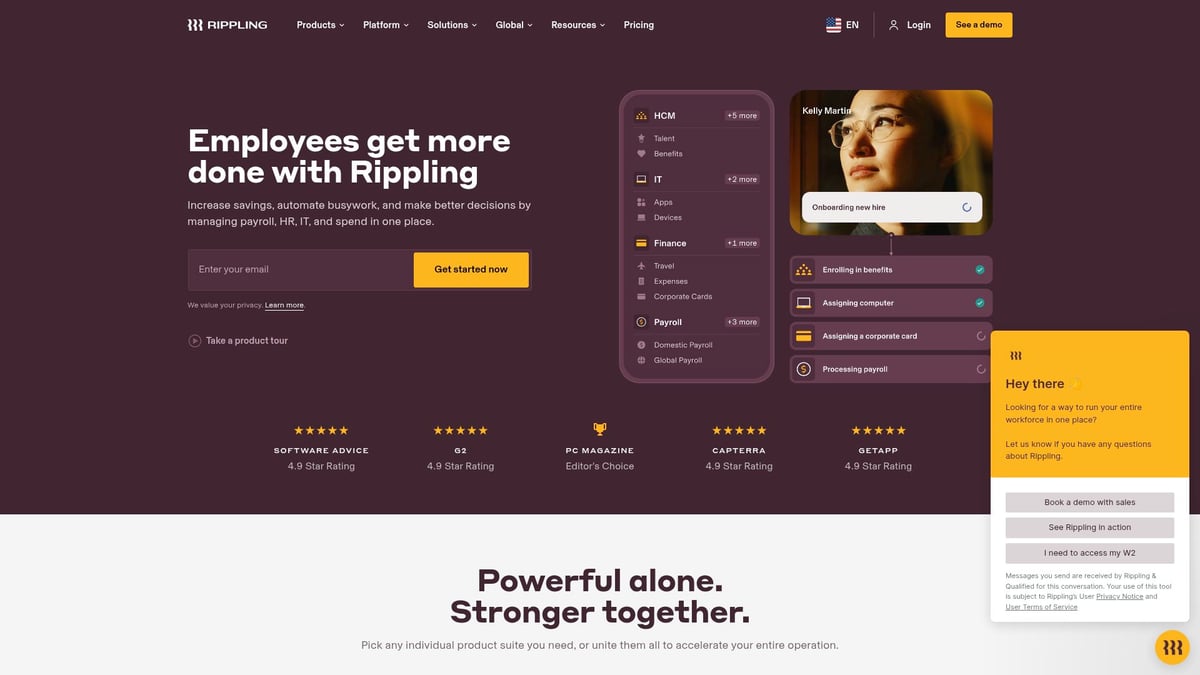
Core features include:
- Centralized employee data
- Workflow studio for process automation
- Global payroll and device management
Rippling is geared toward SMBs and enterprises seeking comprehensive automation. Pros include its extensive integration ecosystem (over 600 apps) and advanced analytics. On the downside, pricing transparency is low and smaller businesses may find the platform complex.
Ideal use cases span HR onboarding, payroll processing, compliance automation, and device management. Rippling’s automation tools for business allow organizations to connect disparate systems and maintain control over sensitive data.
Zapier
Zapier is a leader in workflow automation tools for business, connecting more than 6,000 apps with its no-code builder and multi-step Zaps. Plans range from a generous free tier to premium options starting at $19.99/month.
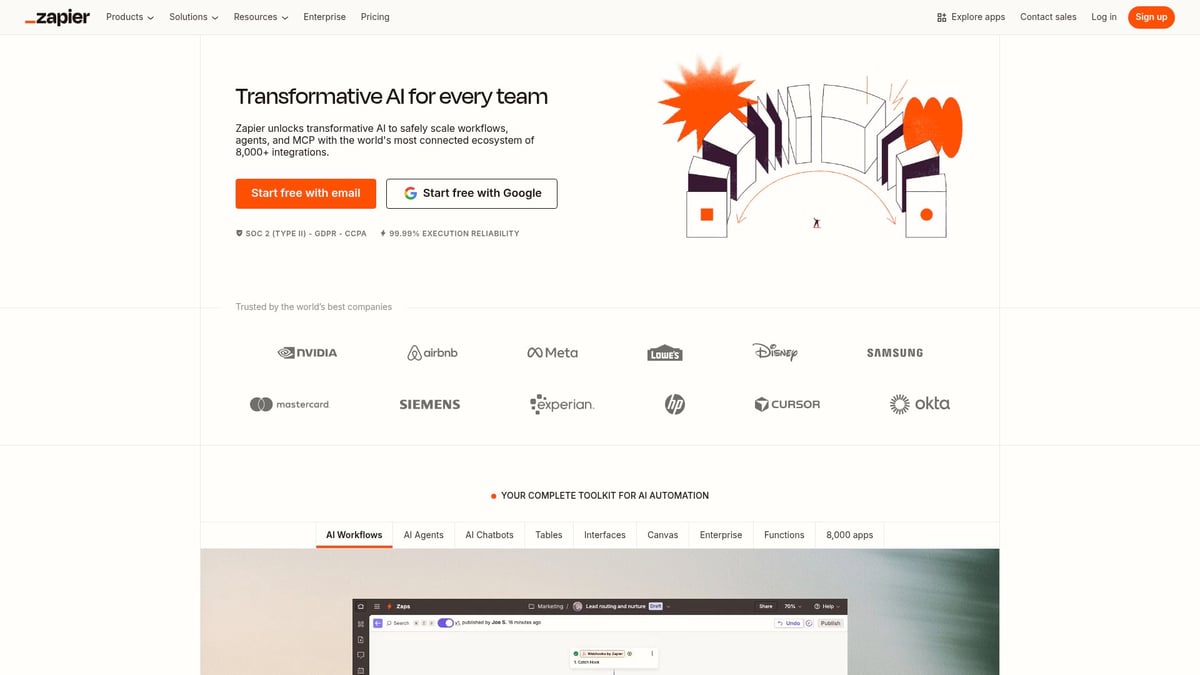
Key features:
- Seamless app integrations
- Customizable workflows for repetitive tasks
- Multi-step automation with branching logic
Zapier targets businesses of all sizes, from marketing teams to operations and administration. Its intuitive UI and vast app ecosystem are major advantages, while premium plans are required for complex automations.
Common applications include lead capture, cross-app data syncing, and marketing automation. For companies looking to connect their favorite tools and automate routine work, Zapier is among the most versatile automation tools for business.
HubSpot Automation
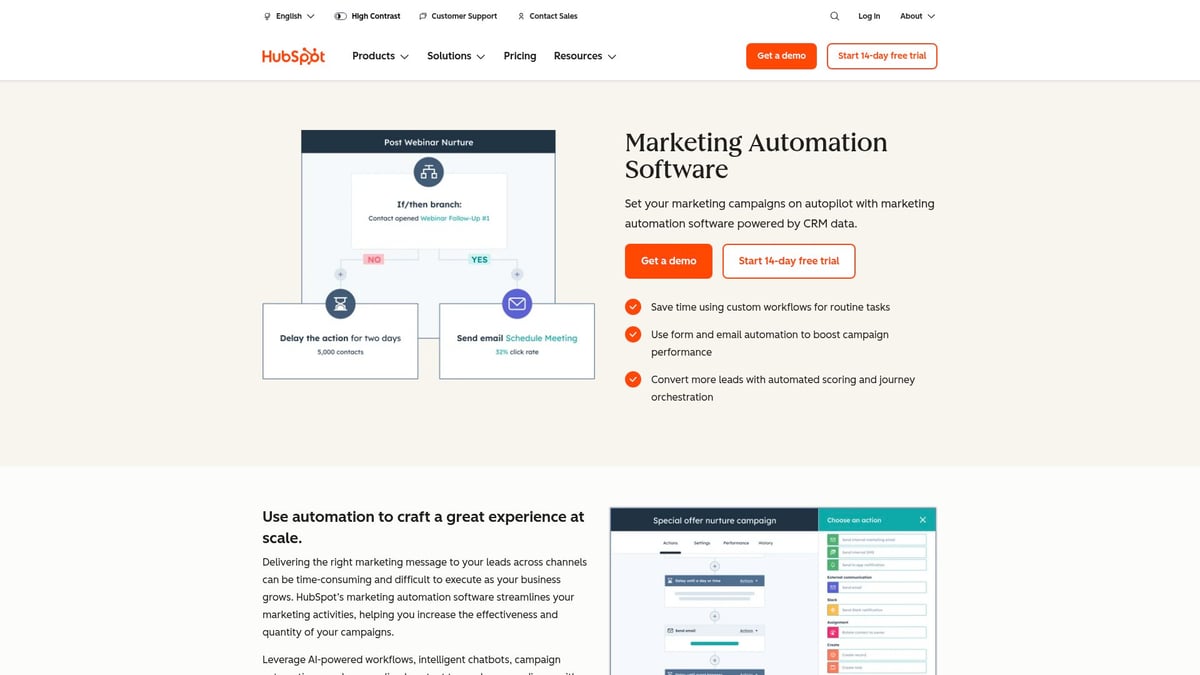
HubSpot Automation delivers a comprehensive suite of automation tools for business, starting at $45/month. The platform offers marketing, sales, and customer service automation, with an integrated CRM and powerful workflow builder.
Core features:
- Automated email campaigns and lead nurturing
- Centralized customer journey management
- Scalable for growing teams
HubSpot is suitable for SMBs and mid-market companies, especially marketing and sales teams. Pros include robust analytics, all-in-one functionality, and scalability. However, advanced automation may require higher-tier plans, and the platform can be overwhelming for beginners.
Ideal scenarios involve automating email sequences, scoring leads, and managing sales pipelines. HubSpot’s automation tools for business empower organizations to deliver personalized experiences and drive revenue.
UiPath
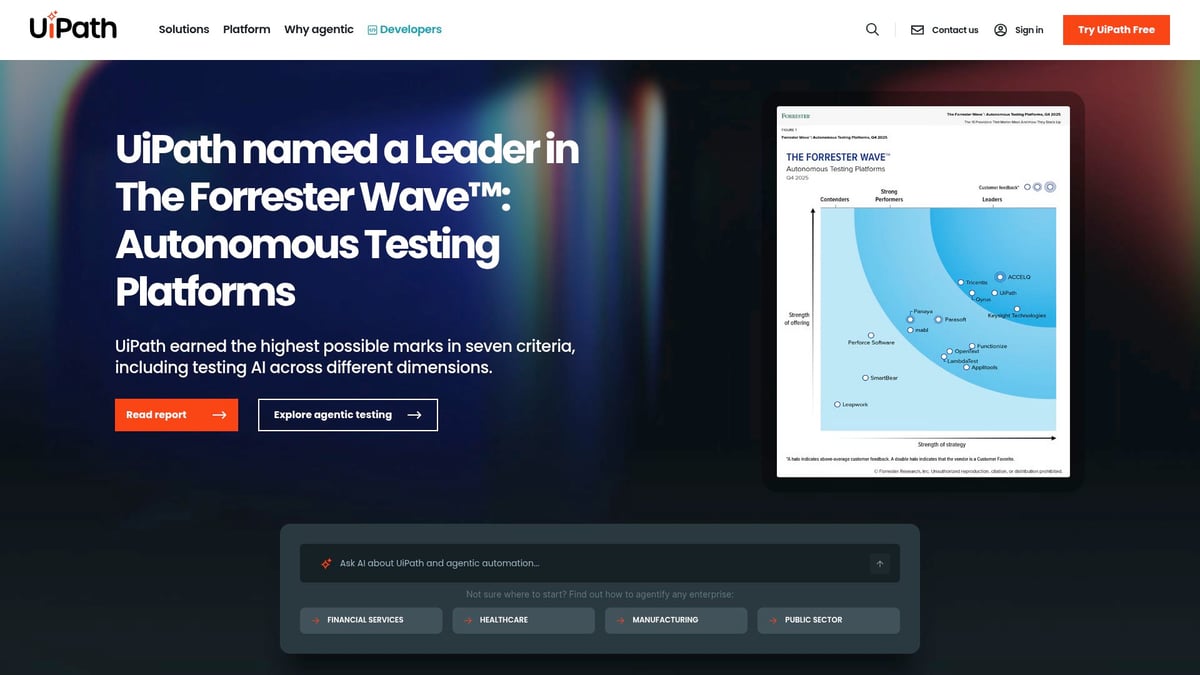
UiPath is at the forefront of robotic process automation tools for business, offering both a free Community Edition and custom enterprise plans. It excels at automating complex, repetitive processes using AI-powered bots.
Key features:
- Enterprise-grade RPA engine
- AI integration for intelligent task automation
- Compliance-ready workflows
UiPath is designed for enterprises and growing businesses with intricate operational needs. Its pros include a powerful automation engine and strong compliance support, though it does have a steeper learning curve and is best suited for larger organizations.
Typical use cases are invoice processing, HR onboarding, and IT operations. With UiPath’s automation tools for business, teams can eliminate manual errors and scale operations efficiently.
Monday.com Work OS
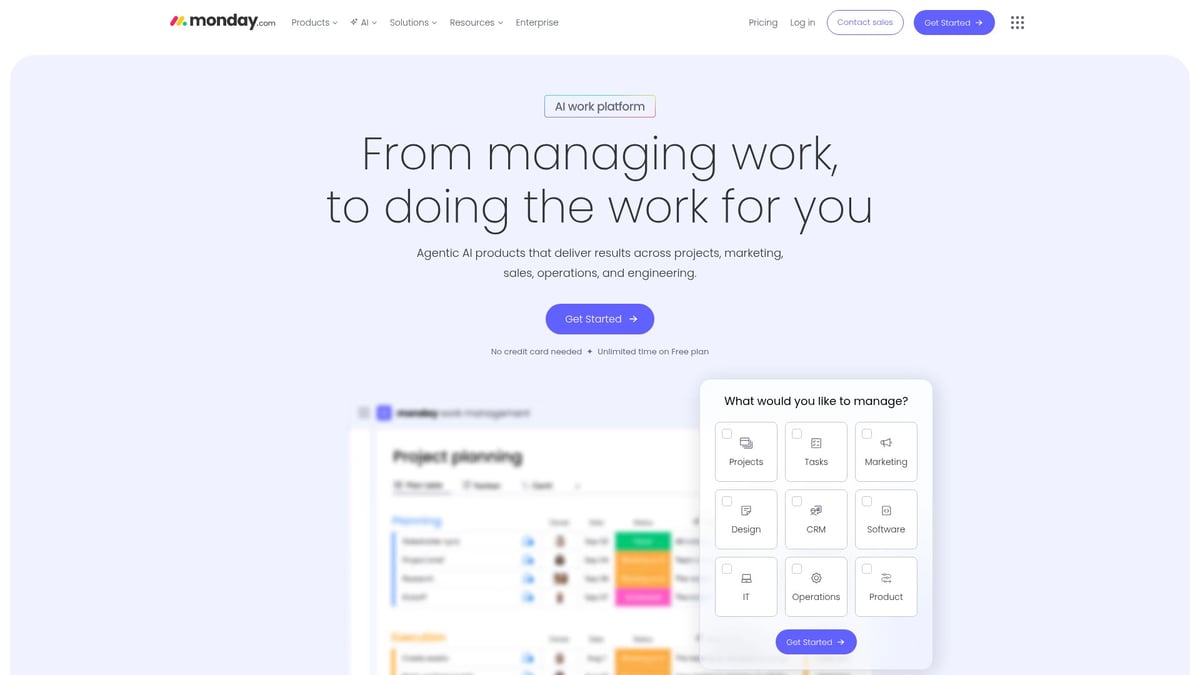
Monday.com Work OS redefines automation tools for business with its customizable workflow automation, project management features, and visual dashboards. Free plans are available, with paid options starting at $8/user/month.
Core features:
- Visual workflow builder
- Automation recipes for repetitive tasks
- Team collaboration and reporting
Monday.com serves teams of all sizes, including project managers, HR, and operations. Pros are its intuitive user interface, flexibility, and robust reporting. Some automations are limited to higher-tier plans, and the feature set can be overwhelming for new users.
Common use cases include project tracking, approval workflows, and automating recurring tasks. Monday.com’s automation tools for business enhance teamwork and productivity by keeping everyone aligned.
ActiveCampaign
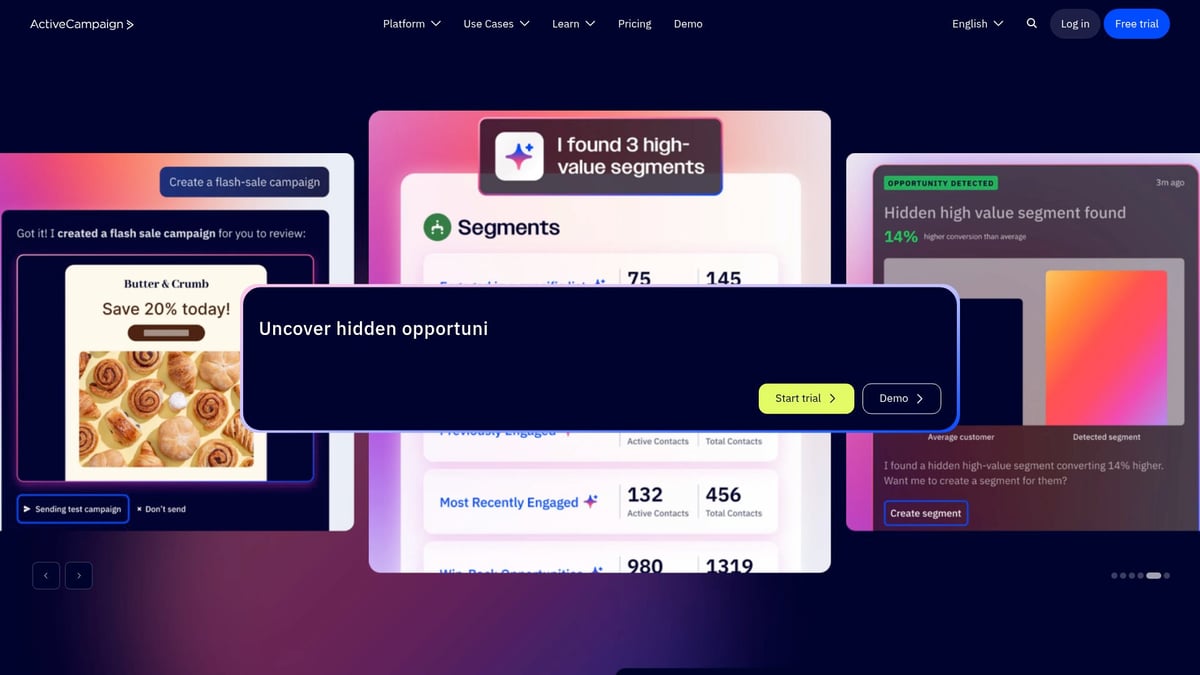
ActiveCampaign specializes in marketing and sales automation tools for business, starting at $29/month. It combines email marketing, CRM, and customer experience automation in one platform.
Key features:
- Advanced segmentation and dynamic content
- Multi-channel automation across email, SMS, and more
- Drip campaigns and customer journey mapping
ActiveCampaign is tailored for SMBs, e-commerce, and marketing teams. Its automation builder and deliverability are standout pros, though the interface can be complex and mastering advanced features may require time.
Use cases include abandoned cart recovery, personalized messaging, and nurturing leads. These automation tools for business help companies engage customers at the right moment, boosting retention and sales.
Make (formerly Integromat)
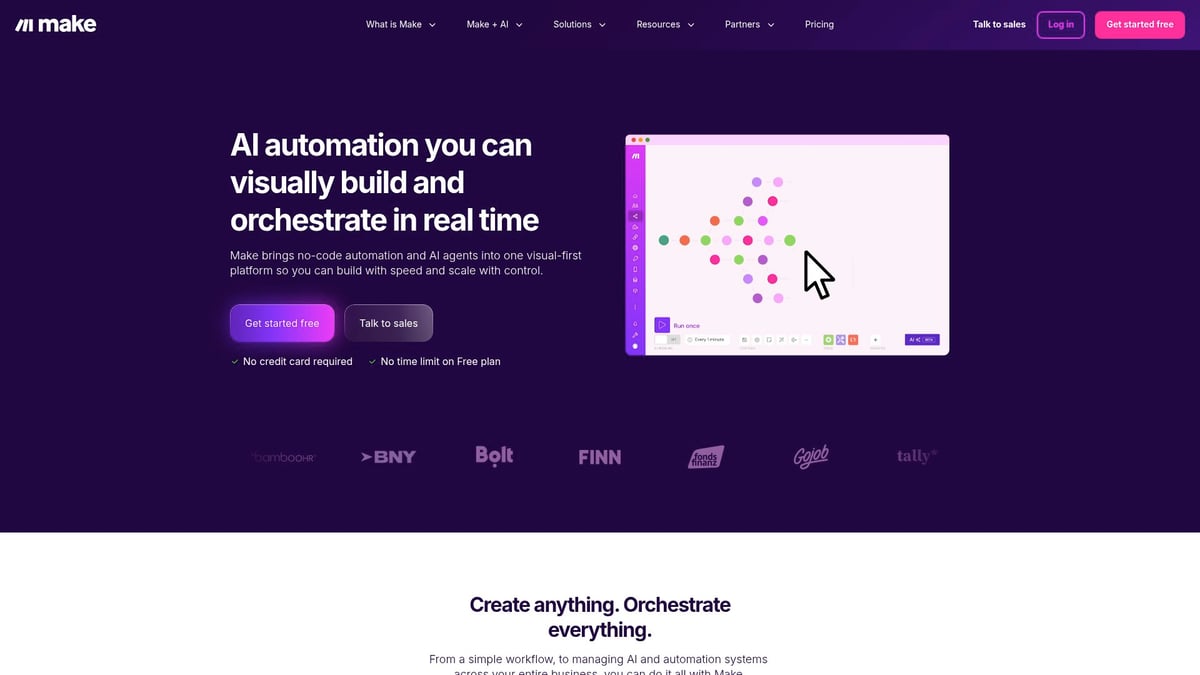
Make, formerly Integromat, is a top choice for tech-savvy users seeking advanced automation tools for business. With a free plan and paid options from $9/month, Make offers a visual scenario builder and connects over 1,000 apps.
Core features:
- Visual workflow automation
- Support for complex, multi-step logic
- Affordable pricing for SMBs
Make targets IT teams, automation specialists, and tech-forward SMBs. Pros include flexibility and detailed customization, while the platform can feel overwhelming for beginners and may require reference to documentation.
Common applications are data processing, app integrations, and automating multi-step business processes. Make’s automation tools for business enable deep process optimization and integration across platforms.
Salesforce Flow
Salesforce Flow brings no-code automation tools for business directly into the Salesforce ecosystem. Included with Salesforce Platform subscriptions, Flow automates CRM, sales, and service processes.
Key features:
- Deep integration with Salesforce CRM
- Multi-step business logic automation
- Scalable for large organizations
Salesforce Flow is ideal for Salesforce users across sales, service, and IT. Pros are seamless ecosystem integration and robust scalability, while non-Salesforce users may find adoption challenging.
Use cases include lead routing, case management, and approval processes. By leveraging these automation tools for business, companies can streamline operations and improve customer response times.
Trello Automation (Butler)
Trello Automation, powered by Butler, offers built-in workflow automation tools for business teams using Trello. Automation is included in paid plans from $5/user/month, with basic features available for free.
Core features:
- Rule-based triggers for board actions
- Scheduled commands and recurring checklists
- Task assignment automation
Trello Automation is tailored for small teams, project managers, and remote groups. Its pros are ease of setup and improved productivity, but advanced automation requires a paid plan and functionality is limited to Trello.
Typical use cases are recurring checklists, automated task assignments, and project tracking. These automation tools for business keep projects moving smoothly and reduce manual work.
Quick Comparison Table
| Tool | Best For | Pricing | Key Automation Area | Notable Pros |
|---|---|---|---|---|
| ToolStacked Custom Chatbot Services | SMBs, E-commerce | Custom | Customer Engagement | No-code, 24/7 support |
| Rippling | SMBs, Enterprises | Custom | HR, Payroll, IT | Unified data, integrations |
| Zapier | All sizes | Free/$19.99+ | Workflow, Apps | Vast ecosystem |
| HubSpot Automation | SMBs, Mid-market | $45+ | Marketing, Sales | All-in-one, analytics |
| UiPath | Enterprises | Free/Custom | RPA, Operations | Powerful, AI |
| Monday.com Work OS | Teams | Free/$8+ | Project, HR | Visual builder |
| ActiveCampaign | SMBs, E-commerce | $29+ | Marketing, CRM | Segmentation |
| Make | Tech-savvy SMBs | Free/$9+ | Workflow, Data | Customizable |
| Salesforce Flow | Salesforce users | Included | CRM, Sales | Deep integration |
| Trello Automation | Small teams | Free/$5+ | Task, Project | Easy setup |
For an expanded review of the most advanced AI-powered options, see this Best AI Automation Tools resource.
How to Select the Right Automation Tool for Your Business
Selecting the right automation tools for business can be transformative, but the process requires careful planning and assessment. With so many options available, understanding what to look for and how to implement these solutions is essential for lasting impact.
Key Evaluation Criteria
Before investing in automation tools for business, evaluate each solution against core criteria. Assess scalability to ensure the tool grows with your company. Integration is vital—confirm compatibility with current systems and apps. Ease of use matters, especially when no-code or low-code options are available. Prioritize security and compliance to protect sensitive data and meet regulatory standards.
Support and training resources should be readily available. For a deeper dive into strategic considerations, explore Automation Strategies for Business, which outlines best practices for identifying and deploying the right tools.
| Criteria | Why It Matters | Questions to Ask |
|---|---|---|
| Scalability | Grows with your business | Can this tool expand with us? |
| Integration | Works with existing systems | Does it support our tech stack? |
| Ease of Use | Reduces training time | Is it intuitive for all users? |
| Security | Protects company data | Is it compliant and robust? |
| Support | Smooth onboarding and help | Are resources and support strong? |
Steps to Implement Automation Successfully
Implementing automation tools for business starts with a clear assessment of needs and pain points. Engage stakeholders early to secure buy-in and align on objectives. Begin with a pilot project to test the tool in a controlled environment.
Monitor key performance indicators and measure ROI throughout the process. Scale gradually, adjusting workflows based on real feedback. Continuous optimization ensures the tool delivers ongoing value and drives business growth.
Common Mistakes to Avoid
Many organizations stumble by over-automating processes without defined goals. Avoid neglecting employee training, as resistance can hinder adoption. Always review security implications before rolling out new automation tools for business.
Failing to use analytics to refine and improve workflows can limit long-term benefits. Keep automation focused, user-centric, and adaptable to changing business needs.
Real-World Examples of Automation Success
Businesses adopting automation tools for business report significant gains. For instance, companies have saved hundreds of hours annually by automating repetitive tasks. Some organizations achieve 30 to 50 percent cost reductions after successful implementation.
Case studies highlight the value of starting small, involving teams in decision-making, and using data-driven insights to optimize. These lessons underscore that the right approach can turn automation into a true competitive advantage.
The Future of Automation: What to Expect Beyond 2026
As we look beyond 2026, automation tools for business will continue to transform how organizations operate, compete, and innovate. The pace of advancement is accelerating, making it essential for leaders to anticipate the next wave of change. Staying informed and adaptable will be key to leveraging future automation opportunities.
Emerging Technologies and Innovations
The future of automation tools for business is shaped by groundbreaking technologies. AI-driven decision-making is becoming more sophisticated, allowing systems to predict outcomes and optimize workflows. Voice and conversational interfaces are now integrated into daily business routines, streamlining how teams interact with data and customers.
Hyperautomation is a major trend, combining robotic process automation, AI, and machine learning for end-to-end process automation. According to Intelligent Automation market trends, adoption rates are rising as organizations seek fully integrated, intelligent solutions.
Key innovations include:
- Predictive analytics for smarter business decisions
- Automated virtual assistants handling complex queries
- Seamless integration with cloud and IoT platforms
These advancements ensure automation tools for business remain at the forefront of efficiency and adaptability.
Impact on Workforce and Business Models
As automation tools for business evolve, the workforce is experiencing a significant shift. Routine, repetitive tasks are increasingly handled by machines, freeing employees to focus on creative, strategic, and relationship-driven work. This transition is pushing businesses to invest in upskilling and reskilling programs to empower teams with new capabilities.
The rise of virtual teams and flexible business models is another outcome. Automation enables organizations to operate globally, breaking down traditional barriers and supporting diverse, distributed teams.
Employees benefit from more meaningful roles, while businesses gain agility and resilience. Automation tools for business are not just replacing tasks; they are redefining how companies grow and serve their markets.
Preparing Your Business for the Next Wave
To stay ahead, organizations must build a culture of continuous improvement and innovation. Investing in flexible, future-ready automation tools for business ensures adaptability as market needs evolve.
Preparation steps include:
- Regularly evaluating industry trends and regulatory updates
- Choosing platforms that support rapid integration and customization
- Prioritizing employee training and change management
Exploring resources like AI Tools for Small Business can help identify solutions tailored to diverse needs. Businesses that proactively prepare will be best positioned to harness the full potential of automation tools for business.
Key Takeaways for Business Leaders
Business leaders must recognize that automation tools for business are a strategic asset. Proactive adoption drives competitive advantage, but success depends on balancing technology with human-centric strategies.
Key actions include:
- Evaluating automation ROI and adjusting tactics as needed
- Fostering collaboration between IT and business units
- Maintaining a commitment to ongoing learning and process optimization
By continually assessing and adapting, organizations ensure that their automation tools for business deliver sustained value and support long-term growth.





3 Comments