Top 10 Best Tools for Solopreneurs to Succeed in 2026
The solopreneur landscape is rapidly changing in 2026, with more people than ever choosing to build thriving one-person businesses. Managing every aspect of a business alone can be overwhelming, leading many to seek smarter solutions.
Digital innovation has transformed what is possible for solopreneurs. AI assistants, automation platforms, and business management apps now give solo founders the power to stay organized, scale operations, and maintain balance.
Imagine freeing yourself from repetitive admin, streamlining client communication, and multiplying your productivity. The secret lies in selecting the best tools for solopreneurs—solutions designed to make solo businesses efficient and sustainable.
In this article, you will discover the top 10 best tools for solopreneurs to succeed in 2026. Learn about each tool’s features, pricing, benefits, and ideal use cases, so you can confidently build your ultimate solo business stack.
Why Solopreneurs Need Powerful Tools in 2026
The solopreneur revolution is in full swing. Driven by economic shifts, remote work, and the rapid evolution of technology, more professionals are building businesses of one. According to recent Rise of solopreneurship, the number of people choosing solo entrepreneurship is at a record high, making this an era defined by independence and innovation.
Yet, running a solo business is not without its hurdles. Solopreneurs must juggle every role: CEO, marketer, customer support, and finance manager. This constant switching between tasks can quickly lead to overwhelm and inefficiency. Without the best tools for solopreneurs, it's easy for deadlines to slip, information to scatter, and mental fatigue to set in.
Technology is fundamentally transforming how solopreneurs operate. Today, 99% of small businesses use some form of digital tool every day. Nearly 40% now rely on AI-powered platforms to automate tasks, boost productivity, and reduce costs. The best tools for solopreneurs enable everything from automated client communication to seamless invoicing, allowing solo founders to focus on growth rather than admin.
The benefits of leveraging the best tools for solopreneurs are significant. With the right solutions, entrepreneurs can automate repetitive tasks, gain time for strategic work, and achieve greater mental clarity. Workflows become scalable, supporting business growth without increasing stress. In fact, data shows that solopreneurs who use AI assistants and automation platforms can double their productivity and cut manual workload by 30 percent.
Choosing from the main categories below ensures coverage of all business needs:
| Tool Category | Purpose | Example Benefits |
|---|---|---|
| Productivity | Task management, planning | Time savings, clear priorities |
| Automation | Repetitive process automation | Reduced manual work |
| Finance | Invoicing, expense tracking | Financial clarity, tax prep |
| Communication | Client and team messaging | Faster response, professionalism |
| Marketing | Content creation, campaign management | Brand growth, lead generation |
| Customer Engagement | CRM, chatbots, support | Improved client satisfaction |
The risks of not adopting the best tools for solopreneurs are real: missed opportunities, burnout, and a scattered workflow. In contrast, those who invest in a modern tech stack enjoy a clear competitive edge. They deliver better client experiences, adapt quickly to change, and scale efficiently, proving that the right tools are not just helpful—they are vital to solo business success.
Top 10 Best Tools for Solopreneurs to Succeed in 2026
The landscape for solo founders is changing fast. To stay ahead, you need more than grit—you need the best tools for solopreneurs. The right digital toolkit saves you time, reduces stress, and helps you scale smarter. Here are the top 10 platforms every modern solopreneur should know in 2026.
ToolStacked
ToolStacked offers an all-in-one platform tailored for the best tools for solopreneurs. With AI business tools, custom chatbot services, and curated automation, it’s a one-stop hub for solo founders.
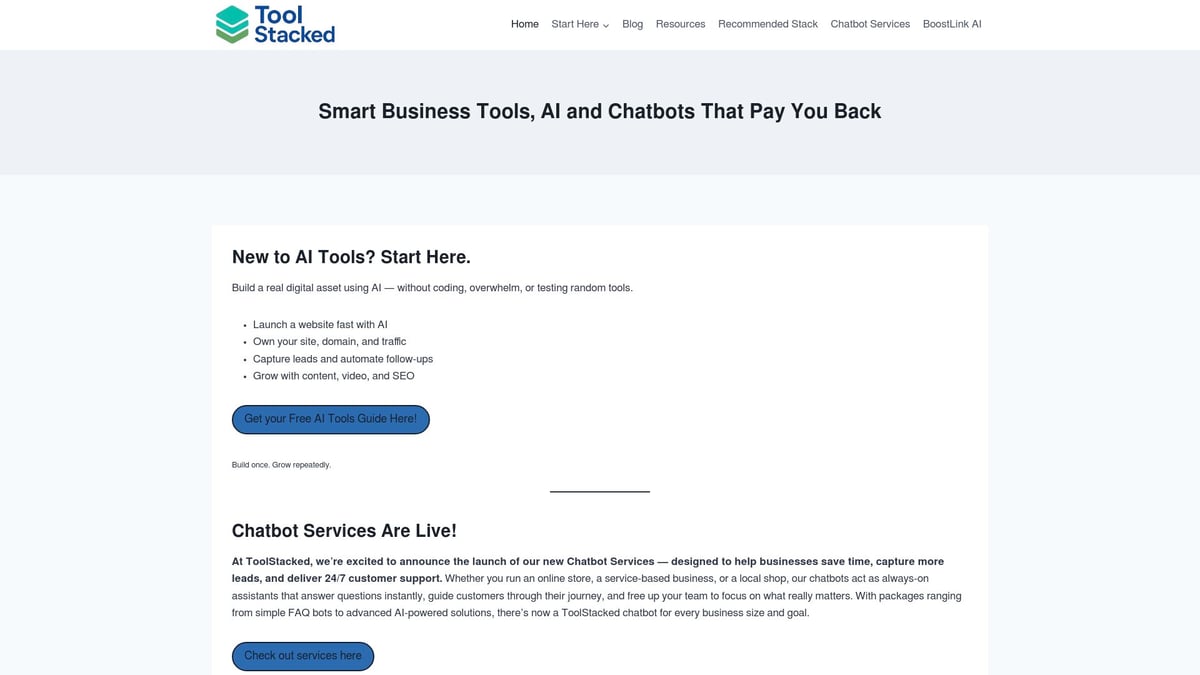
Pricing: Custom packages for chatbots and proprietary tools, plus curated third-party solutions with varied costs.
Core Features:
- AI-powered chatbot creation
- BoostLink AI for affiliate optimization
- Curated reviews of top business tools
- Educational resources for solopreneurs
Key Benefits:
Automate customer engagement, capture leads, and launch websites with no coding. ToolStacked helps you boost conversions and streamline workflows. If you want to explore more, check out their Best AI Tools for Business guide.
Pros:
- Beginner-friendly interface
- Combines proprietary and third-party tools
- Free AI tools guide
Cons:
- Advanced features may need custom setup
- Pricing for some tools not always transparent
Ideal Use Cases:
Those seeking the best tools for solopreneurs to automate support, optimize conversions, or select AI solutions with expert curation.
Saner.AI
Saner.AI is an ADHD-friendly productivity assistant. It centralizes notes, tasks, reminders, and documents, making it one of the best tools for solopreneurs who crave organization.
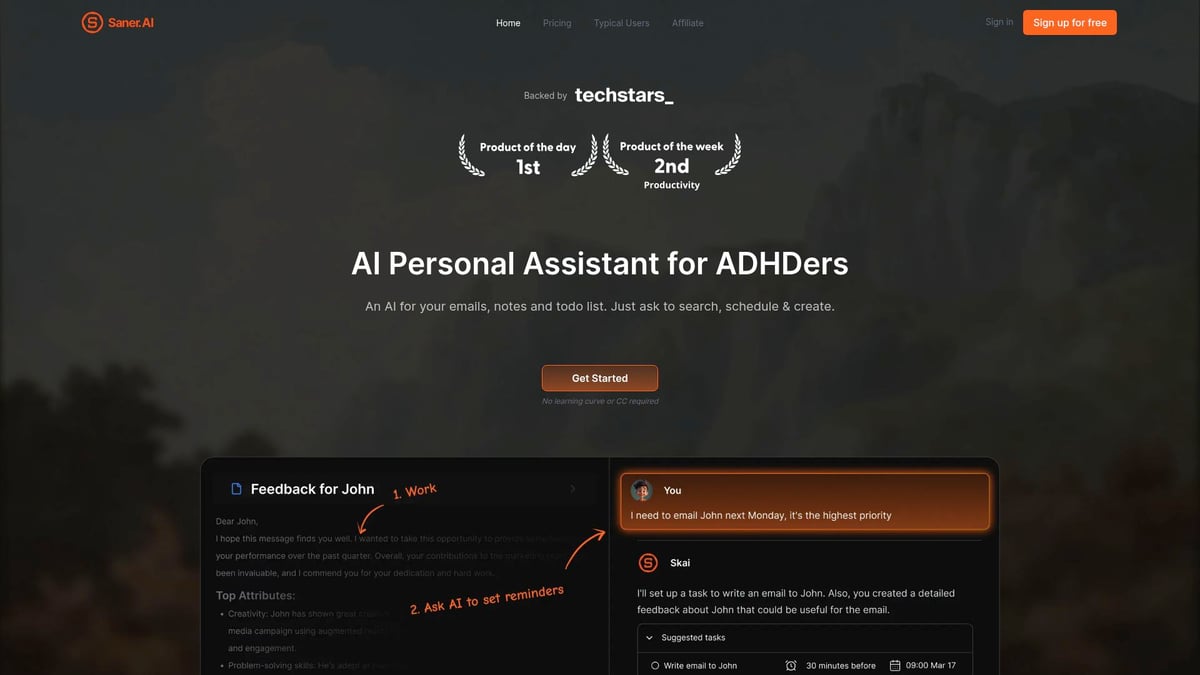
Pricing: Free plan; Starter $8/month; Standard $16/month (annual discounts).
Core Features:
- AI daily planner
- Smart task extraction from emails and notes
- AI-powered search
- Integrations with Google Drive and calendars
Key Benefits:
Cut through mental clutter and streamline your day. Saner.AI reduces context switching, giving you clarity and focus.
Pros:
- Clean, intuitive UI
- Multi-source import
- Auto-tagging for easy sorting
Cons:
- Not suited for complex project management
- Lacks team collaboration tools
Ideal Use Cases:
Perfect for solo founders who need one of the best tools for solopreneurs to act as their digital brain and keep daily chaos in check.
Flowlu
Flowlu is an all-in-one business management suite. It brings CRM, project management, invoicing, and automation into a single dashboard, making it a contender among the best tools for solopreneurs.
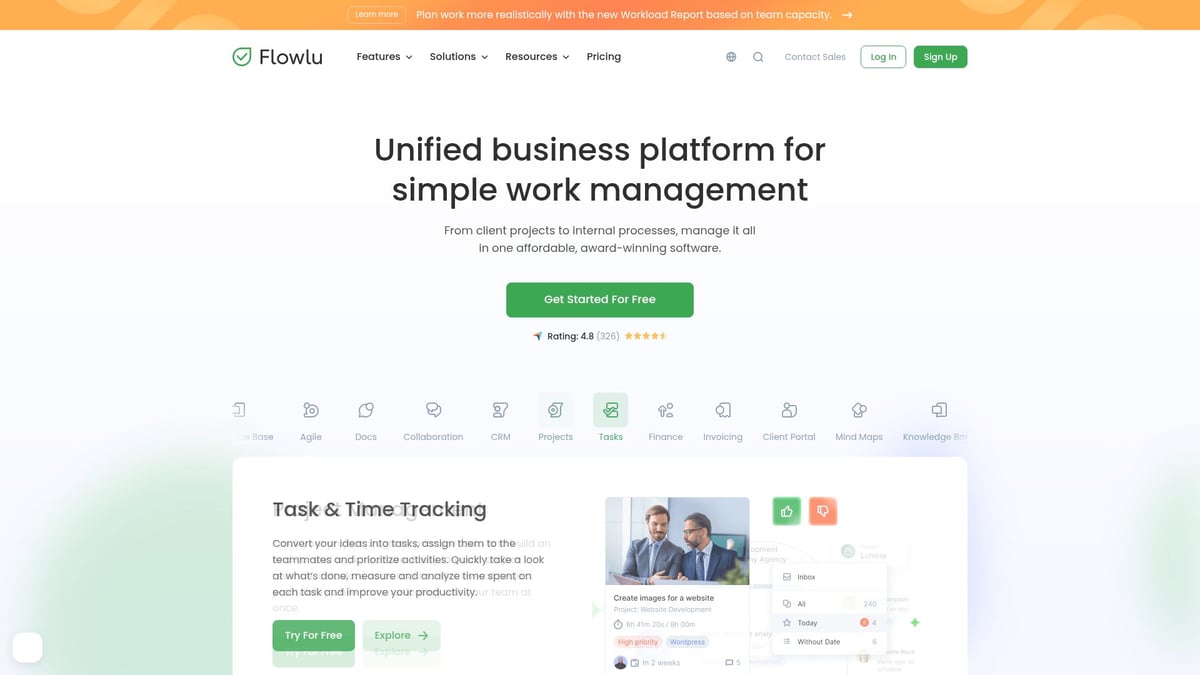
Pricing: Solo plan (2025) tailored for solo founders; other plans start at $9.50/month.
Core Features:
- Project tracking
- Lead management
- Workflow automation
- Financial monitoring
Key Benefits:
Centralize your business operations and scale as you grow. Flowlu saves time by reducing app-switching.
Pros:
- Modular design
- Affordable solo plan
- Strong automation and analytics
Cons:
- Steeper learning curve for advanced features
- Some integrations require extra setup
Ideal Use Cases:
A go-to for managing projects, finances, and clients with the best tools for solopreneurs in a unified space.
Canva
Canva is the drag-and-drop design platform that empowers non-designers. For marketing and branding, it’s among the best tools for solopreneurs to create visuals quickly.
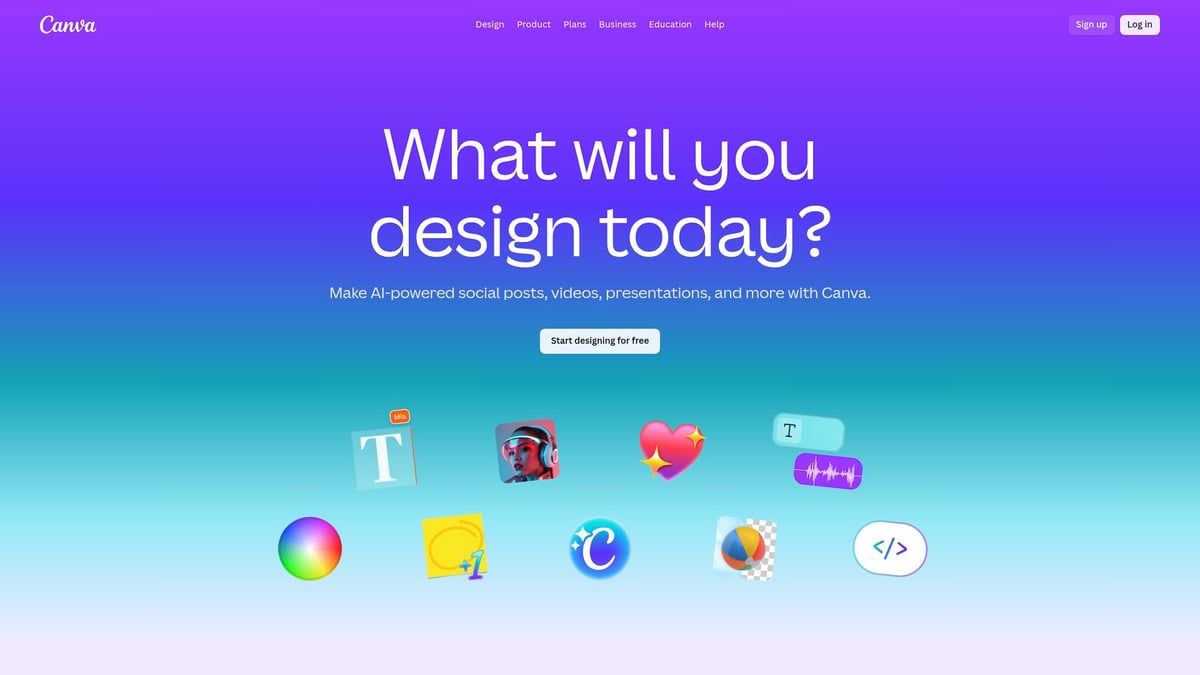
Pricing: Free plan; Pro $12.99/month; Teams $14.99/month (up to 5 users).
Core Features:
- Massive template library
- AI design tools
- Brand kits
- Visual suite (docs, whiteboards)
Key Benefits:
Produce professional marketing assets fast. Canva helps solopreneurs maintain brand consistency and saves precious hours.
Pros:
- Easy to use
- Integrates with other apps
- Supports brand guidelines
Cons:
- Advanced AI features require Pro plan
- Can overwhelm new users with options
Ideal Use Cases:
Creating social posts, pitch decks, and branded graphics with the best tools for solopreneurs, no design degree required.
QuickBooks
QuickBooks is the leading accounting solution for small businesses. For finance management, it stands out among the best tools for solopreneurs.
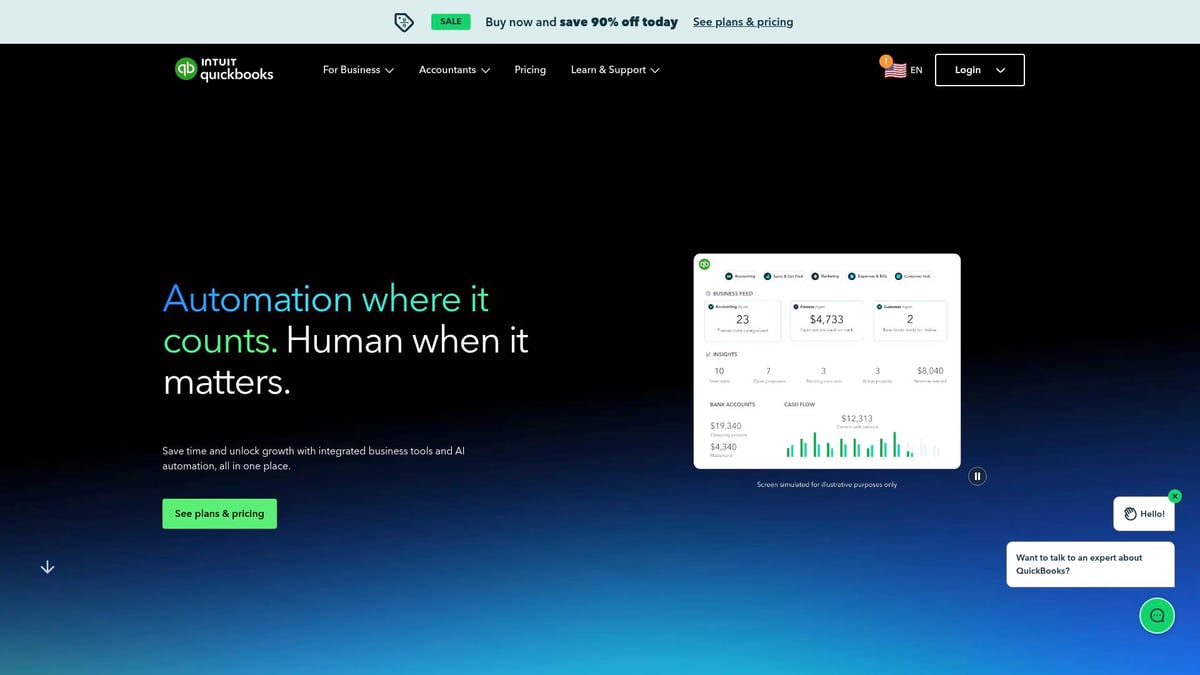
Pricing: Simple Start $9.50/month; Essentials $14/month; Plus $20/month; Advanced $38/month.
Core Features:
- Expense tracking
- Invoicing
- Tax reporting
- Financial analytics
Key Benefits:
Simplify your bookkeeping and tax prep. QuickBooks gives clear financial visibility, so you can make smart decisions.
Pros:
- Scalable for business growth
- Intuitive dashboards
- Strong reporting
Cons:
- Some features only in higher-tier plans
- Subscription required
Ideal Use Cases:
Managing business finances, invoicing, and taxes with one of the best tools for solopreneurs in the finance space.
Calendly
Calendly automates scheduling, ending the back-and-forth of booking meetings. As one of the best tools for solopreneurs, it ensures you never miss a connection.
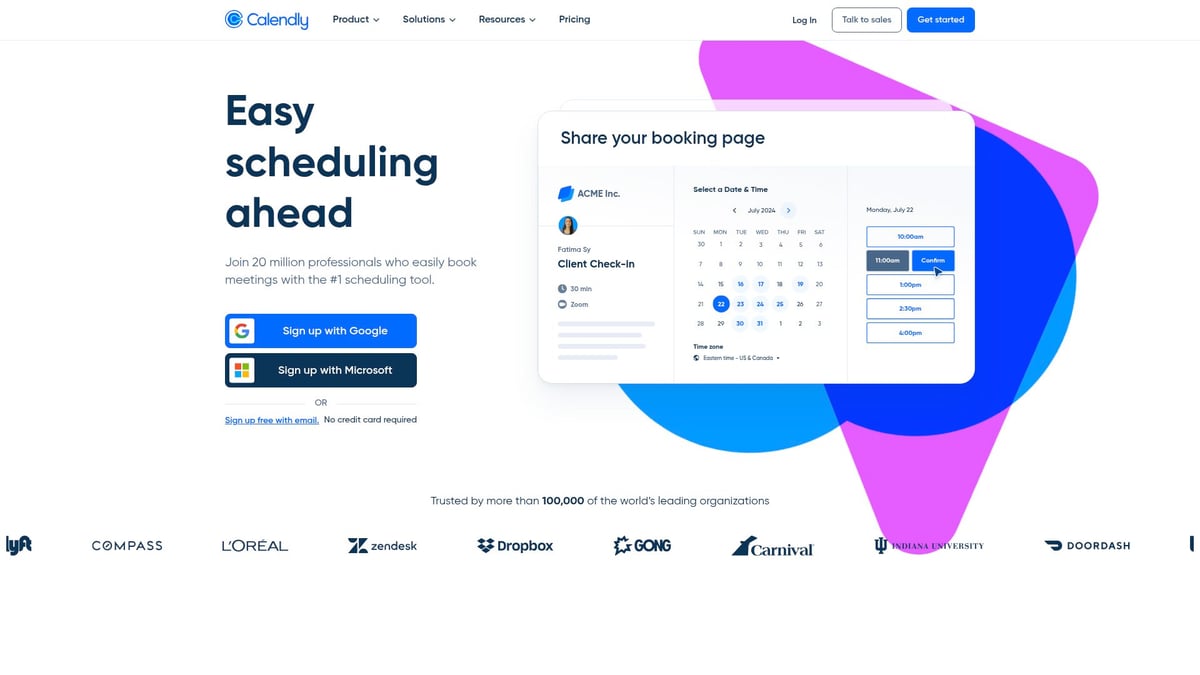
Pricing: Free (one event type); Standard $10/user/month; Teams $16/user/month.
Core Features:
- Link-based booking
- Custom event types
- Calendar sync
- Automated reminders
Key Benefits:
Streamline appointments and reduce no-shows. Calendly projects professionalism and saves admin time.
Pros:
- Easy setup
- Seamless client experience
- Reduces scheduling hassles
Cons:
- Free version is limited
- Lacks advanced conditional workflows
Ideal Use Cases:
Booking client calls and consultations with the best tools for solopreneurs to optimize time and efficiency.
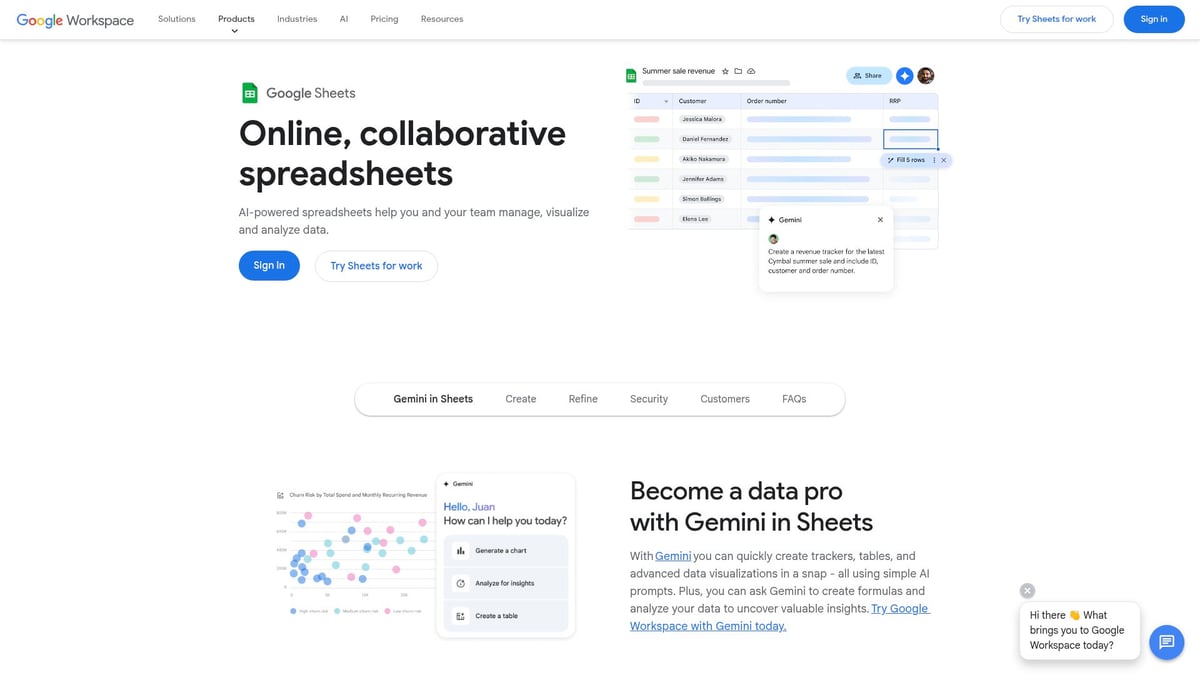
Google Sheets
Google Sheets is a free, cloud-based spreadsheet tool. Its flexibility makes it a staple among the best tools for solopreneurs who need to track everything.
Pricing: Free with a Google account.
Core Features:
- Real-time collaboration
- Custom formulas
- Data visualization
- Add-ons
Key Benefits:
Highly customizable and integrates with Google Workspace. Google Sheets adapts to your workflow without extra cost.
Pros:
- Versatile and extensible
- Collaborative in real time
- No subscription fees
Cons:
- Less visually polished by default
- Complex sheets may slow performance
Ideal Use Cases:
Using the best tools for solopreneurs to budget, track projects, or build simple CRMs.
ChatGPT
ChatGPT is a versatile AI assistant for writing, research, and brainstorming. It’s increasingly one of the best tools for solopreneurs who need to generate ideas and content.
Pricing: Free plan; Plus $20/month for GPT-4o and advanced features.
Core Features:
- AI writing and editing
- Deep research
- Custom GPTs
- Code generation
Key Benefits:
Save time creating content and solving problems. ChatGPT adapts to your unique business needs.
Pros:
- Wide range of applications
- Fast, accurate outputs
- Customizable for niches
Cons:
- Occasional factual errors
- Pro plan may be costly for light users
Ideal Use Cases:
Drafting emails, blog posts, and automating research with the best tools for solopreneurs in AI.
Stripe
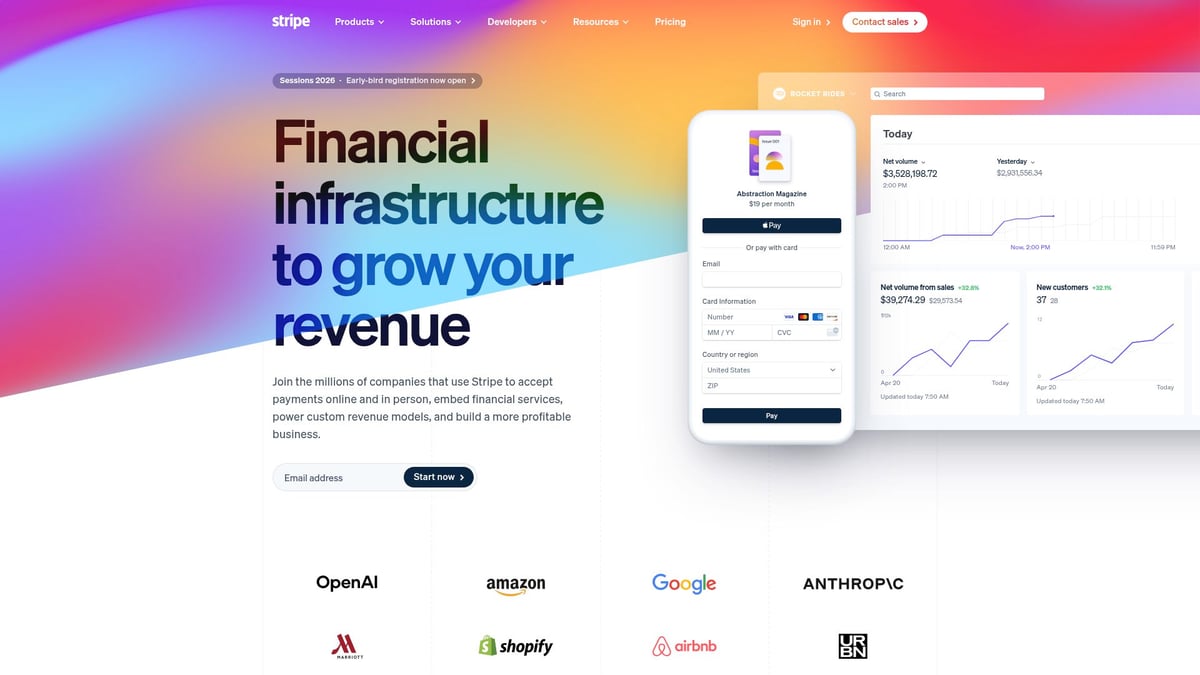
Stripe is the go-to platform for online payment processing. It stands out as one of the best tools for solopreneurs to manage payments and invoices.
Pricing: Usage-based (2.9% + 30¢ per charge), no monthly fee for core features.
Core Features:
- Payment checkout
- Invoicing
- Subscriptions
- Sales analytics
Key Benefits:
Professionalize your payment collection. Stripe supports recurring revenue and integrates with other tools.
Pros:
- Quick setup
- Secure, global reach
- Developer-friendly
Cons:
- Transaction fees apply
- Advanced workflows may need integration
Ideal Use Cases:
Accepting payments and managing subscriptions with the best tools for solopreneurs in e-commerce.
v0.dev
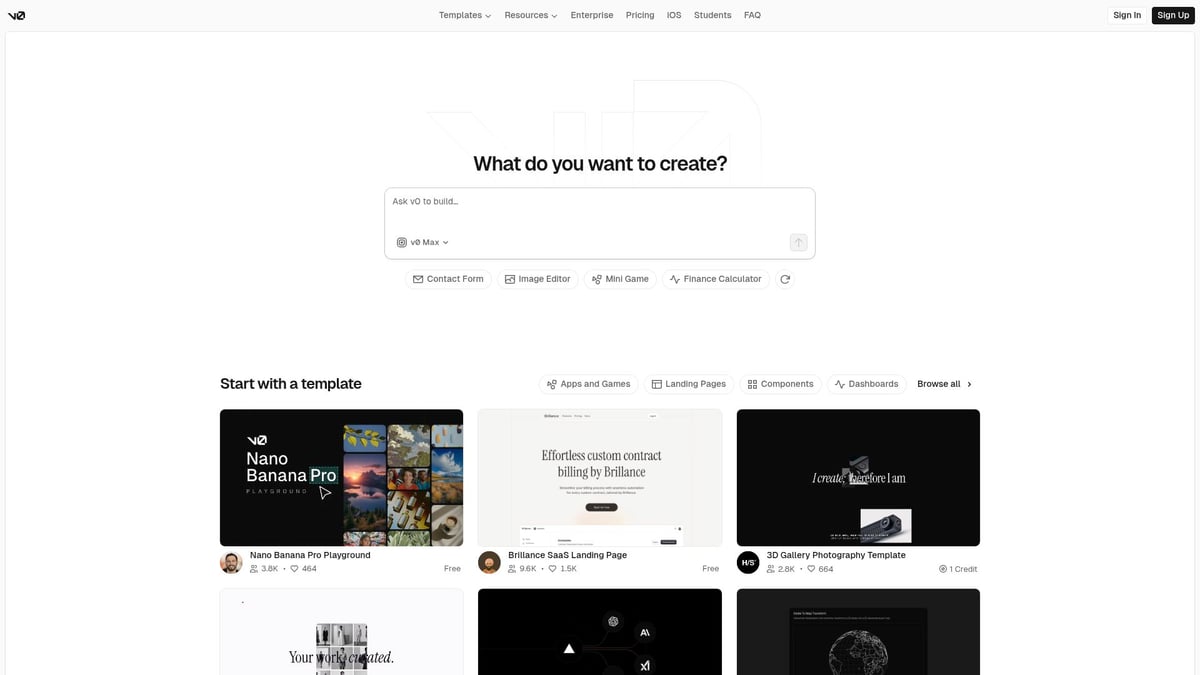
v0.dev is an AI-powered no-code builder for web apps and landing pages. It is among the best tools for solopreneurs seeking rapid digital launches.
Pricing: Free tier available; paid plans on website.
Core Features:
- Agentic reasoning
- Natural language UI builder
- Live code preview
- Vercel deployment
Key Benefits:
Launch web apps without coding. v0.dev enables fast prototyping and instant deployment.
Pros:
- Intuitive design
- Fast iteration
- Instant deployment
Cons:
- Not for enterprise-scale apps
- Advanced features require learning
Ideal Use Cases:
Building landing pages, MVPs, and portfolios with the best tools for solopreneurs who want a no-code solution.
How to Choose the Right Tools for Your Solo Business
Selecting the best tools for solopreneurs is a critical step in building a sustainable, scalable solo business. With so many platforms launching every year, it is easy to feel overwhelmed by choice. A structured approach makes all the difference, ensuring every tool you pick adds value, saves time, and fits your workflow.
Identify Your Needs
Begin by mapping out your daily operations and pinpointing bottlenecks. Are you spending too much time on admin, marketing, or invoicing? Defining your pain points helps you focus on the best tools for solopreneurs that address your unique challenges. For instance, if client communication is a hurdle, prioritize a platform that streamlines scheduling and messaging.
Break your workflow into categories: productivity, automation, finance, communication, marketing, and customer engagement. This clarity prevents tool overload and ensures you only invest in solutions that directly impact your goals.
Prioritize Integration and Workflow
Integration is essential for solopreneurs aiming to build seamless systems. Choose tools that sync with each other, allowing data to flow effortlessly between platforms. For example, integrating your CRM with invoicing and email automation reduces manual entry and the risk of errors.
Explore tools that offer native integrations or support for platforms like Zapier and Make. This enables you to automate repetitive tasks, freeing up time for client work. Reviewing curated resources, such as the Business Tools and Productivity Guides, can help you discover solutions that work well together and avoid common pitfalls.
Budget, Scalability, and User Experience
Balancing cost with value is crucial when selecting the best tools for solopreneurs. Start with free or affordable options that solve immediate needs, but be ready to invest in paid solutions that deliver a strong return on investment as your business grows.
Scalability matters. Choose platforms that offer flexible plans or modular features so you can expand capabilities without switching tools later. Prioritize intuitive interfaces to minimize the learning curve and maximize adoption, especially when you are the only operator.
Security and responsive support are non-negotiable. Look for platforms with robust data protection, transparent privacy policies, and accessible customer service. This ensures your business remains resilient and trustworthy as it scales.
Try Before You Commit
Free trials and live demos are invaluable when evaluating the best tools for solopreneurs. Test each platform with real tasks from your workflow before committing to a paid subscription. This hands-on approach reveals strengths and limitations that reviews may miss.
For example, a solopreneur using Flowlu for project management, Stripe for payments, and Canva for marketing visuals can automate essential processes, freeing up time for client delivery and strategic planning. This combination is just one way to build a stack that supports your ambitions without sacrificing efficiency or peace of mind.
The Future of Solopreneur Tools: Trends to Watch in 2026
The landscape for solo founders is changing rapidly. As we approach 2026, the best tools for solopreneurs are evolving to meet new challenges and opportunities. Staying ahead means understanding the trends shaping these solutions and how they impact day-to-day business.
AI-First Platforms Dominate
AI-powered assistants are now essential for the best tools for solopreneurs. These platforms help solo founders plan, write, automate, and even brainstorm. With machine learning at their core, they provide personalized recommendations, automate repetitive tasks, and reduce time spent on manual admin. This shift is supported by reports that businesses using AI assistants can cut administrative workload by up to 50 percent and boost productivity by 25 percent.
Rise of All-in-One Solutions
Tool fatigue is real. The best tools for solopreneurs in 2026 are increasingly bundled, offering CRM, project management, invoicing, and automation in one platform. This approach means fewer logins, less context switching, and more time focused on growth. Seamless integration between features ensures that business data stays connected and workflows remain efficient.
Seamless Automation With Low-Code and No-Code Tools
Automation is no longer reserved for tech experts. Low-code and no-code solutions empower solopreneurs to automate complex workflows without programming knowledge. These tools handle everything from onboarding new clients to sending follow-up emails, making the best tools for solopreneurs more accessible than ever. For a deeper dive into automation platforms that can transform solo businesses, see Automation Tools for Business.
Personalization and ADHD-Friendly Design
Another major trend is the rise of platforms built for neurodiverse users. In 2026, ADHD-friendly productivity assistants and tools that reduce cognitive overload are standard. Features like smart task extraction, automatic tagging, and visual planning interfaces help solopreneurs stay organized and focused, regardless of work style.
Globalization and Seamless Payments
The best tools for solopreneurs now support global business. Payment processors and collaboration apps make it easy to work with clients and partners across borders. Features like multi-currency support and real-time translation help solo founders tap into worldwide opportunities, fueling further growth in the solopreneur business model as highlighted in Solopreneur business model growth.
Data-Driven Decision-Making
Analytics and reporting are no longer optional. The best tools for solopreneurs offer dashboards that turn data into actionable insights. Solopreneurs can track performance, measure ROI, and adjust strategies with confidence, leading to smarter, faster business decisions.
Community and Education
Modern platforms prioritize community and learning. The best tools for solopreneurs provide access to guides, templates, and peer support, ensuring users get the most value. This focus on education accelerates adoption and empowers solo founders to master new technologies quickly.
Looking ahead, solopreneurs who embrace these trends and invest in the best tools for solopreneurs will be positioned for growth, resilience, and success in 2026 and beyond.