9 Essential AI Tools That Automate Business in 2026
AI is transforming how businesses operate, with automation adoption set to skyrocket by 2026. As organizations race to improve efficiency, cut costs, and scale faster, the demand for ai tools that automate business has never been higher. In this article, we reveal nine essential AI solutions that are driving the next wave of automation, each offering unique features and real-world benefits. From customer service to marketing, workflow automation, and analytics, these tools are reshaping the business landscape. Ready to discover which innovations can elevate your operations and secure your competitive edge?
Why AI Automation Is Critical for Business Success in 2026
The Acceleration of Digital Transformation
In the wake of the pandemic, businesses have rapidly adopted digital solutions to stay competitive. Remote work has become the norm, pushing organizations to rethink traditional workflows and embrace new technologies. This shift has highlighted the importance of ai tools that automate business operations, allowing teams to focus on higher-value tasks.
AI plays a central role in streamlining processes and minimizing manual workloads. By integrating automation platforms, companies can handle routine tasks more efficiently. According to Gartner, over 70 percent of businesses now consider automation a top priority for growth and resilience.
Cost Savings and Efficiency Gains
Companies are under constant pressure to optimize expenses and increase output. Ai tools that automate business workflows have emerged as powerful solutions for cutting operational costs and boosting productivity. These tools can handle repetitive tasks, reduce human error, and free up employee time for strategic initiatives.
For example, organizations using AI-driven automation have reported saving millions annually in labor and process costs. As highlighted by McKinsey, automation can reduce business expenses by up to 35 percent. This significant impact makes AI adoption a smart investment for businesses of all sizes.
Enhanced Customer Experience and Engagement
Customer expectations are higher than ever, with demand for instant, personalized support around the clock. Ai tools that automate business interactions, such as chatbots and recommendation engines, enable organizations to deliver seamless service at scale. These technologies provide fast responses, tailored suggestions, and consistent follow-up.
Retailers leveraging AI-powered chatbots now resolve up to 80 percent of customer queries instantly. This not only boosts satisfaction but also allows human agents to focus on complex issues. For those seeking more options, the Best AI Tools for Business page offers a curated list of solutions for enhancing customer engagement.
Competitive Advantage and Scalability
As automation technology evolves, staying ahead requires more than just basic implementation. Businesses using ai tools that automate business processes can scale operations quickly without a proportional increase in staff. This agility is crucial in fast-changing markets.
Falling behind competitors who adopt advanced automation can threaten long-term success. Choosing the right AI strategies helps organizations future-proof their operations, ensuring they remain adaptable and efficient as new challenges arise.
9 Essential AI Tools That Automate Business in 2026
The landscape of ai tools that automate business is rapidly evolving, with new platforms transforming operations across every industry. In this curated list, you will discover nine standout solutions shaping business automation in 2026. Each tool brings unique strengths, from customer service chatbots to workflow automation and AI-powered analytics. For a comprehensive overview of additional automation platforms and their business applications, see the Automation Tools for Business Guide.
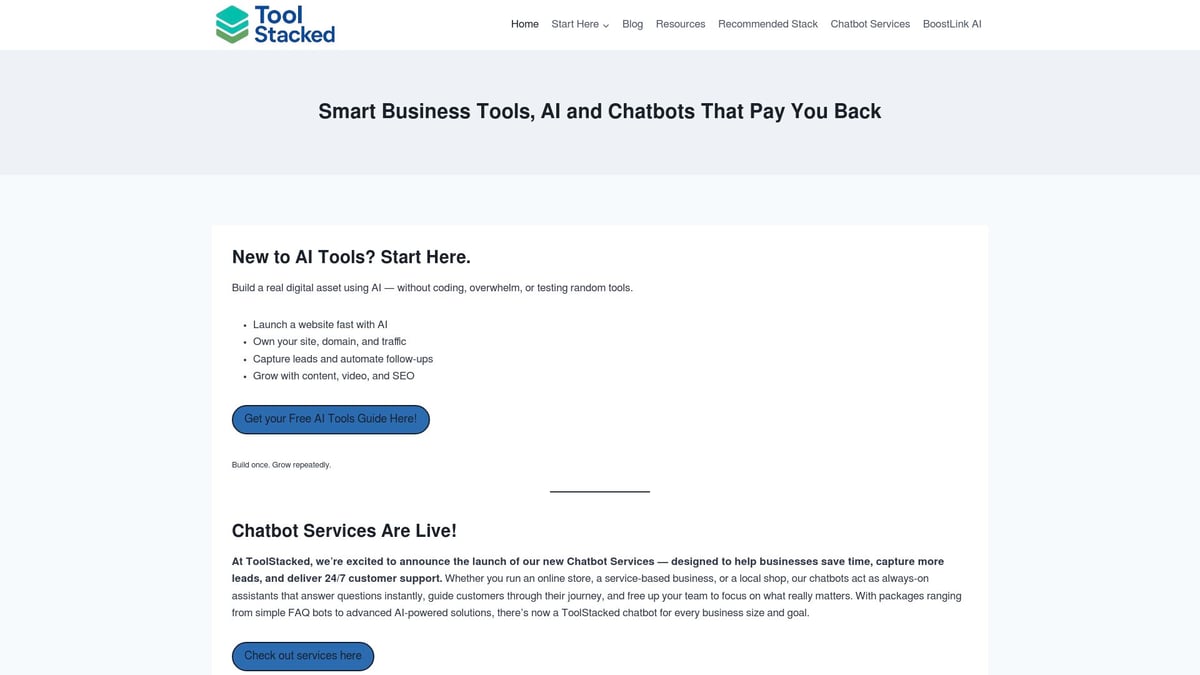
ToolStacked: AI Chatbot & Automation Platform
ToolStacked is a central player among ai tools that automate business, offering a custom suite for entrepreneurs and SMBs. Its pricing is flexible, providing tailored packages for businesses of any size, ensuring accessibility.
Core Features:
- Custom AI chatbots for instant customer support
- Lead capture and affiliate link optimization with BoostLink AI
- Curated SaaS recommendations and educational resources
Key Benefits:
- No coding skills needed
- Rapid deployment of automation solutions
- Industry-specific templates for diverse use cases
Unique Selling Points:
- Combines proprietary automation with expert-curated tool suggestions
- Extensive educational content to upskill teams
Target Audience: Entrepreneurs, affiliate marketers, small businesses, and non-technical users.
Pros:
- All-in-one automation hub
- Beginner-friendly interface
- Responsive support team
Cons:
- Pricing details require consultation
- Some advanced features may need professional setup
Ideal Use Cases: Automating customer service, boosting lead generation, increasing website engagement—a pivotal addition to any list of ai tools that automate business.
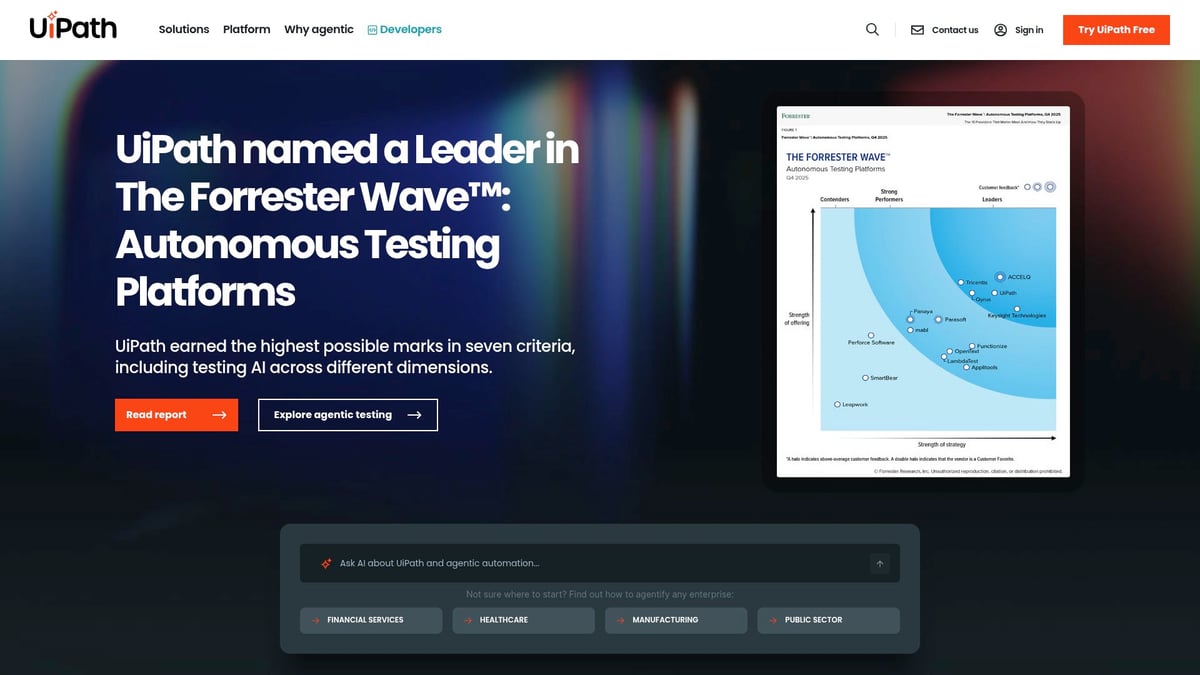
UiPath: Robotic Process Automation
UiPath stands out in the field of ai tools that automate business by streamlining complex back-office tasks. Its tiered pricing and free trial allow organizations to scale as needed.
Core Features:
- Drag-and-drop workflow builder
- AI-powered bots for repetitive processes
- Seamless integration with major business applications
Key Benefits:
- Reduces manual errors
- Automates high-volume business processes
- Delivers measurable ROI
Unique Selling Points:
- Industry leader in robotic process automation (RPA)
- Large, active community for support
Target Audience: Enterprises, finance, HR, and IT departments.
Pros:
- Flexible automation for diverse workflows
- Enterprise-level security
Cons:
- Steep learning curve for complex automations
- Higher cost for advanced features
Ideal Use Cases: Invoice processing, onboarding, and data migration—making UiPath a top choice among ai tools that automate business.
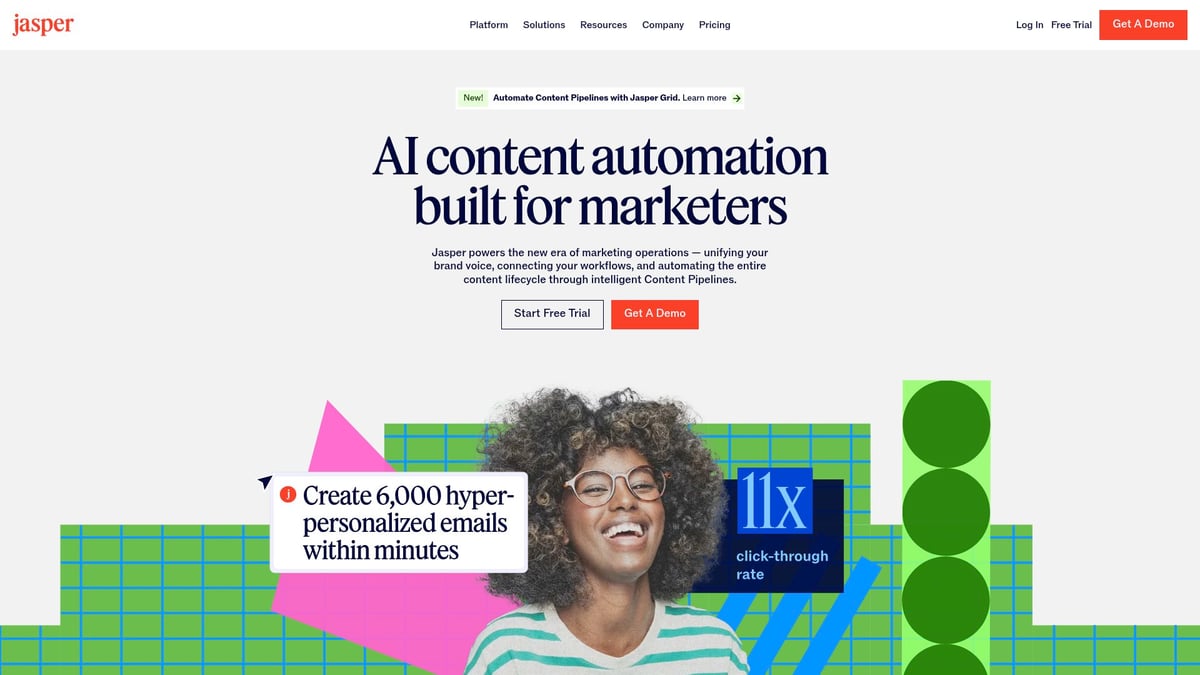
Jasper AI: Content Generation
Jasper AI exemplifies the new generation of ai tools that automate business content creation. With subscription pricing starting at $49/month, it fits both small teams and large enterprises.
Core Features:
- AI-powered copywriting and content generation
- Support for multiple languages
- Collaborative workspace for teams
Key Benefits:
- Scales content production efficiently
- Enhances SEO with optimized copy
- Maintains consistent brand messaging
Unique Selling Points:
- Leading natural language processing capabilities
- Integrates seamlessly with SEO platforms
Target Audience: Marketing agencies, content creators, SMBs.
Pros:
- Saves significant time on writing tasks
- Improves content quality
Cons:
- Occasional need for human review
- Users must learn prompt optimization
Ideal Use Cases: Website copy, ad campaigns, and email marketing—solidifying its place among ai tools that automate business processes.
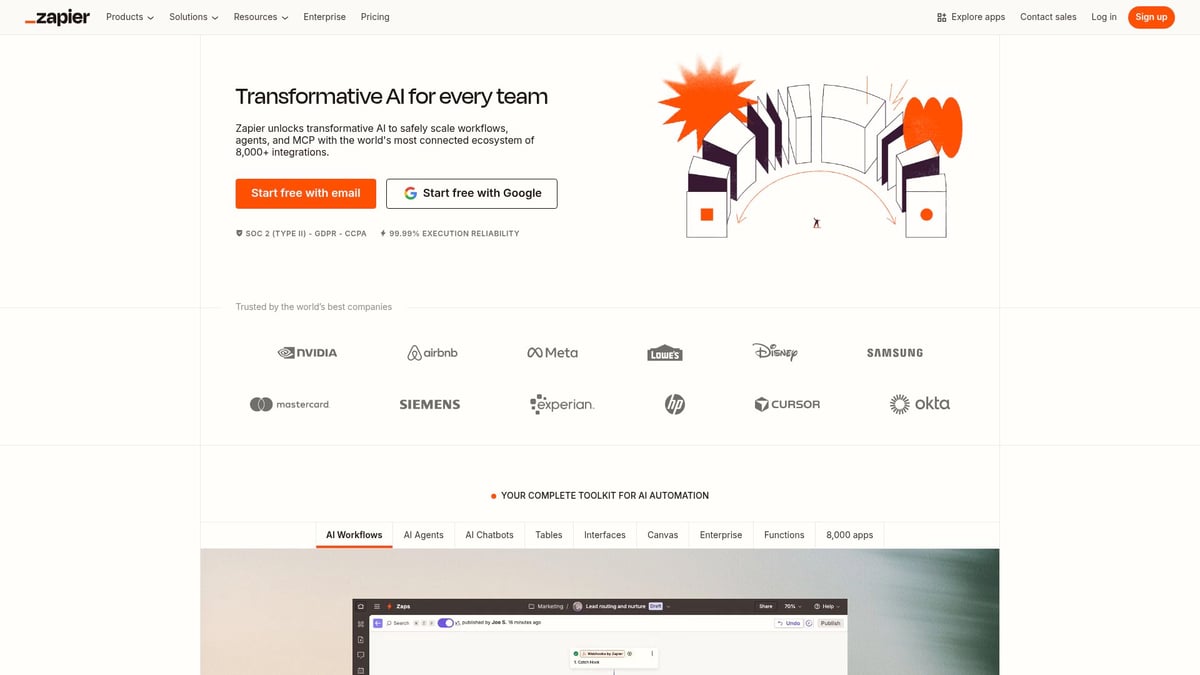
Zapier: Workflow Automation
Zapier has become synonymous with ai tools that automate business workflows. Its free and affordable plans enable any business to connect thousands of apps without code.
Core Features:
- Connects 6,000+ applications
- Automates multi-step workflows
- No-code interface for quick setup
Key Benefits:
- Reduces manual data entry
- Enhances productivity by integrating disparate systems
- Streamlines repetitive tasks
Unique Selling Points:
- Massive app ecosystem
- Extensive documentation and support
Target Audience: SMBs, solopreneurs, marketers.
Pros:
- User-friendly platform
- Broad compatibility
Cons:
- Limited advanced logic in lower tiers
- Depends on third-party API stability
Ideal Use Cases: Lead management, notifications, data syncing—making Zapier a leader among ai tools that automate business.
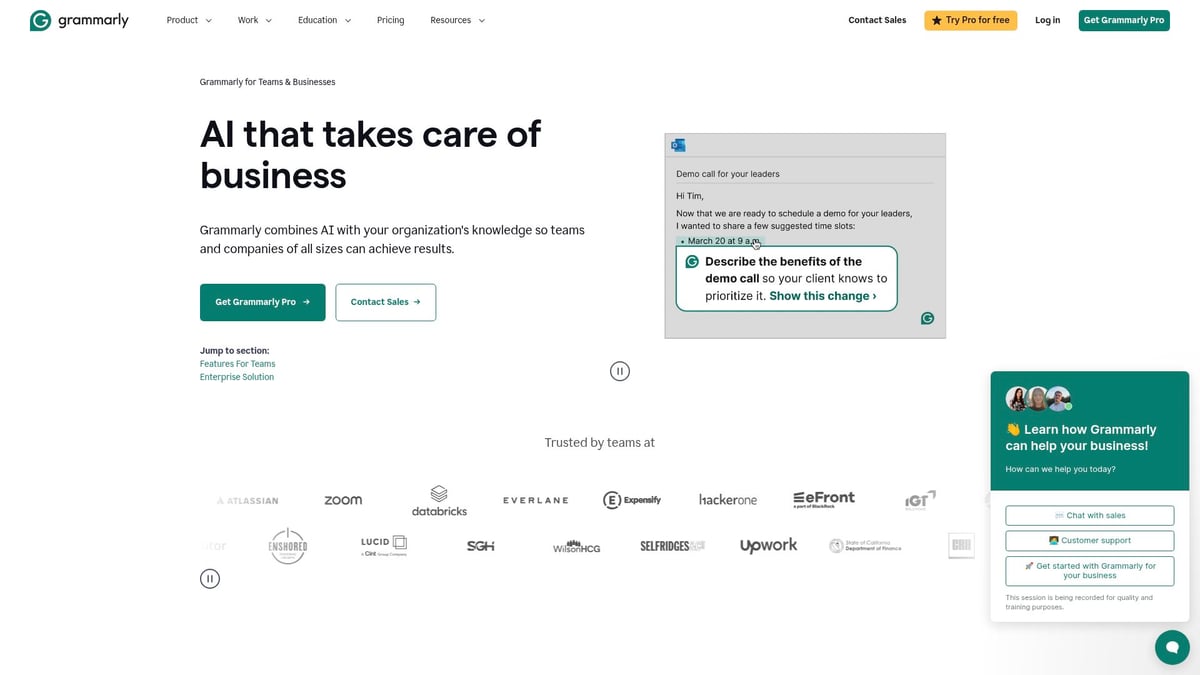
Grammarly Business: AI Writing Assistant
Grammarly Business redefines communication standards as one of the premier ai tools that automate business writing. Starting at $15/user/month, it delivers real-time language support for teams.
Core Features:
- Grammar checking and tone analysis
- Plagiarism detection
- Style guide enforcement
Key Benefits:
- Improves communication clarity
- Reduces editing workload
- Maintains consistent brand voice
Unique Selling Points:
- Advanced AI for language analysis
- Centralized admin controls for teams
Target Audience: Enterprises, marketing, HR, customer support.
Pros:
- Seamless integration with business apps
- Boosts professionalism and productivity
Cons:
- Occasional false alerts
- Limited industry-specific customization
Ideal Use Cases: Internal communications, client proposals, marketing collateral—demonstrating the value of ai tools that automate business communication.
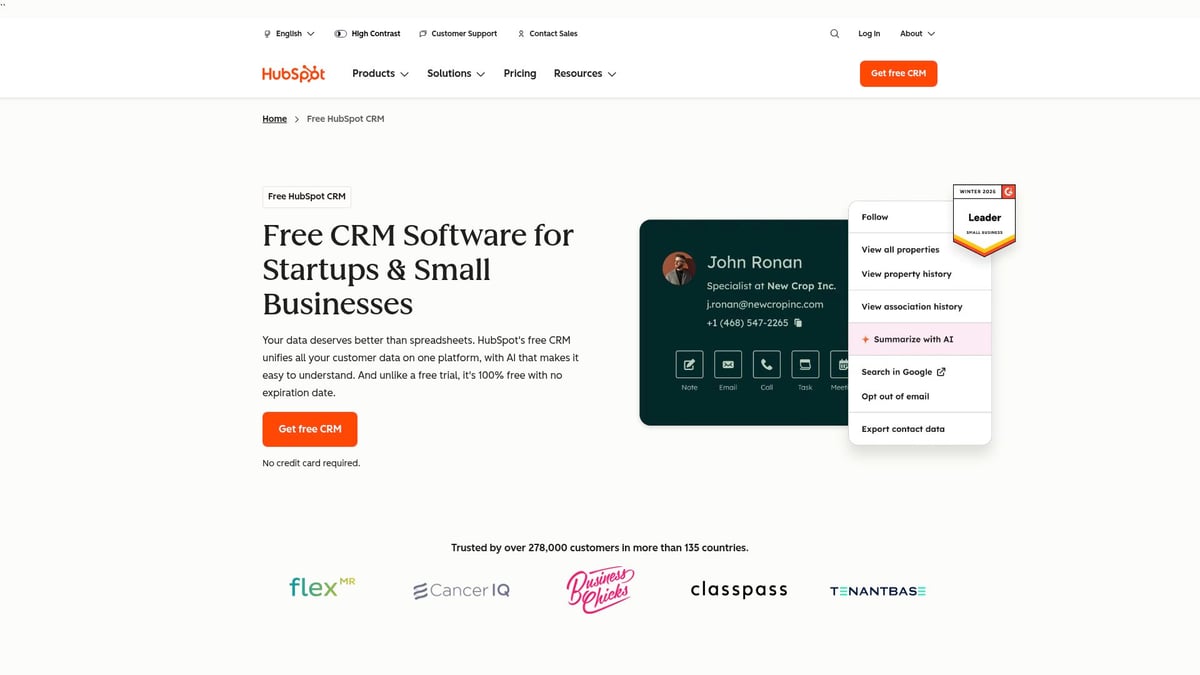
HubSpot AI: CRM & Marketing Automation
HubSpot AI is a cornerstone among ai tools that automate business marketing and sales. Its free CRM and paid marketing suite bring enterprise-level features to SMBs and professionals.
Core Features:
- AI-driven lead scoring and segmentation
- Automated email campaigns and chatbots
- Analytics dashboard for performance tracking
Key Benefits:
- Centralizes customer data for holistic management
- Automates marketing workflows
- Drives higher sales conversions
Unique Selling Points:
- All-in-one platform with rich analytics
- Strong integration ecosystem
Target Audience: SMBs, sales, and marketing teams.
Pros:
- Intuitive user interface
- Scalable solutions for growing businesses
Cons:
- Add-ons can increase costs
- Some features require higher-tier plans
Ideal Use Cases: Lead nurturing, customer segmentation, and pipeline automation—showcasing the power of ai tools that automate business growth.
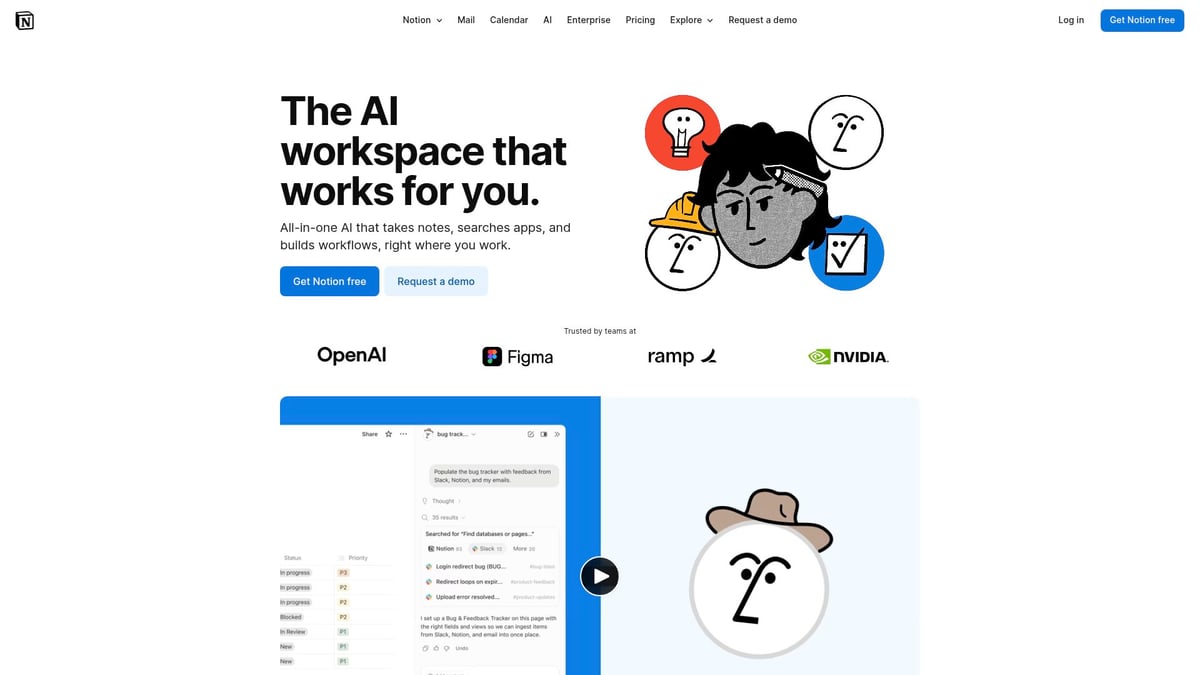
Notion AI: Productivity & Knowledge Management
Notion AI is making waves as one of the most flexible ai tools that automate business documentation and team collaboration. Its AI features start at $10/month/user, with a free basic plan for individuals.
Core Features:
- AI-powered note-taking and summarization
- Task automation and database management
- Intelligent search and insights
Key Benefits:
- Centralizes company knowledge
- Automates repetitive documentation
- Enhances collaboration across teams
Unique Selling Points:
- Highly customizable workspace
- Continuously updated with new automation features
Target Audience: Project managers, startups, remote teams.
Pros:
- Adaptable to various workflows
- Collaborative environment
Cons:
- Can be overwhelming for new users
- Some AI features require upgrade
Ideal Use Cases: Project planning, knowledge base creation, meeting summaries—making Notion AI an essential entry in ai tools that automate business.
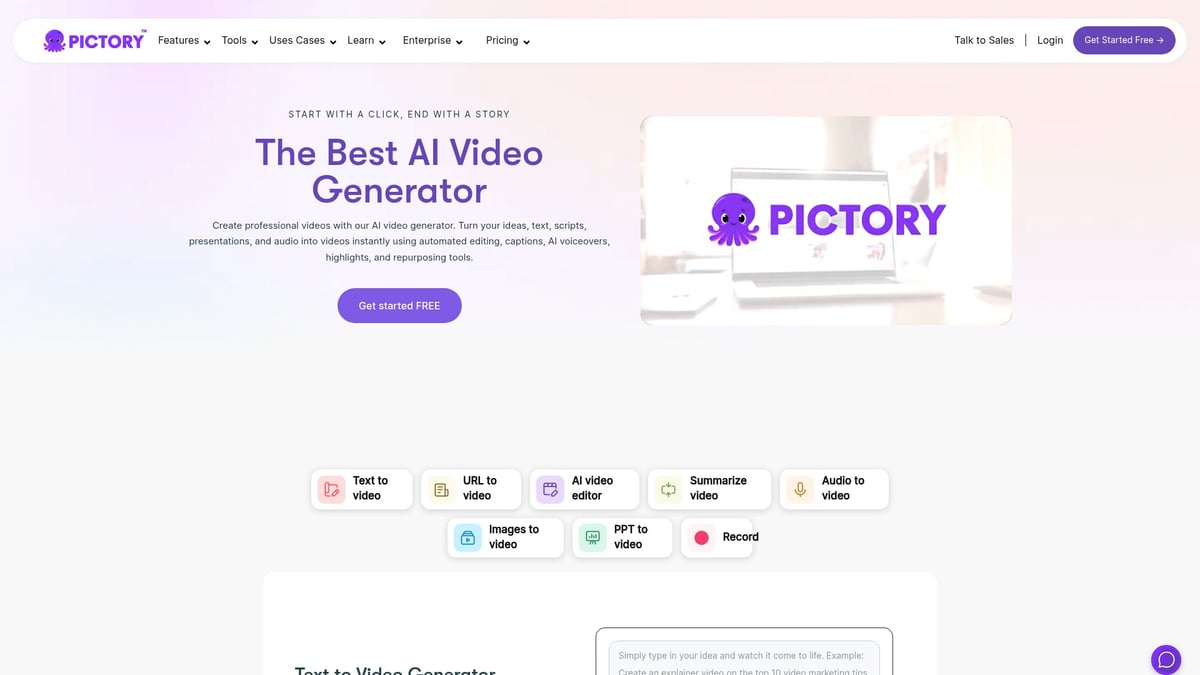
Pictory: AI Video Automation
Pictory is a leader among ai tools that automate business video content. With plans starting at $19/month, it empowers marketers and educators to create videos at scale.
Core Features:
- Converts written content into engaging videos
- Auto-captioning and highlight extraction
- Stock media integration for rapid production
Key Benefits:
- No video editing skills required
- Bulk processing capabilities
- Enhances marketing and training materials
Unique Selling Points:
- Automated video summaries
- Brand templates for consistency
Target Audience: Marketers, educators, HR teams.
Pros:
- Saves time on content creation
- Affordable entry point
Cons:
- Limited advanced editing options
- Branding visible in lower-tier plans
Ideal Use Cases: Social media videos, explainer content, training modules—showcasing how ai tools that automate business can drive engagement.
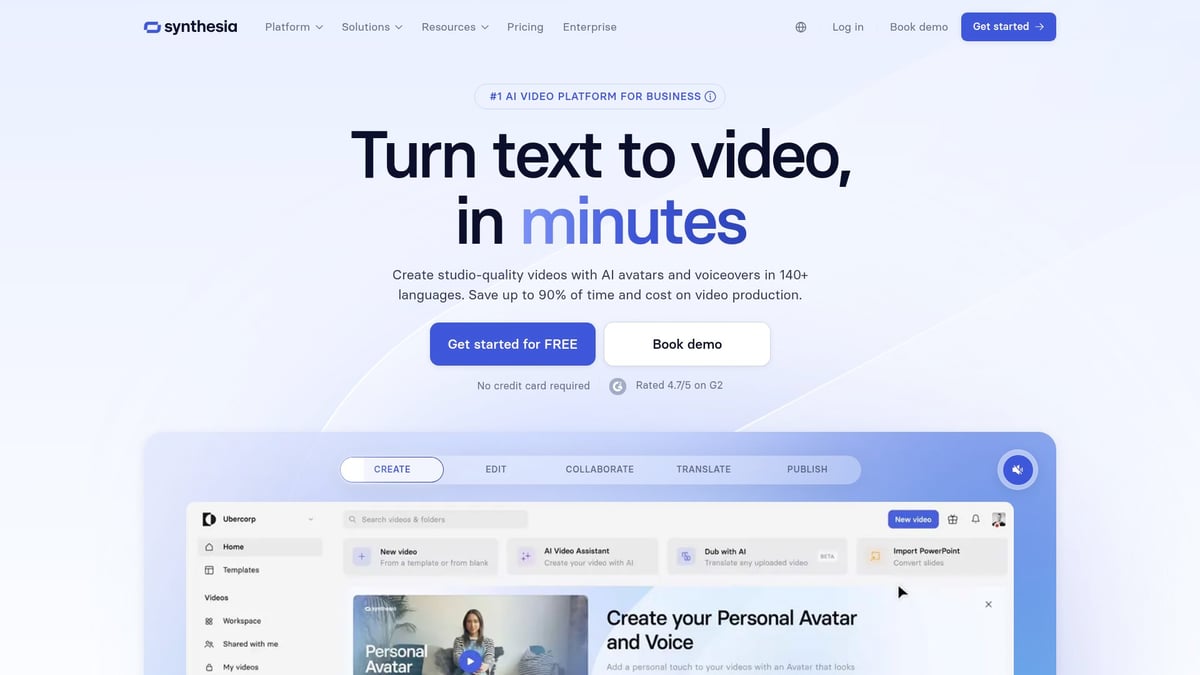
Synthesia: AI Video Avatars
Synthesia is transforming video production as one of the most advanced ai tools that automate business communication. Personal plans start at $30/month, scaling for enterprise needs.
Core Features:
- AI-generated video avatars for presentations
- Multilingual support for global reach
- Script-to-video automation
Key Benefits:
- Rapid, scalable video production
- Human-like avatars for professional content
- Effortless localization
Unique Selling Points:
- Realistic, customizable avatars
- Supports over 120 languages
Target Audience: Enterprises, HR, training, marketing.
Pros:
- Professional-quality results
- Significant time savings
Cons:
- Limited customization for avatars
- Higher cost for premium features
Ideal Use Cases: Employee onboarding, product demos, global marketing—proving the impact of ai tools that automate business communication and training.
These nine ai tools that automate business represent the forefront of automation in 2026. Each brings specialized capabilities for streamlining workflows, enhancing customer engagement, and scaling operations efficiently. As technology advances, adopting the right mix of these tools will be pivotal for companies seeking to stay competitive and innovative.
How to Choose the Right AI Tools for Your Business in 2026
Selecting the right ai tools that automate business is a strategic process that can directly impact your company's growth, efficiency, and profitability. The abundance of automation platforms in 2026 makes it essential to evaluate your options methodically. By focusing on your objectives, integration needs, scalability, and ROI, you can confidently invest in solutions that align with your vision.
Assessing Business Needs and Goals
Begin by defining your business’s automation objectives and unique pain points. Not all ai tools that automate business serve the same purpose, so clarity in your goals is crucial. For example, a retail company may prioritize customer engagement and inventory automation, while a SaaS provider might focus on workflow optimization and content generation.
To guide your assessment:
- List current challenges and tasks that require automation.
- Identify processes with repetitive manual work.
- Consider future growth and market expansion needs.
Many SMEs face different hurdles compared to large enterprises, such as resource constraints and staff expertise. Reviewing the AI adoption by SMEs report can provide insight into sector-specific challenges and trends, helping you set realistic priorities.
Evaluating Integration and Compatibility
Ensuring seamless integration is a cornerstone for implementing ai tools that automate business. A tool’s value diminishes if it doesn’t work with your existing tech stack. Before deciding, audit your current systems, including CRM, ERP, marketing platforms, and communication tools.
Key considerations include:
- Does the tool offer robust APIs or workflow connectors?
- Are there pre-built integrations with your core software?
- Is data migration secure and straightforward?
Integration issues are a leading cause of failed automation projects. According to industry research, 60% of unsuccessful AI deployments cite compatibility as a primary barrier. Testing integrations with a pilot project can help minimize risk and reveal potential bottlenecks early.
Considering Scalability and Flexibility
As your organization evolves, your ai tools that automate business must adapt as well. Scalability ensures the solution can handle increased data, users, and workflows as you grow. Flexibility allows you to modify processes or add features without major disruptions.
To future-proof your investment:
- Choose platforms with modular architectures.
- Confirm support for team expansion and workflow customization.
- Assess if the vendor regularly updates features.
A scalable tool helps you avoid costly migrations as your business expands. Flexible solutions empower teams to innovate, respond to market changes, and maintain a competitive edge. This approach supports sustainable automation for years to come.
Analyzing Pricing and ROI
Balancing cost and value is vital when adopting ai tools that automate business. Assess the upfront investment against expected long-term savings and productivity gains. Create a clear ROI model, factoring in reduced labor hours, error rates, and increased revenue potential.
Tips for a thorough analysis:
- Compare subscription tiers and feature access.
- Calculate potential cost reductions in specific departments.
- Project ROI over 6, 12, and 24 months.
Many businesses report achieving a 3x ROI within the first year of AI adoption. For more industry-specific benchmarks, consult resources like AI in business industry statistics to understand how automation impacts efficiency and revenue across sectors. This data-driven approach ensures you make informed, confident decisions.
The Future of AI-Powered Business Automation
As the business landscape evolves, the future of ai tools that automate business promises unprecedented transformation. Organizations are reimagining workflows, customer engagement, and operational efficiency. Let us explore the key trends, challenges, and preparations that will define the next era of automation.
Emerging Trends in AI Automation
The next wave of ai tools that automate business is driven by rapid advances in generative AI, conversational AI, and autonomous decision-making systems. Businesses are leveraging these technologies to create smarter processes, from predictive analytics that anticipate market shifts to AI-powered assistants that streamline daily operations.
Generative AI is reshaping how companies produce content, automate design, and personalize outreach. For a deeper look at this evolution, explore the AI Content Creation Tools Overview, which highlights cutting-edge solutions transforming marketing and workflow automation. Predictive analytics, powered by machine learning, is now helping leaders make proactive decisions, reducing risks and maximizing opportunities.
In this dynamic landscape, staying informed about new ai tools that automate business will be essential for maintaining a competitive edge.
Ethical, Security, and Compliance Considerations
With the growing adoption of ai tools that automate business, ethical concerns, data privacy, and regulatory compliance take center stage. Businesses must address potential biases in AI models, maintain transparency in automated decisions, and ensure all data handling aligns with privacy laws.
Consumers are more vigilant than ever, with 80 percent expecting companies to use AI responsibly and ethically. Recent AI adoption statistics 2025 reveal that trust is now a critical factor in automation success. Organizations must prioritize explainability, regular audits, and robust security protocols to safeguard data and build lasting customer confidence.
Ultimately, adopting ai tools that automate business requires a commitment to responsible innovation and ongoing compliance.
Preparing Your Organization for AI Evolution
To fully benefit from ai tools that automate business, organizations need to invest in upskilling employees and fostering a culture of innovation. Training programs focused on AI literacy empower teams to collaborate with new technologies effectively and adapt to changing workflows.
Companies that embrace continuous learning and leverage vendor support experience faster and more successful AI adoption. For example, businesses with dedicated AI training see implementation rates improve by 50 percent. Encouraging experimentation and supporting cross-functional teams ensures that automation initiatives are sustainable and scalable.
By preparing your workforce and processes, your organization can harness the full potential of ai tools that automate business for long-term growth.