Bots and AI Guide: Unlocking Intelligent Automation in 2025
Imagine a workplace where routine chores are handled instantly, freeing teams to focus on what truly matters. Intelligent automation is making this vision a reality for organizations of all sizes.
In this guide, you’ll discover how bots and ai are transforming the landscape in 2025. We break down key concepts, track technological evolution, and reveal the tools driving automation forward.
Explore practical steps for implementation, learn how to overcome challenges, and get a glimpse into the future of digital transformation. Ready to unlock a new era of productivity? Your roadmap to automation success starts here.
Understanding Bots and AI: Key Definitions and Differences
Exploring the landscape of bots and ai begins with understanding the core technologies at play. Each automation type, from basic bots to advanced artificial intelligence, serves distinct purposes in modern organizations. Recognizing their differences is key to making informed automation decisions.
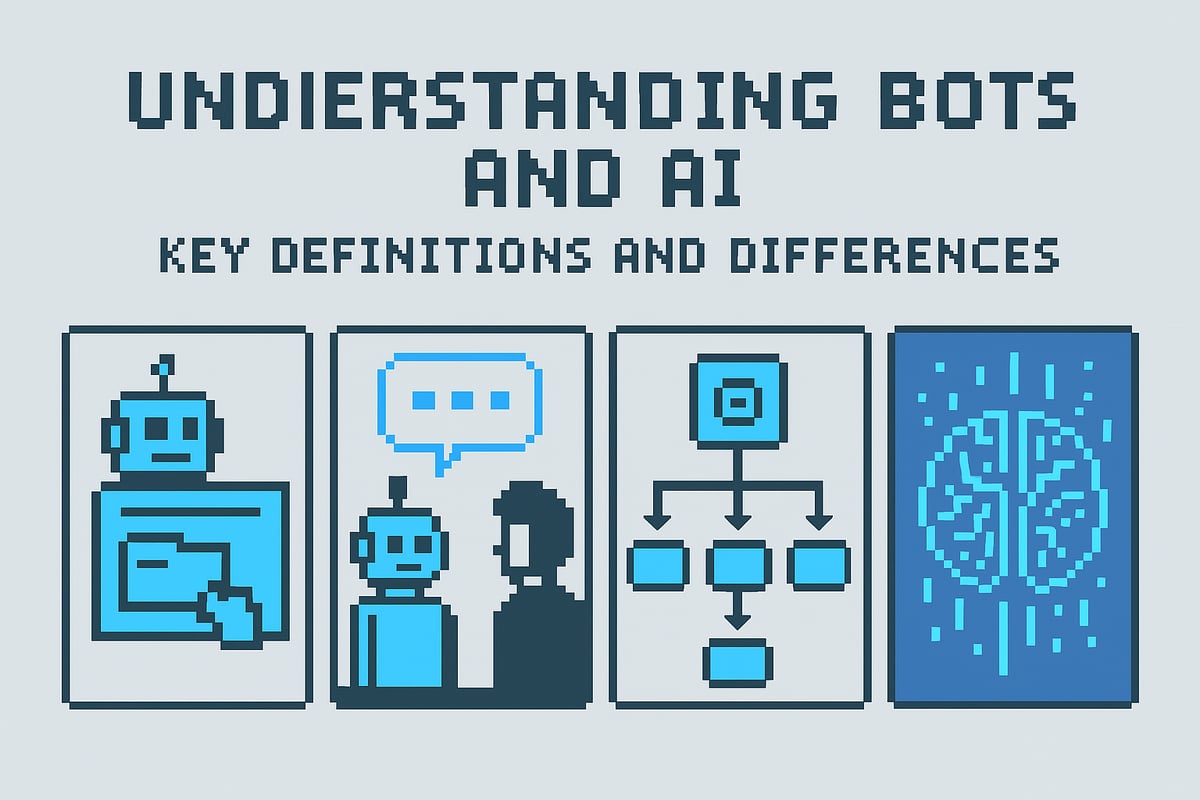
What Are Bots?
Bots are simple automation tools designed to execute repetitive, rule-based tasks with speed and accuracy. These digital assistants are typically pre-programmed, making them ideal for straightforward activities that do not require contextual understanding.
Common examples include Google bots that index web pages or website navigation bots that help users find information. In business settings, bots and ai are used to route customer queries or offer self-service options on websites.
The main advantages of bots are their simplicity and cost-effectiveness, making them accessible for businesses of all sizes. However, their limitations become clear when tasks demand nuanced judgment, as bots cannot interpret context or adapt to unexpected scenarios. A recent statistic shows that bots rank as the most cost-effective automation solution for basic, entry-level tasks.
What Are Chatbots?
Chatbots represent a step forward in the bots and ai landscape, offering conversational interfaces powered by Natural Language Understanding (NLU). Unlike basic bots, chatbots can interpret and respond to a range of language inputs, providing a more natural and engaging user experience.
You’ll find chatbots in customer support roles, answering FAQs or guiding users through troubleshooting steps. For instance, Codify Academy’s chatbot led to a 10% increase in enrollments by engaging prospective students more effectively. Businesses seeking affordable chatbot solutions for business often deploy these tools to free up human agents for complex issues.
Despite their benefits, chatbots still require human programming and oversight. They excel at handling common requests but may transfer the conversation to a person when faced with unfamiliar queries.
What Is Robotic Process Automation (RPA)?
Robotic Process Automation (RPA) is a form of bots and ai that automates back-office tasks behind the scenes. Unlike physical robots, RPA consists of software robots that mimic human actions on computers, such as copying and pasting data or updating records across systems.
Typical use cases include data entry, invoice processing, and cross-system updates in contact centers. RPA is distinct from customer-facing bots, as it operates within internal workflows to reduce manual errors and save time for employees.
By handling repetitive administrative work, RPA allows human staff to focus on higher-value activities. The impact is particularly strong in sectors like finance and customer service, where accuracy and efficiency are critical.
What Is Artificial Intelligence (AI)?
Artificial Intelligence (AI) is the most advanced category within bots and ai, leveraging technologies like Natural Language Processing (NLP) and Machine Learning to mimic human intelligence. AI systems can learn from data, adapt to new information, and make real-time decisions.
Examples include real-time speech analytics that evaluate customer sentiment or predictive support systems that anticipate user needs. Unlike rule-based bots, AI evolves through experience, becoming more effective over time.
This adaptability sets AI apart as businesses look to future-proof their operations. In fact, AI adoption in enterprises is projected to grow by 40% year-over-year by 2025, highlighting its expanding influence in digital transformation.
The Evolution of Intelligent Automation: From Rule-Based Bots to Adaptive AI
The journey of intelligent automation has transformed the way organizations operate, introducing new efficiencies and opportunities. Understanding the evolution of bots and ai is essential for any business aiming to stay competitive in 2025.
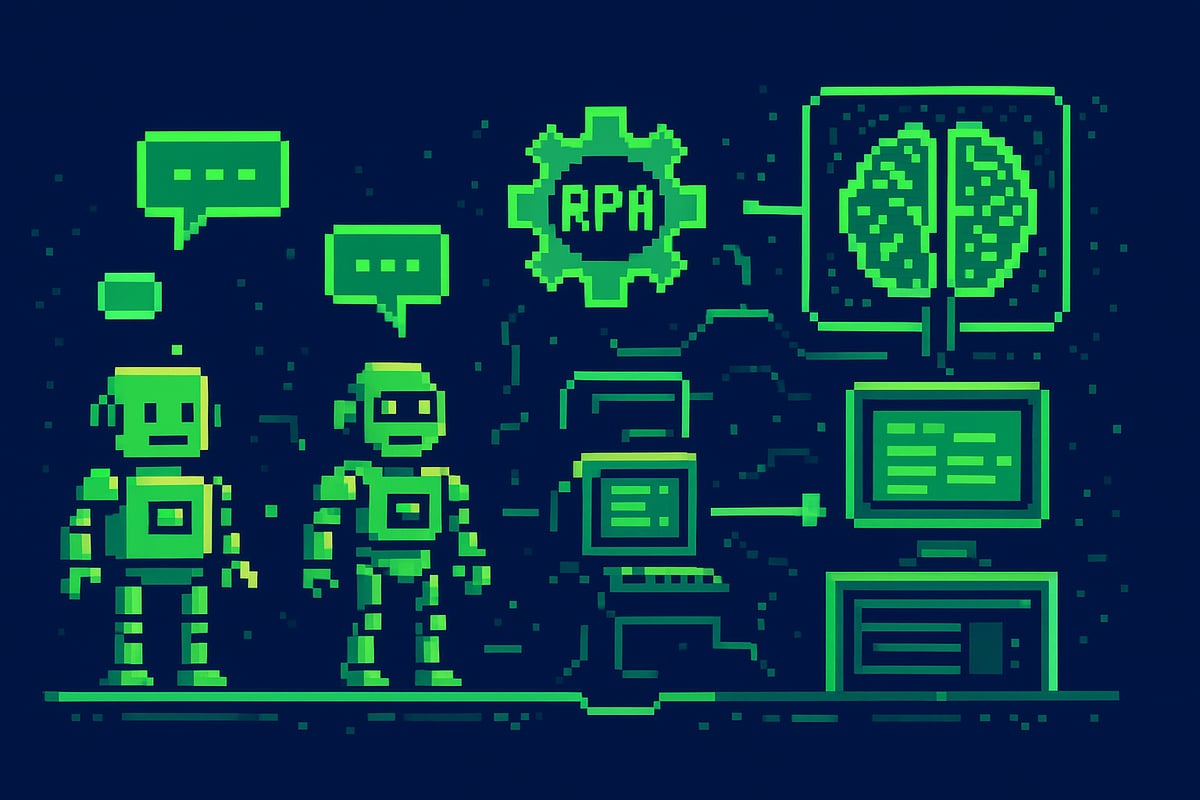
Historical Overview of Automation
Automation began with rule-based bots designed to handle straightforward, repetitive tasks. Early examples include basic data entry programs and website crawlers. These first-generation bots and ai solutions offered cost savings and increased speed but operated within strict parameters.
As technology advanced, organizations adopted more sophisticated automation tools. The drive for efficiency and reduced operational costs fueled this progression. Key milestones include the adoption of chatbots for customer interactions and the introduction of robotic process automation (RPA) for back-office operations.
A simplified timeline illustrates this evolution:
| Era | Technology | Key Feature |
|---|---|---|
| Early 2000s | Rule-based bots | Simple task automation |
| 2010s | Chatbots | Conversational interfaces |
| Late 2010s | RPA | Cross-system automation |
| 2020s | Adaptive AI | Real-time decision making |
The continual evolution of bots and ai has redefined business operations at every stage.
The Rise of Conversational AI
The development of Natural Language Processing (NLP) and Natural Language Understanding (NLU) marked a turning point for bots and ai. Chatbots became capable of understanding context, intent, and sentiment, making interactions feel more natural and human-like.
Modern conversational AI integrates with voice assistants and messaging apps, allowing seamless communication across channels. In sectors like education and healthcare, AI chatbots are now used to answer complex queries, provide guidance, and deliver personalized support.
By leveraging advanced bots and ai, organizations can offer faster, more accurate responses, freeing human agents to focus on strategic initiatives.
RPA’s Impact on Business Efficiency
Robotic Process Automation (RPA) brought a new level of efficiency to business operations. Unlike traditional bots and ai, RPA automates complex workflows that span multiple departments and systems. Tasks such as data migration, invoice processing, and compliance reporting can now be handled with minimal human intervention.
This shift has reduced manual errors and operational costs. Employees can redirect their efforts toward creative and value-driven work. In contact centers, RPA solutions streamline data processing, leading to improved customer experiences and quicker resolutions.
Bots and ai, when combined with RPA, enable organizations to scale automation initiatives across the enterprise.
AI-Driven Decision Making
The evolution of bots and ai has enabled real-time, data-driven decision making. Machine learning algorithms analyze vast datasets to uncover trends, predict outcomes, and optimize business processes. This capability is especially valuable for customer engagement, fraud detection, and resource allocation.
Live agent support now benefits from AI-powered speech analytics, offering instant feedback and suggestions during customer interactions. Predictive analytics tools help businesses anticipate needs, personalize offerings, and increase retention rates.
As bots and ai continue to learn from new data, their ability to support complex decision-making grows, setting the stage for autonomous operations.
The Convergence of Bots, RPA, and AI
Today, businesses are embracing unified automation platforms that combine bots, RPA, and AI into a cohesive ecosystem. This convergence allows for seamless handoffs between different automation technologies, ensuring end-to-end process coverage and a consistent user experience.
The adoption of hybrid solutions is accelerating, with companies looking to IT automation trends 2025 for guidance on integrating their bots and ai strategies. By leveraging these advances, organizations can automate both customer-facing and behind-the-scenes operations, unlocking new levels of agility and innovation.
The future of bots and ai lies in their ability to adapt, collaborate, and drive continuous business transformation.
Core Technologies Powering Intelligent Automation in 2025
The landscape of intelligent automation is rapidly evolving, and at its heart are the core technologies shaping the future of bots and ai. Understanding these technologies is key to unlocking the full potential of automation in 2025. Let’s break down the building blocks driving this transformation.
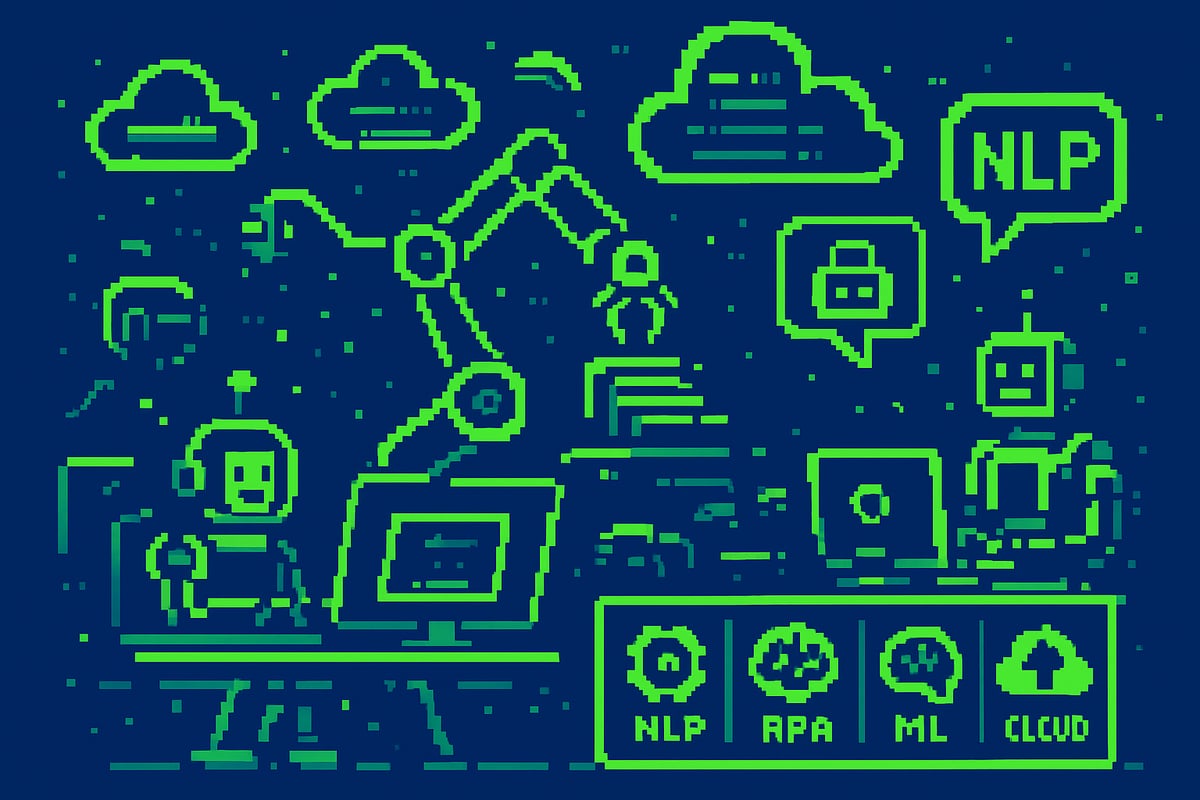
Natural Language Processing (NLP) and Understanding (NLU)
NLP and NLU are revolutionizing how bots and ai interact with humans. These technologies enable chatbots to interpret language, grasp context, and respond with increasing accuracy. Advances in contextual comprehension and sentiment analysis allow automated systems to detect nuances in tone and intent.
The impact is clear in customer service, where bots and ai now handle complex conversations, reducing the need for human intervention. According to AI adoption statistics 2025, 85% of customer interactions are predicted to be managed without a human agent by 2025.
Key features include:
- Real-time language translation
- Sentiment detection for improved empathy
- Contextual routing of queries
With these capabilities, NLP and NLU are making bots and ai indispensable to modern business communication.
Machine Learning and Predictive Analytics
Machine learning empowers bots and ai to continuously learn from vast datasets. These systems identify patterns and optimize processes, adapting in real time to changing user behaviors and market trends.
Predictive analytics takes this a step further, allowing organizations to anticipate customer needs, detect fraud, and personalize recommendations. For example, bots and ai can predict customer churn and suggest retention strategies, ensuring businesses stay ahead of the curve.
Benefits include:
- Real-time process optimization
- Automated anomaly detection
- Enhanced decision support
By integrating machine learning, bots and ai transform data into actionable insights, driving smarter business outcomes.
Robotic Process Automation (RPA) Platforms
RPA platforms are the backbone of back-office automation. These tools enable bots and ai to automate repetitive, rule-based business processes, from data entry to cross-system updates.
Leading RPA solutions offer seamless integration with existing systems, making them scalable for both enterprises and small businesses. For instance, implementing RPA can reduce average handling time in contact centers by up to 40%, freeing up human agents for more valuable work.
Key advantages:
- Reduced manual errors
- Consistent process execution
- Fast deployment and scalability
RPA complements bots and ai by handling structured tasks efficiently, supporting end-to-end automation across organizations.
Conversational Interfaces and Multimodal Bots
The rise of conversational interfaces is expanding how users interact with bots and ai. These platforms support voice, text, and visual inputs, enabling seamless engagement across multiple channels.
Integration with omnichannel communication platforms means bots and ai can manage voice calls, chat messages, and even social media inquiries. For example, a single chatbot can now handle customer requests on websites, messaging apps, and phone lines.
Advantages include:
- Improved accessibility for diverse users
- Higher user engagement rates
- Streamlined support across platforms
By leveraging multimodal capabilities, bots and ai deliver a unified and responsive customer experience.
Cloud-Based Automation and Integration APIs
Cloud-based automation is key to scaling bots and ai solutions. Modern cloud platforms provide the flexibility and power needed to deploy automation at scale, while integration APIs ensure seamless connectivity between bots, AI, and core business systems.
Security and compliance are critical, with cloud providers offering advanced safeguards to protect data. The trend toward cloud-native automation allows organizations to innovate rapidly while controlling costs.
Key benefits:
- Rapid deployment and updates
- Centralized management and monitoring
- Future-proof integration capabilities
As cloud adoption grows, bots and ai will become even more agile, supporting business transformation in 2025 and beyond.
Implementing Intelligent Automation: A Step-by-Step Guide for 2025
Embarking on the journey to intelligent automation requires a clear, methodical approach. By following structured steps, organizations can ensure they maximize the benefits of bots and ai, minimize risks, and create a sustainable path to innovation.

Step 1: Assess Business Needs and Automation Potential
Begin by thoroughly evaluating your organization's daily processes. Identify repetitive, high-volume tasks that consume time and resources. Consult with stakeholders from various departments to gather insights and prioritize automation opportunities.
Use a simple table to organize findings:
| Task | Frequency | Automation Potential | ROI Estimate |
|---|---|---|---|
| Data Entry | High | Excellent | High |
| Customer Routing | Medium | Good | Medium |
| Inventory Updates | Low | Fair | Low |
By mapping these tasks, you lay a strong foundation for integrating bots and ai into your workflow.
Step 2: Select the Right Automation Technologies
Choosing the right mix of tools is essential for successful implementation. Compare available options such as basic bots, chatbots, RPA, and advanced AI solutions. Consider the complexity of tasks, integration with existing systems, and scalability for future growth.
A simple decision matrix can help:
- Use bots for simple, repetitive actions.
- Deploy chatbots for customer-facing conversations.
- Implement RPA for back-office process automation.
- Leverage AI for adaptive, data-driven tasks.
This strategic selection ensures your organization leverages bots and ai to address specific business needs.
Step 3: Design and Develop Automation Solutions
Once technology choices are made, map out workflows and user journeys. Collaborate closely with IT and business teams to ensure seamless development. Focus on user-friendly interfaces and smooth handoffs between automated and human-driven steps.
For practical guidance, explore resources like Building custom AI agents, which outlines step-by-step creation tailored to your goals.
Rigorous testing is crucial to ensure reliability and accuracy as you embed bots and ai into daily operations.
Step 4: Integrate with Existing Systems
Integration is the bridge between automation and business continuity. Use APIs and middleware to connect new solutions with legacy systems. Prioritize real-time data updates and maintain strict security and privacy standards.
Checklist for integration success:
- Verify API compatibility.
- Ensure consistent data formats.
- Monitor for integration errors.
- Follow compliance guidelines.
A robust integration plan ensures bots and ai enhance processes without disrupting daily operations.
Step 5: Train, Monitor, and Optimize
Empower your workforce to work alongside automation by providing targeted training. Monitor performance metrics to track the effectiveness of bots and ai in real time. Use analytics to pinpoint areas for improvement and create feedback loops for continuous refinement.
Key monitoring metrics:
- Task completion rate
- Error reduction percentage
- Customer satisfaction scores
Ongoing optimization helps your bots and ai solutions evolve with business needs.
Step 6: Scale and Innovate
After initial success, expand automation to additional departments and processes. Embrace emerging technologies such as generative AI and process mining to stay ahead. Foster a culture that values innovation and digital transformation.
Statistic: Organizations that scale bots and ai initiatives report productivity gains of up to 30 percent.
By scaling thoughtfully, you drive lasting value and future-proof your business.
Real-World Applications and Industry Use Cases
Bots and ai are reshaping every major industry, bringing new levels of efficiency and innovation. By automating routine work, these technologies empower businesses to deliver faster service, reduce costs, and enhance customer experiences.
Customer Service and Support
In customer service, bots and ai play a pivotal role in managing high volumes of inquiries. AI chatbots handle routine questions, complaints, and FAQs, freeing human agents to solve more complex issues.
- Bots route customers to the right department quickly.
- RPA tools automate ticket creation and follow-ups.
- AI provides instant, data-driven responses.
Contact centers leveraging bots and ai reduce response times and improve customer satisfaction. With 70 percent of customers now expecting instant replies, automation is essential for meeting modern demands.
Sales and Marketing Automation
Sales and marketing teams use bots and ai to increase lead quality and conversion rates. Bots qualify leads by asking targeted questions and scheduling appointments, while AI algorithms personalize email campaigns and product recommendations.
- E-commerce chatbots guide shoppers and answer product queries.
- AI tools analyze customer data for targeted marketing.
- Bots automate routine outreach, saving time for sales reps.
For a closer look at how AI-powered automation tools are transforming marketing, see this Predis.ai tool review and analysis. Integrating bots and ai into these workflows enables businesses to boost conversions and streamline campaigns.
Healthcare and Education
Healthcare and education benefit from bots and ai through improved accessibility and operational efficiency. AI chatbots help patients schedule appointments, offer health advice, and answer common medical questions.
- RPA systems automate patient data entry and records management.
- Chatbots assist students with enrollment and course information.
- AI supports personalized learning recommendations.
Educational institutions use bots and ai to manage student queries, while healthcare providers gain more productive, accurate operations.
Finance and Banking
Finance and banking organizations rely on bots and ai for compliance, security, and customer engagement. RPA automates transaction processing and regulatory checks, reducing manual errors.
- AI detects fraud patterns and manages risk in real time.
- Virtual assistants provide 24/7 customer support.
- Bots update records and process loan applications.
Banks deploying bots and ai enhance both security and customer experience, ensuring trust and efficiency in every transaction.
Operations and Human Resources
Operations and HR departments use bots and ai to automate repetitive processes, from onboarding to payroll. RPA streamlines procurement and inventory management, while bots ensure accurate benefits administration.
- HR bots handle employee inquiries and paperwork.
- AI analyzes workforce data for better decision-making.
- Automation reduces manual tasks and improves compliance.
Organizations embracing bots and ai in HR and operations achieve greater productivity, allowing staff to focus on strategic initiatives.
Challenges, Risks, and Best Practices for Intelligent Automation
Implementing bots and ai can bring transformative benefits, but organizations must navigate a landscape filled with challenges, risks, and evolving best practices. Addressing these issues head-on is crucial for sustainable automation success.
Addressing Common Implementation Challenges
Many companies encounter significant barriers when integrating bots and ai into legacy systems. Compatibility issues can arise, especially if older software lacks modern integration points. Data privacy and security concerns are also front and center, as sensitive information flows through automated pipelines.
Change management is another hurdle. Employees may worry about job displacement or struggle to adapt to new workflows powered by bots and ai. Proactive communication and training are essential to ease the transition. Regulatory compliance adds an extra layer of complexity, requiring organizations to stay updated on evolving standards and legal requirements.
A well-structured implementation plan helps mitigate these risks. Involving stakeholders early, mapping out dependencies, and running pilot programs can uncover integration gaps before they impact operations.
Overcoming Ethical and Societal Concerns
Ethical considerations are central when deploying bots and ai at scale. One major issue is bias in AI algorithms, which can lead to unfair outcomes in areas like hiring or lending. Transparency is vital, so organizations must ensure that automated decisions can be explained and justified.
Accountability is another key factor. It is important to clearly define who is responsible when bots and ai make errors or unintended choices. Balancing automation with human oversight helps maintain trust and avoids over-reliance on technology.
For example, in recruitment, using diverse datasets and regular audits can help mitigate bias. Establishing clear guidelines and ethical review boards ensures that the use of bots and ai aligns with organizational values and societal expectations.
Ensuring Scalability and Sustainability
As companies expand their use of bots and ai, scalability becomes a primary concern. Building flexible, modular automation frameworks allows organizations to adapt to new business needs and technology changes. Monitoring performance metrics ensures that automation delivers consistent value as it grows.
Sustainability also means planning for ongoing updates. Technology evolves rapidly, so regular system reviews and updates are required to future-proof your automation investments. According to AI adoption projections by industry, sectors embracing bots and ai will need robust strategies to manage the increasing complexity of their systems.
A proactive approach to scalability involves cross-functional collaboration and a willingness to invest in new skills and infrastructure.
Best Practices for Success in 2025
To maximize the benefits of bots and ai, organizations should start with small pilot projects before scaling up. This approach helps identify practical challenges and refine strategies in a controlled environment.
Cross-functional collaboration is crucial. Bringing together IT, business units, and end users ensures that automation solutions meet real operational needs. Investing in employee training and upskilling is also essential, preparing teams to work effectively alongside bots and ai.
Regularly reviewing and refining automation strategies keeps initiatives aligned with business goals. By following these best practices, companies can navigate the challenges of intelligent automation and unlock new levels of productivity.
The Future of Bots and AI: Trends and Predictions for 2025 and Beyond
The landscape of bots and ai is evolving rapidly, setting the stage for transformative change across industries. As we look to 2025 and beyond, several key trends are shaping the future of intelligent automation. These shifts will redefine how organizations approach productivity, collaboration, and innovation.
Hyperautomation and Autonomous Enterprises
Hyperautomation is emerging as the next frontier for bots and ai. By combining RPA, machine learning, and advanced bots, businesses can achieve end-to-end automation of complex processes. This trend is leading to the rise of autonomous enterprises, where workflows self-optimize based on real-time data.
For instance, supply chains are becoming more responsive and customer service is now capable of handling inquiries with minimal human involvement. According to AI market size and growth, investments in automation technologies are accelerating as organizations seek to maximize efficiency and agility.
Human-AI Collaboration
Rather than replacing human workers, bots and ai are increasingly being positioned as collaborative partners. In 2025, most organizations will leverage AI to enhance decision-making, boost creativity, and support complex problem-solving.
Teams will rely on AI-powered tools for data analysis, scenario planning, and customer insights. The result is a synergistic environment where humans and intelligent systems work together to achieve better outcomes. Notably, 60% of jobs are expected to require AI-related skills, underscoring the value of collaboration.
Democratization of Automation
A significant trend is the democratization of bots and ai through no-code and low-code platforms. These solutions empower non-technical users to design, deploy, and manage automation workflows with ease. As a result, small and midsize businesses can now compete with larger enterprises on a more level playing field.
This widespread adoption is driving innovation across sectors. Companies that embrace user-friendly automation tools are seeing faster ROI and greater flexibility. The expansion of automation capabilities is making advanced technology accessible to all.
AI Governance, Ethics, and Regulation
With the rapid expansion of bots and ai, governance and ethics are taking center stage. Regulatory bodies are developing new frameworks to ensure transparency, accountability, and fairness in automated systems. Organizations must prioritize explainability and compliance as AI becomes integral to operations.
Key considerations include mitigating bias in algorithms, protecting data privacy, and maintaining human oversight. Staying ahead of evolving regulations will be critical for building trust and sustaining long-term success in intelligent automation.
Emerging Technologies and the Next Frontier
Looking ahead, emerging technologies are set to further accelerate the impact of bots and ai. Innovations such as generative AI, edge computing, and integration with IoT devices will enable real-time, context-aware automation. The adoption of 5G networks will provide the bandwidth needed for seamless, large-scale deployments.
Enterprises should prepare for ongoing disruption by investing in continuous learning and adaptability. Those who harness the power of new technologies will unlock unprecedented opportunities for growth and transformation.