

9 Essential Business Lead Lists to Boost Growth in 2026
In today's hyper-competitive market, reaching the right prospects before your rivals can make all the difference. Businesses that harness business lead lists effectively consistently outperform those that rely on outdated or scattered data.
The right business lead lists drive sales acceleration, help build robust pipelines, and enable companies to scale efficiently as we approach 2026. Recent studies reveal that organizations using targeted lead data see up to 35% faster growth compared to those without a clear list strategy.
This article reveals the nine essential business lead lists every growth-focused company needs. You will discover how each list fuels results, plus actionable strategies to turn data into sustainable business growth. Ready to get ahead? Let’s dive in.
The Evolving Role of Lead Lists in 2026
In 2026, business lead lists are no longer static directories. They have evolved into dynamic, data-driven assets that reflect rapidly changing buyer expectations, new technology, and a tightening regulatory landscape. To unlock growth, organizations must rethink how they build, manage, and leverage lead data.
Shifting Buyer Behaviors and Data Privacy
Today’s B2B buyers are more independent, leveraging digital channels to conduct research and compare solutions long before talking to sales. According to the B2B Buyer Experience Report 2025, 87% of buyers now begin their journey online and expect seamless, relevant outreach. This shift, combined with strict GDPR and CCPA regulations, demands that business lead lists contain only high-quality, compliant data. Companies risk heavy penalties and reputational damage if privacy is overlooked. As a result, investing in compliant business lead lists has become a critical foundation for modern sales and marketing success.
AI, Automation, and Lead List Quality
Artificial intelligence is transforming business lead lists by automating segmentation, scoring, and enrichment. AI-powered tools analyze intent signals and predict which prospects are most likely to convert, allowing teams to focus efforts where they matter most. Predictive analytics can surface hidden opportunities within existing data, while automation reduces manual work and boosts list accuracy. Businesses leveraging these technologies report measurable ROI improvements, as targeted, high-quality business lead lists drive greater engagement and conversion rates with less wasted outreach.
Integrating Lead Lists with Sales & Marketing Tech Stacks
Seamless integration between business lead lists and core tech stacks is now essential for efficiency and growth. Modern CRMs, marketing automation platforms, and lead enrichment tools enable real-time updates, nurturing, and tracking of every interaction. When business lead lists are connected to these systems, teams can automate workflows, personalize outreach, and respond instantly to prospect signals. Studies show that companies with integrated lead data and automation tools see up to 25% higher conversion rates, underscoring the value of a unified approach.
Key Challenges and Opportunities
Despite advancements, managing business lead lists presents ongoing challenges. Common pitfalls include outdated data, list fatigue, and declining engagement rates. Regular cleansing and enrichment are vital to maintain accuracy and effectiveness. Targeted segmentation helps prevent overuse and ensures messages resonate with each audience. Learning from competitor research, top-performing organizations combine frequent data hygiene with smart segmentation to overcome these obstacles, ensuring their business lead lists remain a powerful asset for sustainable growth.
9 Essential Business Lead Lists for 2026
Selecting the right business lead lists can be the difference between stagnant pipelines and record-breaking growth. In 2026, the landscape is more sophisticated, with providers offering advanced data, automation, and compliance features. Below, we explore the nine most essential business lead lists for driving sales, building relationships, and scaling efficiently in a rapidly changing market.
1. ZoomInfo
ZoomInfo stands out as a leader in business lead lists, offering a comprehensive B2B database enriched with intent data and advanced filtering options. Pricing begins at $14,995 per year as of 2024, reflecting its enterprise-grade capabilities. Core features include real-time updates, deep integrations with sales and marketing tools, and robust segmentation for targeted outreach.
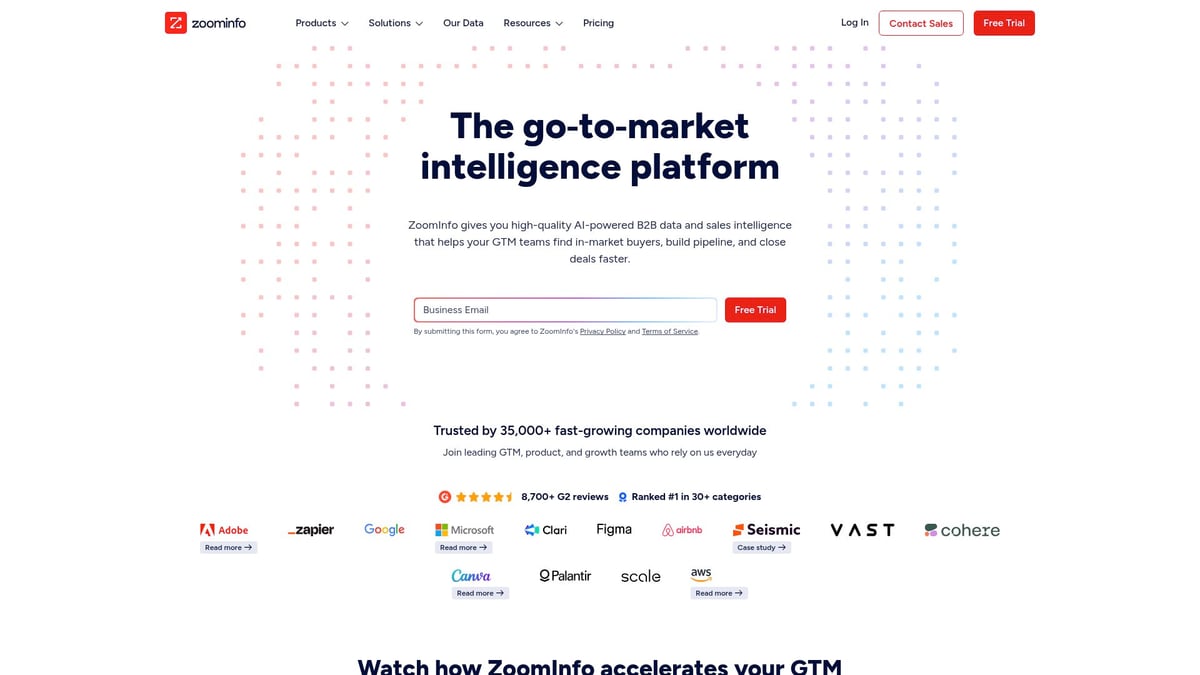
- Benefits: Ensures highly accurate contact information and actionable insights, supporting both sales and marketing teams.
- Target audience: B2B sales teams, marketers, and recruiters seeking scale and precision.
- Pros: Extensive coverage, automation-ready workflows.
- Cons: Premium pricing and a learning curve for new users.
Companies leveraging ZoomInfo report up to a 30% increase in qualified leads, making it a pivotal resource for business lead lists in 2026.
2. Apollo.io
Apollo.io brings affordability and usability to the world of business lead lists. With a free tier and paid plans starting at $39 per user per month, it is accessible for SMBs and startups. Features include a rich lead database, enrichment tools, email automation, and customizable workflow management.
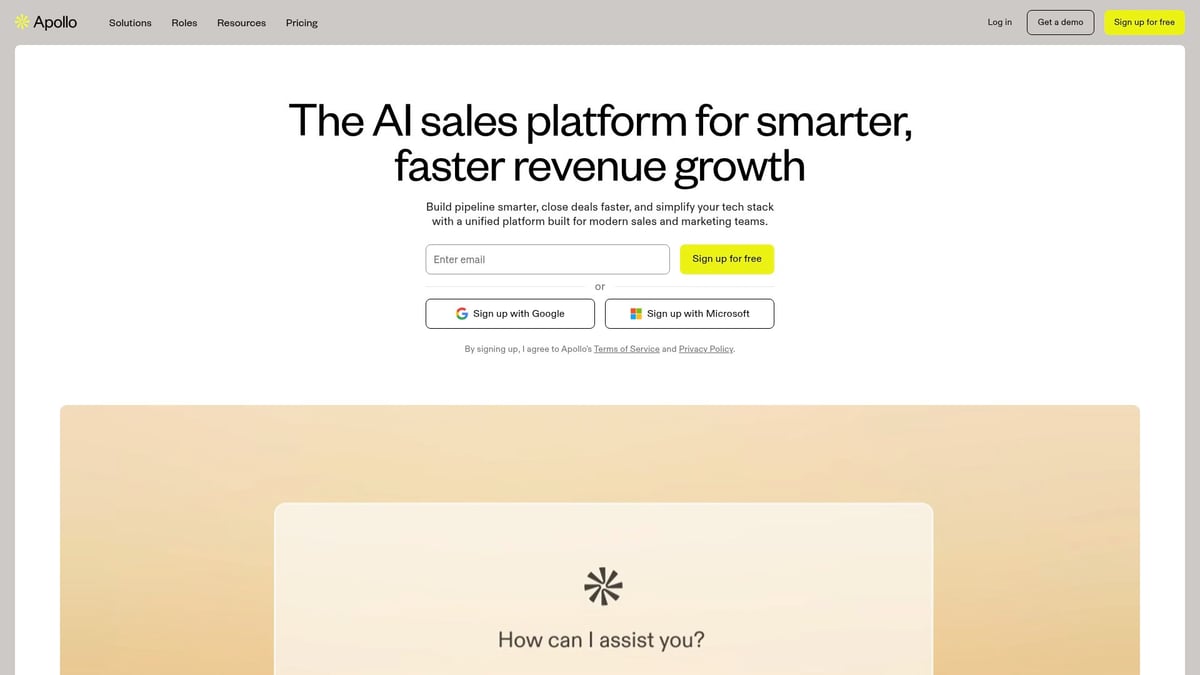
- Benefits: Integrates smoothly with popular CRMs, enabling fast pipeline growth.
- Target audience: SMBs, startups, and growth-focused sales teams.
- Pros: Generous free plan, robust search tools, supports multichannel outreach.
- Cons: Some data fields are less comprehensive compared to premium competitors.
Users consistently report faster pipeline growth and improved efficiency, proving Apollo.io’s value among business lead lists.
3. Lusha
Lusha is designed for speed and simplicity in building business lead lists. It offers a free trial, with paid plans from $29 per user per month. Key features include accurate B2B contact info, a user-friendly Chrome extension, and an enrichment API for seamless integration.

- Benefits: Rapid prospecting and GDPR-compliant data handling.
- Target audience: Recruiters, sales reps, and marketers who need quick, reliable data.
- Pros: Simple interface, accurate direct dials, strong privacy focus.
- Cons: Export options are limited on lower tiers.
Recruiters using Lusha have reduced sourcing time by 50%, highlighting its effectiveness in the business lead lists ecosystem.
4. Lead411
Lead411 delivers verified emails, intent data, and trigger alerts to help businesses build dynamic business lead lists. With plans starting at $99 per month, it offers real-time data and high deliverability rates.
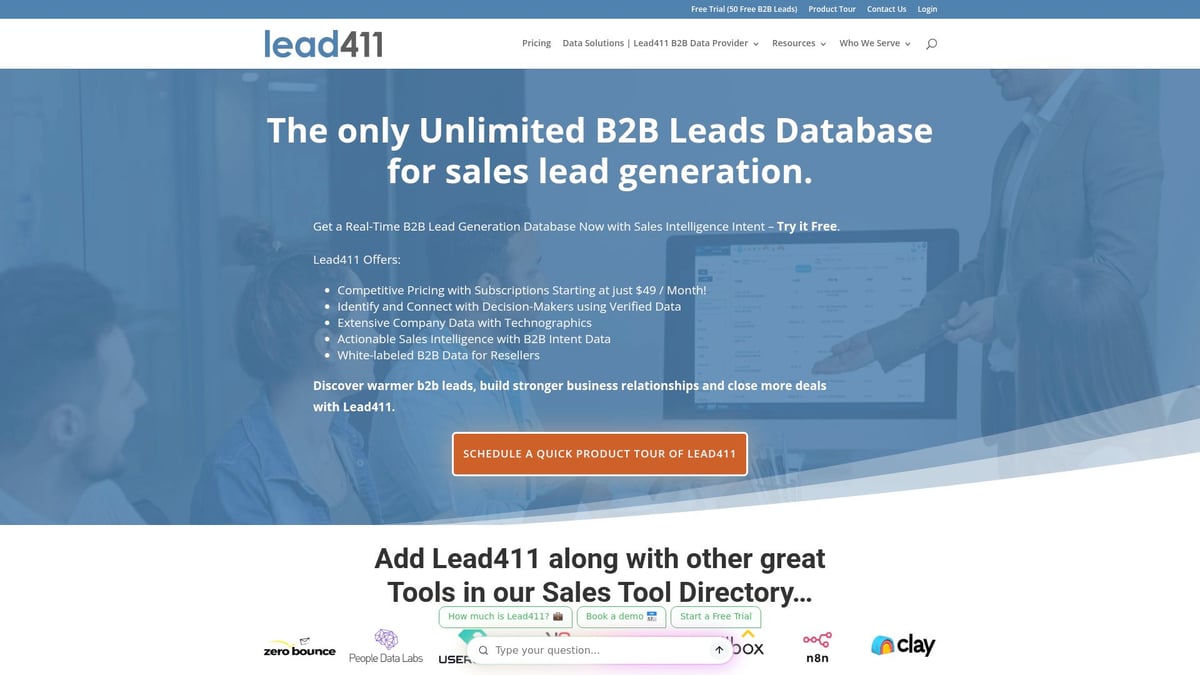
- Benefits: Up-to-date contact information and intent-driven targeting.
- Target audience: B2B sales, marketing teams, and agencies.
- Pros: Real-time updates, advanced filtering, solid integrations.
- Cons: International data coverage is limited.
Agencies using Lead411 have increased outbound response rates by 22%, proving its value for proactive business lead lists strategies.
5. UpLead
UpLead is known for its accuracy and transparency among business lead lists. Pricing starts at $74 per month, with a free trial available. Features include 95% data accuracy, real-time email verification, and detailed firmographics for precise targeting.
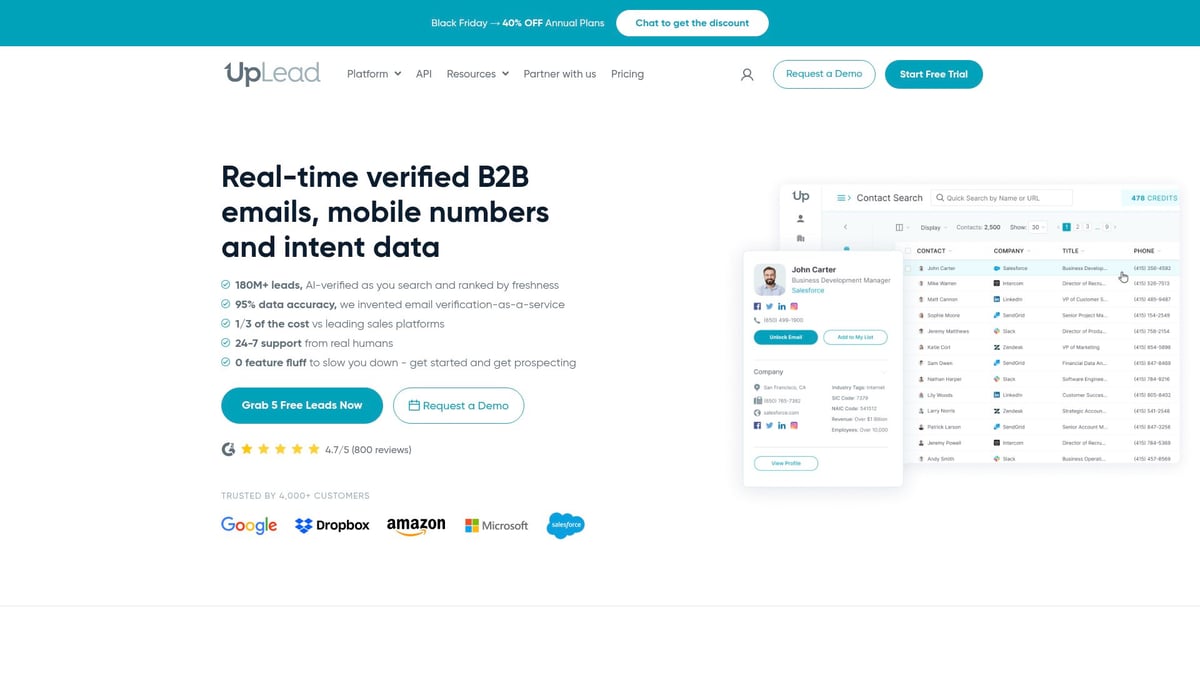
- Benefits: High deliverability and easy CRM syncing.
- Target audience: SMBs, enterprise sales, and marketing operations.
- Pros: Transparent pricing, no contracts, responsive customer support.
- Cons: The database is smaller than some competitors.
SaaS companies utilizing UpLead have reported 20% higher email open rates, demonstrating its effectiveness in business lead lists.
6. Cognism
Cognism specializes in global business lead lists with pricing tailored for mid-sized to enterprise organizations. It features an extensive B2B database, advanced intent data, GDPR compliance, and unique Diamond Data for enhanced accuracy.
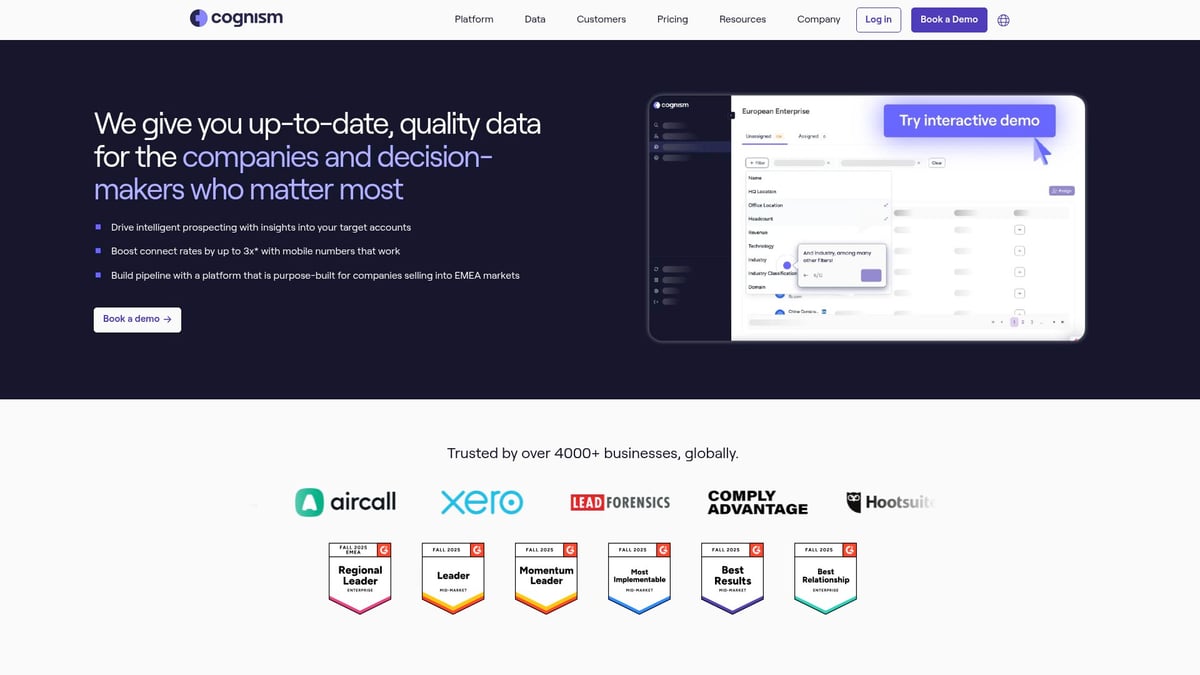
- Benefits: Supports international reach and compliance with evolving regulations.
- Target audience: Enterprise sales, global teams, and compliance-driven organizations.
- Pros: Strong European data, intent-driven insights, advanced sales triggers.
- Cons: Higher cost, best suited for larger organizations.
Enterprises using Cognism benefit from reduced compliance risk and improved EMEA coverage, solidifying its role in business lead lists.
7. Hunter.io
Hunter.io focuses on simplifying the email discovery process within business lead lists. It offers a free plan and paid options from $49 per month. Core features include email finding, domain search, and bulk email verification, all accessible through a Chrome extension.
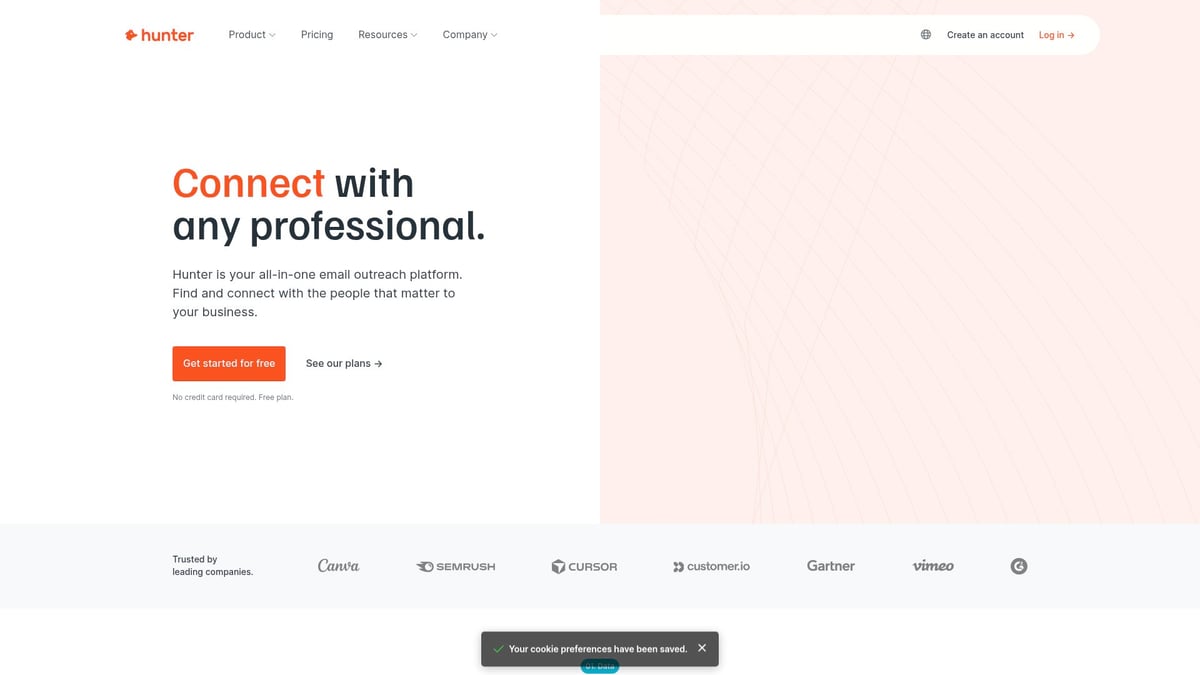
- Benefits: Fast lead discovery and high verification rates.
- Target audience: Marketers, outreach teams, and freelancers.
- Pros: Simple user interface, affordability, reliable verification.
- Cons: Limited to email data, not full prospect profiles.
Marketers have doubled their campaign reach using Hunter.io’s bulk tools, making it a go-to solution for efficient business lead lists.
8. SalesIntel
SalesIntel offers human-verified contacts and deep company insights, distinguishing itself among business lead lists for accuracy and detail. Pricing is custom and generally targets mid-market and enterprise clients.
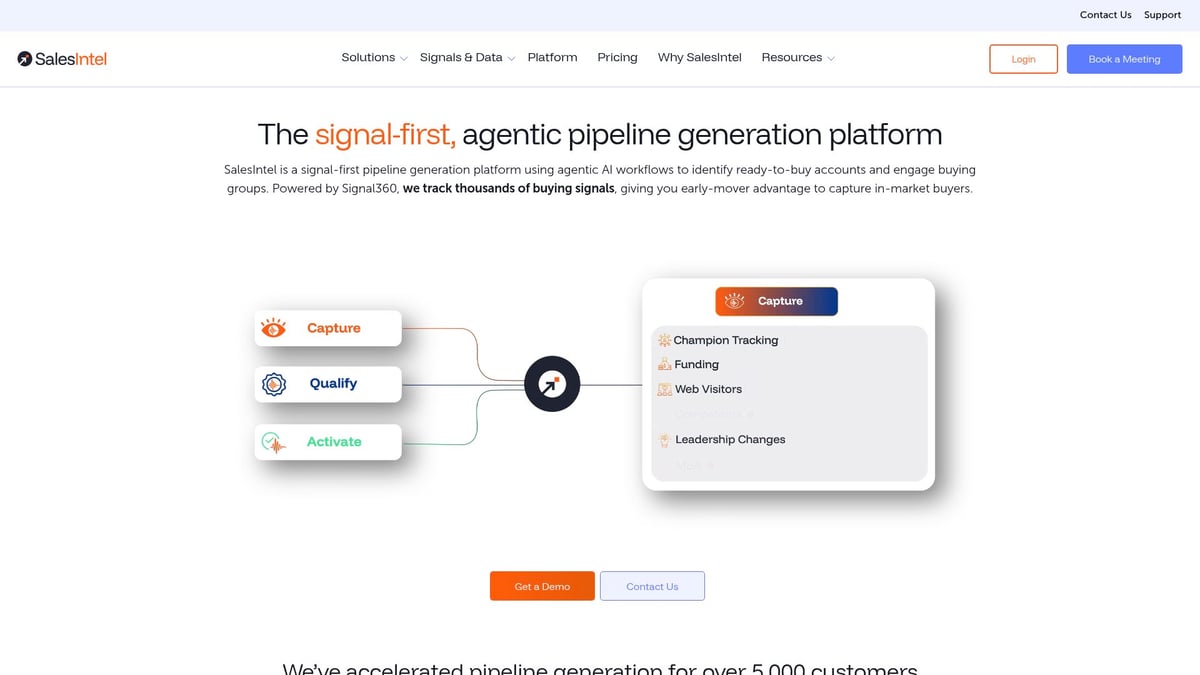
- Features: Technographics, intent signals, and direct dials.
- Benefits: High accuracy and live research support.
- Target audience: B2B sales, ABM teams, and enterprise marketers.
- Pros: Detailed firmographics, live research team.
- Cons: Pricing requires a demo, ideal for larger teams.
Account-based marketing teams using SalesIntel have achieved a 25% lift in qualified meetings, underscoring its impact on business lead lists.
9. ToolStacked
ToolStacked brings a fresh perspective to business lead lists by curating AI and automation tools, as well as custom chatbot development. Chatbot services are available via custom quotes, and tool reviews are free.
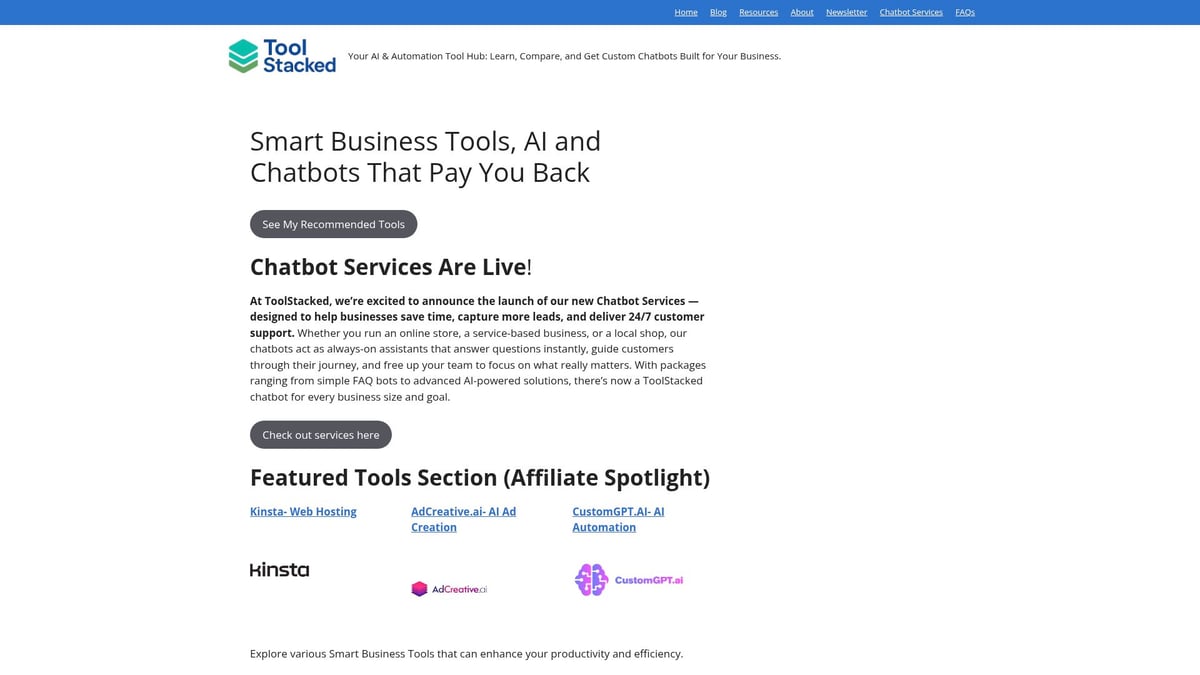
- Features: In-depth tool comparisons, AI-powered recommendations, and chatbot solutions for automated lead capture.
- Benefits: Streamlines lead engagement and helps businesses find the best tools for their needs.
- Target audience: SMBs, marketers, agencies, and tech-forward businesses.
- Pros: Focus on AI-powered solutions, educational resources, tailored recommendations.
- Cons: Chatbot pricing requires inquiry, not a traditional lead database.
Businesses utilizing ToolStacked’s chatbot solutions see improved conversion and engagement, especially when leveraging AI-powered lead generation tools for advanced automation within their business lead lists.
How to Choose the Right Lead List Provider
Selecting the ideal provider for your business lead lists is a strategic decision that impacts your entire sales and marketing workflow. With so many options available, it is essential to take a systematic approach. The following framework will help you assess providers, reduce risk, and maximize the value of your investment.
Assessing Data Accuracy and Compliance
Data accuracy is the backbone of effective business lead lists. Outdated or incorrect information can lead to bounced emails, wasted outreach, and compliance risks. Always ask providers about their verification processes and how frequently they update records.
Equally important is regulatory compliance. With GDPR, CCPA, and other privacy laws evolving, your business lead lists must be sourced and maintained with full transparency. Verify that vendors follow strict privacy protocols and can provide documentation if needed.
Questions to consider include:
- How is data sourced and validated?
- What steps are taken to ensure compliance?
- How often is the data refreshed?
By prioritizing accuracy and compliance, you protect your brand and set the stage for higher deliverability and engagement.
Evaluating Features, Integrations, and Scalability
The right business lead lists should seamlessly integrate with your existing sales and marketing stack. Check for compatibility with your CRM, marketing automation, and enrichment tools, as this enables real-time lead updates and efficient nurturing.
Assess the platform’s enrichment, filtering, and segmentation features to ensure they match your targeting needs. Scalability is vital as your team or market expands, so confirm that the solution can grow with you.
Providers offering real-time data can support better buyer experiences and conversion rates. According to Real-Time Data in B2B E-commerce, timely information is a key factor in winning over modern B2B buyers.
Balancing Cost, ROI, and Support
Understanding the true cost of business lead lists involves more than just the subscription fee. Review contract terms, usage limits, and any additional charges for premium features. Estimate potential ROI by considering benchmarks for open rates, conversions, and pipeline growth.
Reliable customer support can make or break your onboarding experience. Look for providers with responsive teams, comprehensive help centers, and onboarding resources.
A simple table can help compare costs and support options:
| Provider | Pricing Model | Support Type |
|---|---|---|
| Provider A | Annual | 24/7 Live Chat |
| Provider B | Monthly | Email Only |
| Provider C | Custom | Dedicated Manager |
By weighing cost, ROI, and support side by side, you make a more informed investment.
User Reviews, Trials, and Case Studies
Peer feedback is invaluable when evaluating business lead lists. Explore G2, Capterra, and industry forums for honest reviews about data quality, usability, and support.
Take advantage of free trials or pilot programs to test the platform with your actual workflow. Case studies offer insights into real-world results, especially for businesses in your industry or of similar size.
Ask yourself:
- What do users praise or criticize?
- Are there success stories relevant to my sector?
- Does the provider offer a risk-free trial?
By leveraging reviews and case studies, you gain confidence in selecting the best fit for your business lead lists.
Lead List Best Practices for Maximum Growth
Maximizing the value of your business lead lists requires a disciplined approach and continual optimization. In this section, explore proven best practices that keep your lists accurate, actionable, and primed for growth. Each strategy below is essential for transforming raw data into a high-performing sales asset.
Regular Data Cleansing and Enrichment
Data decay is a silent threat to business lead lists. With contacts changing jobs and companies updating information, up to 30% of B2B data becomes outdated each year. This decline in accuracy can directly impact your deliverability rates and campaign ROI.
To combat this, schedule regular data cleansing sessions. Use built-in verification tools from your lead list provider or integrate third-party solutions that automate email and phone validation. Automated enrichment platforms can update firmographics, fill missing fields, and ensure compliance with privacy standards.
A healthy business lead lists program includes:
- Quarterly list audits
- Automated verification workflows
- Enrichment with real-time data sources
Consistent hygiene prevents wasted outreach efforts and keeps your pipeline strong.
Segmentation and Personalization Strategies
Segmentation transforms business lead lists from static directories into dynamic revenue engines. By grouping leads by industry, job role, buying intent, or engagement history, you enable hyper-targeted messaging that resonates with recipients.
Consider segmenting leads using these criteria:
- Industry verticals and company size
- Seniority or decision-making authority
- Behavioral signals, such as website visits or webinar attendance
Personalization drives higher conversions. For example, using AI tools to tailor subject lines and content based on a lead's recent actions can increase response rates by 20% or more. Continually refine your segments as new data flows in, ensuring your outreach remains relevant and timely.
Multichannel Outreach and Nurturing
Relying on a single channel limits the effectiveness of business lead lists. Integrating email, phone, social media, and chat ensures your message finds leads where they are most active. Automation tools can help sequence touchpoints and follow up at optimal times.
For example, pairing email campaigns with LinkedIn outreach and a chatbot on your website increases engagement opportunities. To learn about advanced chatbot tools that support automated lead capture and nurturing, explore Chatbot solutions for lead capture.
Successful multichannel programs often include:
- Drip emails tailored to each segment
- Social media touchpoints for brand reinforcement
- Chatbots for instant qualification and engagement
This holistic approach keeps prospects moving through your pipeline.
Measuring Performance and Continuous Improvement
Continuous measurement is the backbone of effective business lead lists management. Track metrics such as open rates, reply rates, conversions, and overall ROI to pinpoint what works and what needs improvement.
A/B testing subject lines, messaging, and outreach timing provides actionable insights. Use analytics dashboards to monitor performance by segment and channel. Regularly review outcomes and adjust your strategies to maximize results.
Key steps include:
- Setting clear KPIs for each campaign
- Reviewing analytics weekly
- Implementing learnings into future outreach
With a commitment to ongoing optimization, your business lead lists will consistently drive sustainable growth.
The Future of Business Lead Lists: Trends to Watch
As technology evolves and buyer expectations shift, the future of business lead lists is set to transform how organizations identify, qualify, and engage prospects. Forward-thinking companies are already adapting to new trends that will define sales and marketing success in the coming years. Understanding these trends will help you stay ahead and unlock the full potential of business lead lists for your organization.
AI-Driven Predictive Lead Scoring
Artificial intelligence is rapidly reshaping business lead lists by making them smarter and more actionable. With AI-powered predictive lead scoring, sales teams can prioritize prospects who are most likely to convert, using signals like engagement history, firmographics, and intent data. This approach not only increases efficiency but also drives higher conversion rates.
According to Gartner’s 2030 B2B Sales Forecast, the balance between automation and human touch will be key. Early adopters of AI-driven business lead lists are already seeing measurable gains, such as faster pipeline velocity and improved ROI. As algorithms become more sophisticated, expect even greater personalization and accuracy in lead targeting.
First-Party Data and Privacy-First Approaches
The shift toward privacy-first strategies is influencing how business lead lists are built and maintained. With regulations like GDPR and CCPA tightening, companies are moving away from third-party data and focusing on first-party, opt-in information. This change ensures compliance and builds trust with prospects.
To create effective business lead lists, organizations are investing in data collection through owned channels, interactive content, and value-driven exchanges. Recent B2B Buying Behavior Statistics 2025 highlight that buyers are more likely to engage with brands that respect their privacy and offer transparency. As privacy concerns grow, prioritizing first-party data will be crucial for sustainable lead generation.
Integration with Conversational AI and Automation
Conversational AI and automation are revolutionizing how business lead lists convert into real opportunities. Chatbots and virtual assistants can engage leads instantly, qualify prospects, and guide them through the funnel at any time of day. This seamless integration allows businesses to respond faster and nurture leads with personalized messaging.
Building a no-code chatbot for outreach is now accessible for teams of any size. For example, you can learn how to build a no-code chatbot for outreach to automate lead engagement and capture. By connecting business lead lists to conversational AI, companies can ensure every prospect receives timely, relevant interactions, maximizing conversion potential and freeing teams to focus on high-value tasks.
Industry-Specific and Niche Lead Lists
The demand for highly targeted business lead lists is on the rise. Generic databases are giving way to industry-specific and niche-focused lists that deliver higher relevance and better results. Providers now offer tailored data sets for verticals such as healthcare, fintech, or manufacturing, enabling sales teams to reach decision-makers who are more likely to be interested in their solutions.
Using specialized business lead lists helps organizations stand out in crowded markets and craft messaging that resonates. As industries become more complex, the value of granular, up-to-date, and segmented lead data will only increase. Companies investing in niche lists will gain a competitive edge by connecting with the right audience at the right time.



2 Comments