Business Model Canvas AI Guide: Unlock Innovation in 2025
The pace at which artificial intelligence is transforming business strategy is unprecedented, with 2025 marking a critical turning point. This guide explores how business model canvas ai can empower organizations to innovate, boost efficiency, and achieve sustainable growth. You will discover the fundamentals of the Business Model Canvas, the transformative impact of AI, a step-by-step integration process, real-world examples, best practices, and future trends. Ready to unlock new levels of innovation and gain a competitive edge? Dive in and see how AI-driven business model canvases are reshaping the future of business.
Understanding the Business Model Canvas: Foundations for Innovation
The business model canvas has become a universal language for startups and enterprises looking to innovate. As digital transformation accelerates, understanding how to leverage the business model canvas ai tools is essential for staying ahead.
What is the Business Model Canvas?
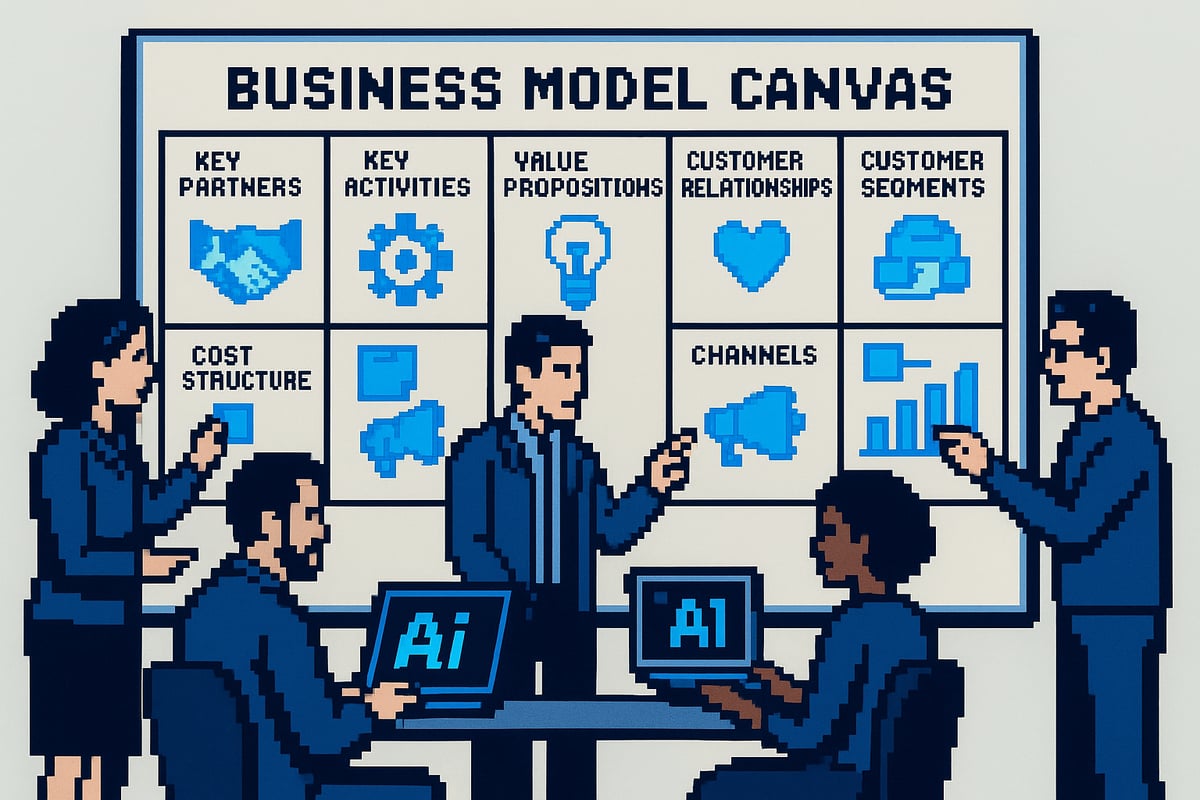
The business model canvas, first developed by Alexander Osterwalder, is a strategic planning tool that breaks down any business into nine essential building blocks. These are: Customer Segments, Value Propositions, Channels, Customer Relationships, Revenue Streams, Key Resources, Key Activities, Key Partnerships, and Cost Structure.
By visually mapping these elements, teams can quickly understand, iterate, and communicate their business model. The business model canvas ai approach takes this a step further by enabling digital, real-time collaboration and faster iterations.
For example, traditional startups once used whiteboards and sticky notes to build their canvas. Today, digital platforms let founders and teams co-create, edit, and refine their models from anywhere. Over 5,000 entrepreneurs now use business model canvas ai tools, according to Convoboss data. This shift emphasizes clarity and alignment, which are critical for innovation and successful pivots.
The business model canvas is not just a planning tool, but also a foundation for integrating advanced technologies. As organizations move toward digital-first strategies, the business model canvas ai framework ensures that innovation is both systematic and collaborative.
Why the Canvas Matters in 2025
In 2025, business environments are more complex and fast-paced than ever. The ability to adapt quickly is a key differentiator. The business model canvas ai empowers teams to experiment, iterate, and refine ideas rapidly, all while leveraging data-driven insights for smarter decisions.
Businesses face growing pressure to make informed choices based on real-time data. AI-powered business model canvas solutions allow leaders to visualize changes, test new revenue streams, and align stakeholders without lengthy delays. Case studies from platforms like Convoboss and Creately have shown measurable improvements in speed and strategic clarity.
The continued relevance of the business model canvas comes from its unique ability to unite teams with a shared vision. As highlighted in AI’s Role in Business Model Innovation, artificial intelligence is redefining how organizations approach each canvas block, driving both efficiency and creativity.
In summary, the business model canvas ai is central to modern business strategy, offering a clear path for integrating advanced technologies and maintaining alignment in a rapidly changing world.
The Rise of AI in Business Model Design
Artificial intelligence is rapidly reshaping how organizations approach strategy and innovation. In 2025, the synergy between business model canvas ai solutions and digital transformation is more influential than ever. Companies are leveraging AI to redefine how they visualize, test, and execute business models, opening new possibilities for growth.
How AI Transforms the Business Model Canvas
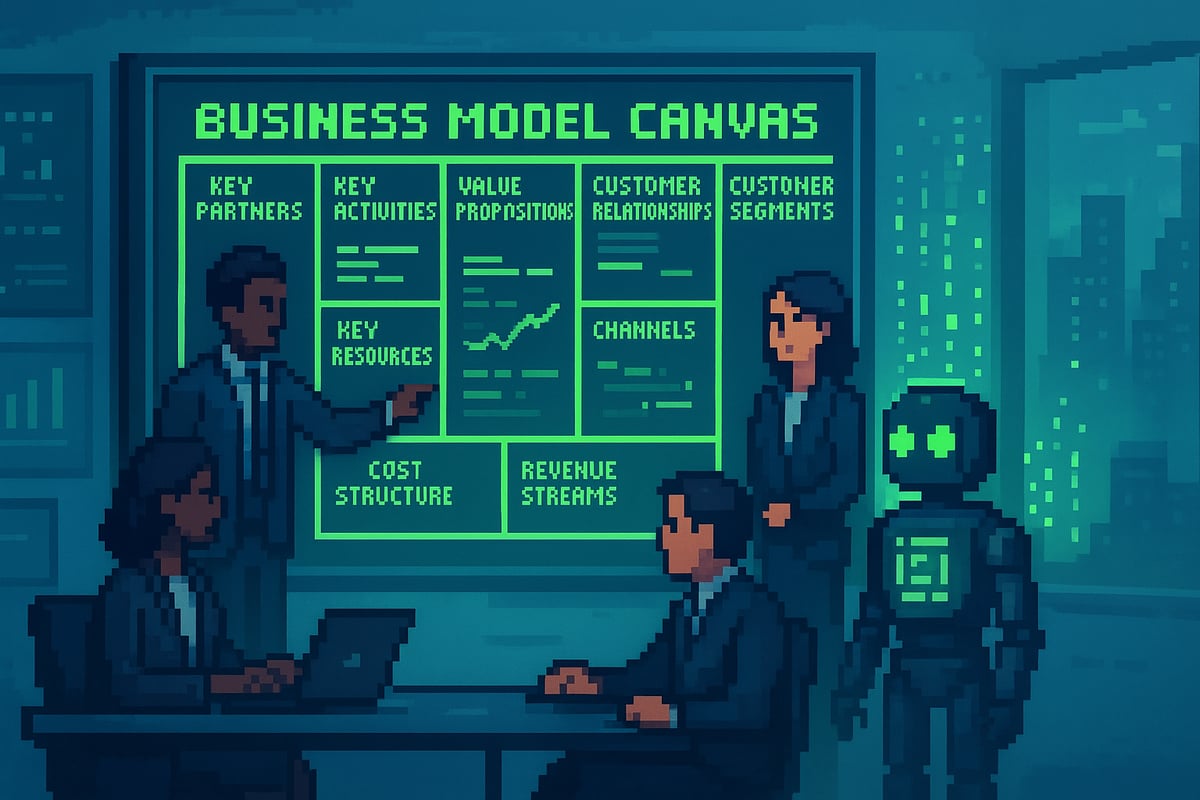
The integration of business model canvas ai platforms introduces a step change in strategic planning. AI can analyze vast arrays of market data, customer preferences, and financial metrics in real time, providing insights that empower teams to make smarter decisions. By automating the drafting and refinement of each of the nine canvas blocks, AI reduces manual effort and accelerates ideation.
AI-generated suggestions now enhance revenue models, identify optimal partnerships, and streamline cost structures. For instance, Creately’s AI generator can draft a full canvas from just a simple prompt, allowing users to iterate quickly and collaboratively. According to Creately, over 10 million users are utilizing business model canvas ai tools to speed up innovation cycles.
A recent AI-Driven Business Model Innovation Review highlights how AI uncovers patterns and opportunities that traditional methods may overlook. This combination of real-time analytics and automation not only reduces human bias but also helps organizations discover new pathways for value creation.
Benefits of AI-Driven Business Model Canvas Tools
Adopting business model canvas ai solutions delivers tangible benefits across industries. The most striking advantage is speed—platforms like Convoboss claim you can go from idea to actionable model in just two minutes. AI-powered tools recommend proven frameworks for each block, enhancing the quality of decisions.
Collaboration is now seamless, with real-time editing, co-creation, and feedback loops built into the workflow. Customization features allow users to select industry-specific templates and receive contextual recommendations, ensuring relevance for every business type. Data security is prioritized, with platforms like Creately assuring users that business information remains private and protected.
Below is a quick summary of the benefits:
| Benefit | Description |
|---|---|
| Speed | Rapid canvas generation from prompts |
| Smarter Decisions | AI-driven suggestions for each canvas block |
| Collaboration | Real-time multi-user editing and feedback |
| Customization | Industry templates and contextual guidance |
| Security | Secure, private handling of business data |
Business model canvas ai tools are used to generate canvases for industries ranging from food trucks to digital marketing agencies, highlighting their versatility and broad impact.
Limitations and Considerations
While business model canvas ai tools are powerful, they are not without limitations. The quality of AI-generated outputs depends heavily on the input data provided. If data is incomplete or inaccurate, the resulting canvas may lack relevance or depth.
Human oversight remains essential. Business leaders must review and refine AI suggestions to ensure alignment with strategic goals. There is also a risk of receiving generic outputs if templates are not sufficiently customized for the unique aspects of each business.
Best practices include:
- Always combine AI insights with expert judgment.
- Regularly update data inputs for accuracy.
- Customize templates to reflect your unique value proposition.
By balancing automation with human expertise, organizations can maximize the value of business model canvas ai solutions and drive sustained innovation.
Step-by-Step Guide: Building Your AI-Powered Business Model Canvas
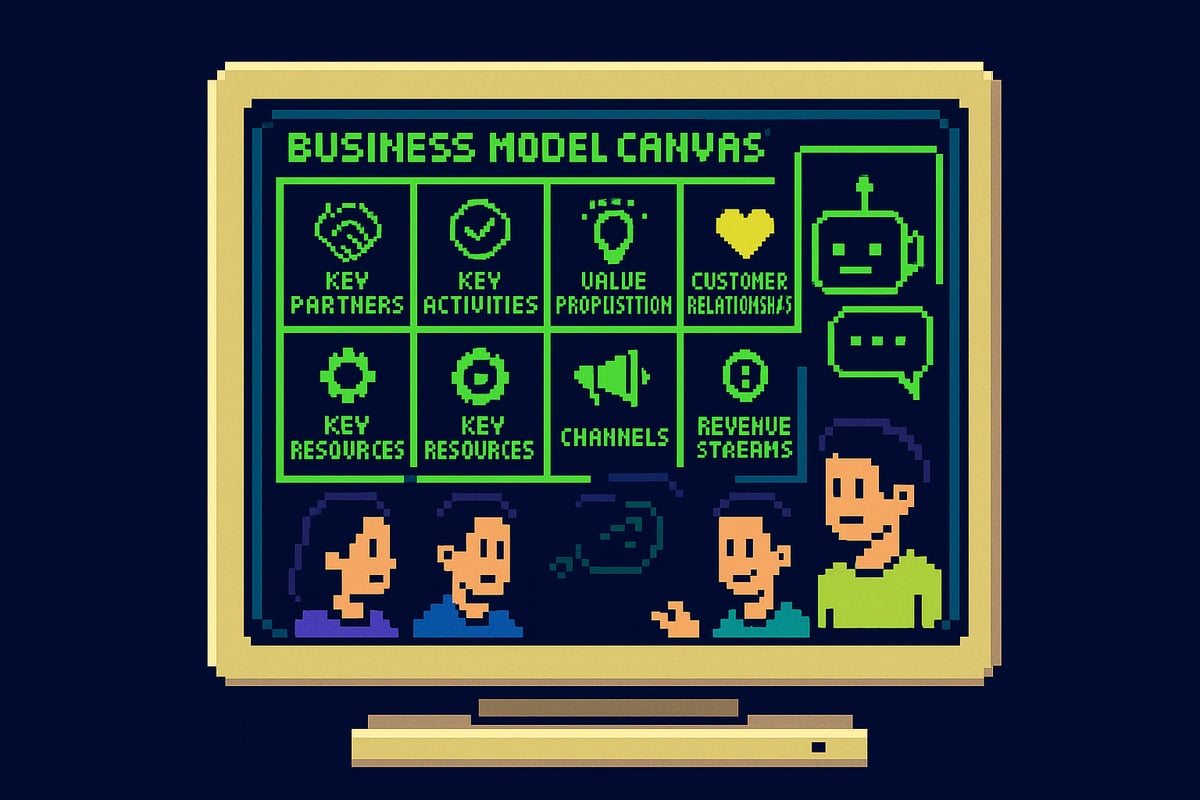
Building a business model canvas ai with modern tools is now faster, smarter, and more collaborative than ever. This step-by-step guide will help you transform your idea into a dynamic, AI-driven business model that keeps you ahead in 2025.
Step 1: Define Your Idea or Business Vision
The foundation of any effective business model canvas ai is a clear and concise business description. Start by outlining your core idea, mission, and what sets your venture apart. AI tools rely on your input to deliver tailored suggestions, so clarity at this stage is essential.
Consider prompts such as:
- "Describe your target customer in one sentence."
- "Summarize your unique value proposition."
- "What is your main revenue source?"
The more specific your answers, the more accurate and relevant your business model canvas ai becomes. For example, a digital marketing agency might enter: "We help small e-commerce brands increase sales with data-driven campaigns." This direct input allows the AI to generate context-specific recommendations for each canvas block.
Remember, the business model canvas ai can only be as strong as the vision you provide. Take time to refine your description before moving to the next step.
Step 2: Select the Right AI Business Model Canvas Tool
Choosing the right platform is crucial for building an effective business model canvas ai. Popular options such as Convoboss and Creately offer a range of features, from AI-assisted drafting to real-time collaboration.
When evaluating tools, consider:
- Industry-specific templates
- Collaboration and sharing capabilities
- Export formats (Word, PDF, PowerPoint)
- Free vs. premium features
Here's a quick comparison:
| Platform | Users | Key Feature | Export Options |
|---|---|---|---|
| Convoboss | 5,000+ | Fast AI canvas creation | PDF, Image |
| Creately | 10M+ | Real-time editing | PDF, Word, PPT |
Platforms like AI business tools for innovation also help you discover and compare the best solutions for your workflow. Select a business model canvas ai tool that matches your team's needs and integrates with your existing processes.
Step 3: Generate and Customize Your Canvas
With your vision defined and tool selected, use the business model canvas ai to auto-populate each section. Most platforms allow you to input key details and receive AI-generated suggestions for customer segments, value propositions, channels, and more.
Edit these suggestions to align with your unique business context. For example, Creately’s real-time editing and voting tools let your team refine each block together. Attach supporting documents or visuals for added clarity within your business model canvas ai.
A typical workflow might look like:
- Input your business description and goals.
- Review AI-generated drafts for each canvas block.
- Customize content to reflect your strategy.
- Link relevant files or data sources.
This step ensures your business model canvas ai is both comprehensive and tailored to your market.
Step 4: Collaborate and Iterate with Your Team
Collaboration is at the heart of a successful business model canvas ai process. Invite team members and stakeholders to co-create, provide feedback, and iterate on the canvas in real time.
Assign ownership of specific blocks, track progress, and manage different versions. Features like live chat, comments, and voting can significantly reduce decision-making time and improve alignment.
For example, a startup team using business model canvas ai tools can cut planning time from weeks to minutes, allowing for faster pivots and greater agility. Regular iteration ensures your canvas evolves with your business landscape.
Step 5: Present, Export, and Share Your Canvas
Once your business model canvas ai is finalized, it's time to present it to stakeholders or investors. Use built-in presentation modes for clear, compelling overviews. Export your canvas as a PDF, image, or shareable link to distribute across your organization.
Many platforms integrate with business tools like Google Drive, Teams, or Confluence, making sharing seamless. Business model canvas ai outputs are increasingly used in investor decks, strategic meetings, and cross-team planning sessions.
By following these steps, you can harness the full potential of business model canvas ai for innovation and growth in 2025.
Industry Applications: AI Business Model Canvas in Action
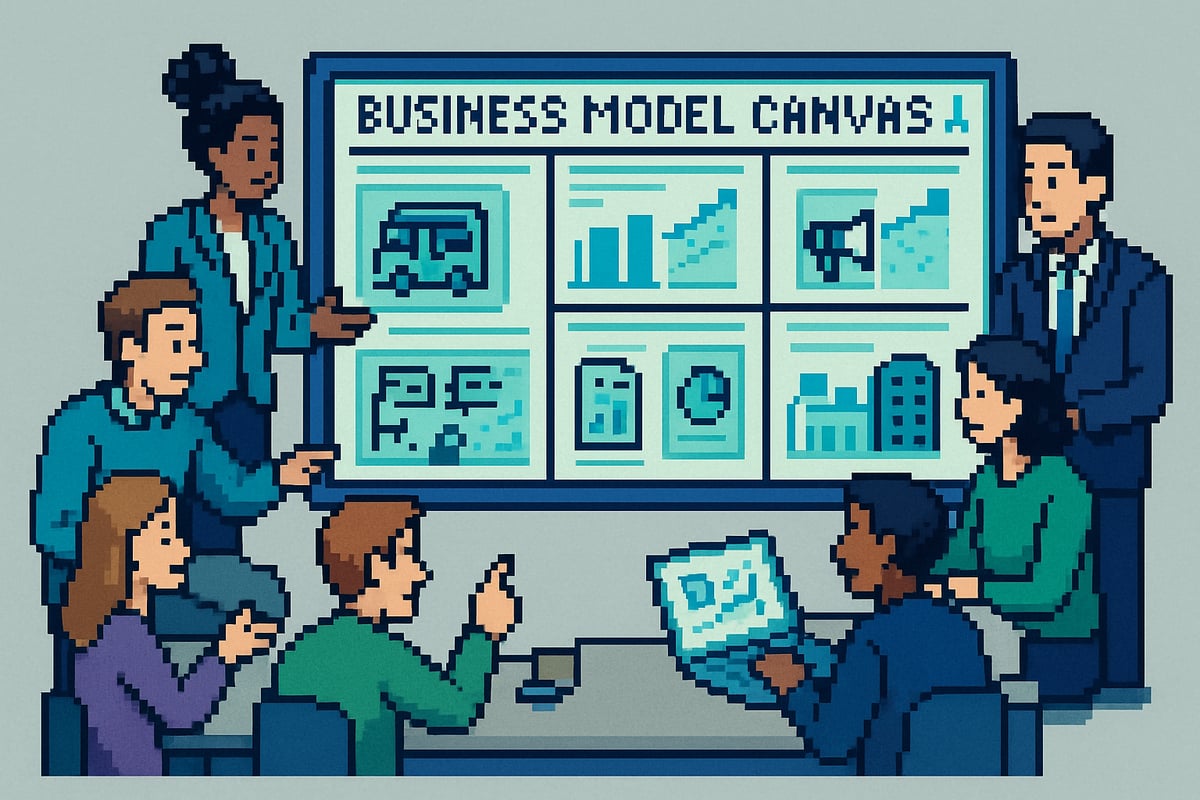
Across industries, organizations are rapidly adopting business model canvas ai to accelerate planning, boost alignment, and drive innovation. The flexibility of these tools ensures they fit startups, agencies, educators, enterprises, and nonprofits alike.
Startups and Entrepreneurs
For startups, business model canvas ai enables rapid prototyping and validation. Founders can instantly generate canvases tailored to their ideas, experiment with revenue streams, and iterate based on AI-driven insights.
AI tools reduce planning time from weeks to minutes, helping entrepreneurs focus on execution. For example, many startups use business model canvas ai to identify unique value propositions and test market fit before investing heavily. With real-time feedback and automated suggestions, founders can pivot quickly and stay ahead of competitors.
Consultants and Agencies
Consultants and agencies leverage business model canvas ai to deliver customized strategies for their clients. By using AI-powered frameworks, consultants can generate sector-specific canvases, analyze client data, and recommend optimized business models.
Agencies often turn to resources like the AI Business Model Framework and Use Cases to enhance their methodology. This approach streamlines client onboarding, ensures consistency, and elevates the quality of deliverables. AI also enables faster iteration, making strategy sessions more dynamic and data-driven.
Education and Incubators
In education and incubator programs, business model canvas ai transforms how students and founders learn innovation. Professors use interactive AI tools to teach business modeling, encouraging learners to experiment with real-world scenarios.
Accelerators and incubators benefit from business model canvas ai by facilitating collaborative workshops, where teams co-create, receive instant feedback, and refine ideas. The visual, interactive nature of these platforms fosters deeper understanding and prepares participants for real market challenges.
Enterprises and Corporations
Large enterprises rely on business model canvas ai to align cross-functional teams during digital transformation. AI-driven canvases provide a single source of truth, streamlining communication and supporting strategic pivots.
Companies in digital platform sectors are increasingly adopting these tools, as highlighted in AI in Digital Platform Enterprises. With business model canvas ai, corporations can quickly iterate on models for new product launches, evaluate partnerships, and optimize cost structures. Real-time collaboration features ensure that every stakeholder stays engaged and informed.
Nonprofits and Social Enterprises
Nonprofits and social enterprises use business model canvas ai to design sustainable models for impact-driven initiatives. AI tools help these organizations map out funding sources, stakeholder relationships, and scalable solutions.
For grant proposals and stakeholder presentations, business model canvas ai ensures clarity and alignment. Nonprofits can visualize their mission, resources, and partnerships, making it easier to communicate value and secure support. The adaptability of these tools allows mission-driven teams to refine strategies in response to evolving community needs.
Best Practices and Future Trends for AI-Powered Business Model Innovation
Adopting business model canvas ai solutions can transform how organizations approach innovation and strategy. To ensure you maximize value, it is essential to follow proven best practices, avoid common mistakes, and stay ahead of future trends. Let us explore how you can make the most of business model canvas ai tools, what to watch out for, and how leading companies are already seeing measurable results.
Best Practices for Maximizing AI BMC Tools
To unlock the full potential of business model canvas ai, start by defining clear objectives and key performance metrics before using any tool. This clarity guides AI-generated insights and ensures alignment with your strategic vision.
- Combine AI outputs with expert judgment, market research, and industry insights.
- Update your business model canvas regularly as conditions evolve.
- Encourage team-wide participation to foster collaborative innovation.
- Use industry-specific templates for more relevant recommendations.
Agencies often leverage business model canvas ai during client strategy sessions, integrating custom AI agents to streamline data analysis and automate repetitive tasks. For example, building custom AI agents can help personalize the canvas process for unique business needs.
Common Pitfalls to Avoid
While business model canvas ai tools accelerate planning, they are not foolproof. Avoid these common pitfalls to ensure success:
- Relying solely on AI outputs without critical human review.
- Using generic templates that do not reflect your unique value proposition.
- Overlooking data privacy and security best practices.
It is important to tailor the canvas to your business context and regularly review AI-generated suggestions. Human oversight and customization remain crucial for effective business model canvas ai adoption.
The Future of AI in Business Model Design (2025 and Beyond)
Looking ahead, business model canvas ai tools are set to integrate more deeply with big data platforms and predictive analytics. Generative AI will enable richer, industry-specific frameworks, making models more actionable and precise.
| Trend | Impact |
|---|---|
| Predictive analytics | Proactive strategy adjustments |
| Industry-specific templates | Faster, relevant model creation |
| Generative AI integration | Deeper scenario planning |
| Broader SMB/enterprise use | Widespread adoption and competitive edge |
Recent reports show rising adoption of business model canvas ai among startups, consultants, and large enterprises. AI is becoming a true co-creator, empowering teams to focus on high-level strategy rather than manual tasks.
Real-World Success Stories
Businesses across industries are already reaping the benefits of business model canvas ai. Startups report faster launches and sharper value propositions, while agencies and enterprises credit AI tools for improved collaboration and strategic clarity.
For instance, organizations leveraging AI-powered canvases have seen planning times drop from weeks to minutes. Customer testimonials highlight increased stakeholder engagement and measurable revenue growth. To see real-world feedback, check out first impressions of CustomGPT AI, which demonstrates how AI-driven innovation is reshaping business model development.