
Aiplus Guide: Your Essential Handbook for 2026
The world of artificial intelligence is evolving faster than ever, reshaping industries and daily life. The aiplus Guide is your essential resource for mastering this transformation in 2026.
Inside, you will discover the latest AI trends, step-by-step implementation strategies, and the most effective tools for business and personal growth. Learn how AI is impacting healthcare, finance, retail, and more, while gaining future-proofing insights to stay ahead.
Ready to thrive in the AI era? Let the aiplus Guide be your roadmap for success in a dynamic, technology-driven world.
The State of AI in 2026: Key Trends and Developments
Artificial intelligence has reached a pivotal moment in 2026, transforming how industries operate and reshaping the global economy. The aiplus guide is your key to understanding these rapid advancements, from surging adoption rates to groundbreaking technologies. This section explores the trends, challenges, and innovations that define the state of AI today.

The Acceleration of AI Adoption Across Industries
In 2026, aiplus adoption has accelerated across nearly every sector. Healthcare, finance, retail, and manufacturing lead the charge, leveraging AI for efficiency, accuracy, and innovation. According to IDC, global AI spending is projected to surpass $500 billion this year, demonstrating the scale of investment and belief in AI’s transformative power.
Healthcare institutions now use AI-powered diagnostics to reduce errors and deliver faster, personalized care. In finance, algorithmic trading and fraud detection systems powered by aiplus offer improved accuracy and risk management. Retailers deploy AI chatbots and recommendation engines to personalize customer experiences, while manufacturers implement predictive maintenance and quality control solutions.
Governments worldwide have introduced new policies and regulations to ensure responsible AI use. The rise of ethical frameworks aims to address concerns about bias, data privacy, and transparency, making aiplus implementation more trustworthy and secure.
Workforce transformation is another significant trend. Companies are investing in upskilling programs to help employees adapt to new AI-driven roles. The demand for data literacy, prompt engineering, and ethical AI expertise is higher than ever.
Despite these gains, organizations still face challenges. Bias in algorithms, safeguarding data privacy, and ensuring transparency remain top concerns. Expert predictions suggest that by 2030, aiplus will be integral to core business operations, enabling smarter decision-making and continuous innovation. For more comprehensive data, see the latest AI adoption statistics 2026.
Breakthrough Technologies Powering the Next Wave of AI
The next wave of aiplus innovation is powered by significant advances in technology. Natural language processing (NLP) has evolved, enabling AI to understand and generate human-like responses with remarkable accuracy. Computer vision systems now interpret images and video at a granular level, supporting everything from medical imaging to automated retail checkout.
Generative AI has expanded creative boundaries, allowing the aiplus community to develop content, art, and code with minimal human intervention. The integration of AI with IoT, edge computing, and 5G networks means real-time data analysis and decision-making are possible on a global scale.
Quantum computing is on the horizon, promising to accelerate aiplus capabilities by solving complex problems far beyond the reach of traditional computers. Between 2024 and 2026, researchers have achieved notable breakthroughs, including self-learning AI agents and improved model transparency.
Another key trend is the democratization of AI tools. No-code and low-code platforms now enable non-technical users to build and deploy aiplus solutions, lowering barriers to entry and fostering widespread innovation. As these technologies mature, the AI ecosystem becomes more accessible, adaptable, and impactful across industries.
Building Your AI Strategy: A Step-by-Step Approach for 2026
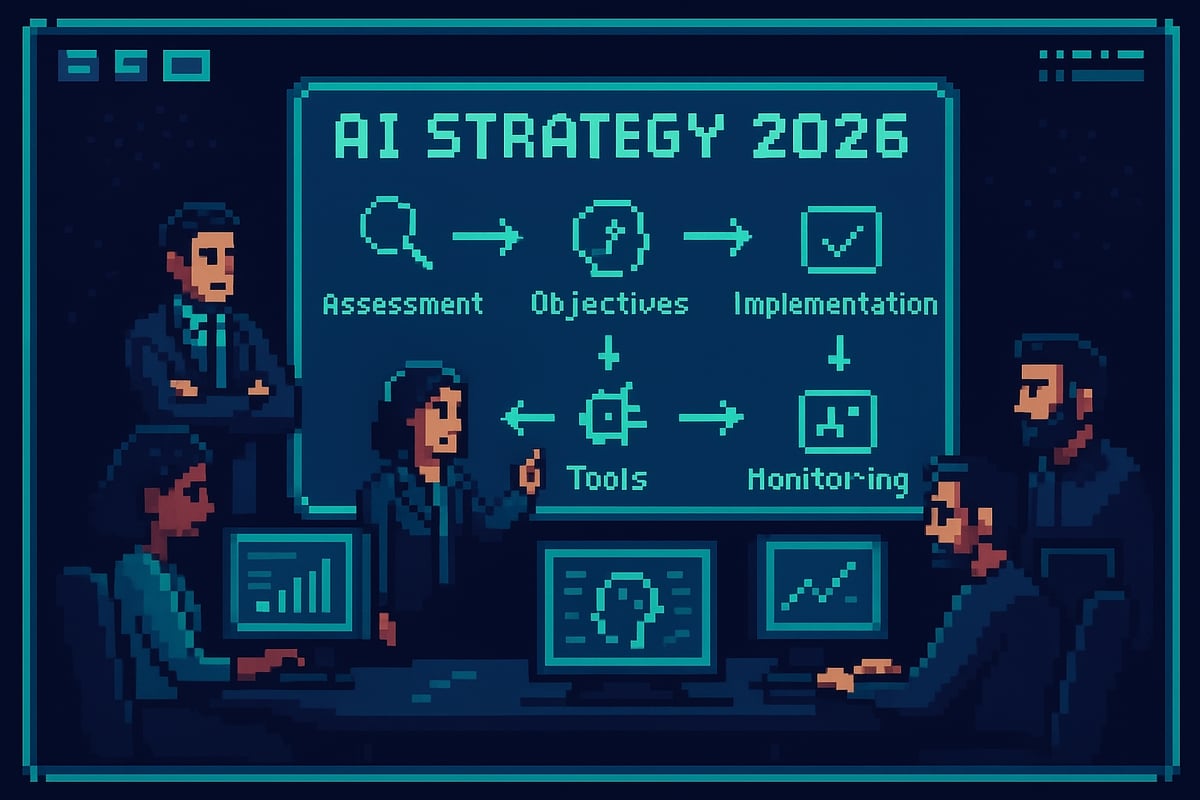
A robust AI strategy is no longer optional for organizations seeking to stay ahead in 2026. The aiplus guide presents a clear, actionable path to help you harness AI’s potential, from initial assessment to ongoing optimization. Follow these five steps to build an AI roadmap that delivers measurable business value and resilience.
Step 1: Assessing Your Organization’s AI Readiness
Success with aiplus starts by understanding your current position. Begin with an AI readiness audit to uncover strengths, gaps, and opportunities within your organization. Evaluate your data infrastructure, technology stack, and workforce skills.
Typical audit questions include:
# Sample AI Readiness Audit Checklist
readiness = {
    "data_quality": "High",
    "AI_talent": "Moderate",
    "infrastructure": "Cloud-based",
    "executive_support": True
}
Identify pain points where AI could have the most impact. For example, a mid-sized retailer might find inefficiencies in inventory management or customer engagement processes. By mapping these areas, you set a solid foundation for the aiplus journey.
Assess your talent pool. Do you have data scientists, or should you invest in upskilling? Review your data sources for accuracy and accessibility. This comprehensive approach ensures your organization is primed for AI integration and long-term success.
Step 2: Defining Clear AI Objectives and KPIs
Once your readiness is clear, establish well-defined AI objectives. The aiplus method recommends aligning goals with broader business priorities such as customer satisfaction, operational efficiency, or innovation. Create measurable key performance indicators (KPIs) to track progress.
Examples of effective KPIs include:
- Customer satisfaction scores
- Cost reduction percentages
- Employee productivity rates
A focused approach ensures that your AI initiatives are not only aspirational but also actionable. For instance, a company aiming to enhance customer service with AI can track response times and resolution rates. The aiplus framework encourages regular KPI reviews to maintain alignment with evolving business needs.
Use case studies to illustrate success. Companies that set clear, quantifiable goals often achieve faster returns on AI investments. This step transforms vision into tangible outcomes by providing a roadmap for ongoing measurement and improvement.
Step 3: Selecting the Right AI Tools and Platforms
Selecting the best tools is a cornerstone of the aiplus strategy. Evaluate each AI solution for scalability, security, integration ease, and user-friendliness. Consider both enterprise-grade platforms and no-code/low-code options for smaller teams or rapid prototyping.
A comparison table may help clarify choices:
| Platform | Scalability | Security | Integration | No-Code Option |
|---|---|---|---|---|
| Google Cloud AI | High | Strong | Excellent | Yes |
| Microsoft Azure AI | High | Strong | Excellent | Yes |
| Open-Source Alternatives | Moderate | Varies | Good | Limited |
For a curated overview of top solutions, see Best AI Tools for Business. This resource supports the aiplus approach by helping you compare leading platforms and align each tool with your unique needs.
No-code platforms are especially valuable for SMEs, enabling non-technical users to experiment and deploy AI with minimal friction. Always choose tools that can grow with your organization and adapt to future requirements.
Step 4: Implementation and Change Management
Implementing aiplus means moving from planning to action. Start with pilot projects to test feasibility and gather early feedback. Develop comprehensive training programs to upskill your workforce and foster AI literacy at all levels.
Best practices for successful implementation:
- Begin with small-scale pilots in high-impact areas
- Provide hands-on AI workshops for staff
- Communicate benefits and address concerns proactively
Change management is critical. Resistance may arise, so encourage open dialogue and celebrate quick wins to build momentum. For example, a logistics company might introduce AI route optimization, then share results to inspire broader adoption. The aiplus framework highlights the importance of cultivating a culture of innovation and continuous learning during this phase.
Step 5: Monitoring, Evaluation, and Continuous Improvement
AI strategy is not a one-time effort but an ongoing journey. The aiplus philosophy emphasizes regular monitoring and evaluation to maximize ROI and adapt to changing conditions. Establish feedback loops using AI-powered analytics to track performance and uncover new opportunities.
Set up dashboards for real-time KPI tracking. Analyze outcomes to inform future decisions. When industry trends shift, adapt your AI strategy accordingly. Continuous improvement ensures your organization remains competitive and resilient.
By embedding aiplus principles into your monitoring processes, you foster an agile mindset that is essential for thriving in the dynamic AI landscape of 2026.
Essential AI Tools and Solutions for 2026
The rapid expansion of AI in 2026 means that choosing the right tools is critical for staying ahead. The aiplus guide curates the most effective solutions, helping organizations streamline operations, boost productivity, and unlock new opportunities across every industry.

AI-Powered Automation Tools
AI-powered automation is reshaping business operations, allowing organizations to automate repetitive tasks and focus on higher-value work. With platforms such as Robotic Process Automation (RPA), companies in finance and HR are automating invoice processing, payroll, and compliance tasks. According to Statista, the RPA market is projected to reach $13.74 billion by 2026, highlighting the increasing demand for these solutions.
Popular automation tools now offer drag-and-drop interfaces and integration with existing systems, making adoption accessible for businesses of all sizes. The aiplus approach emphasizes not only efficiency but also resilience—automation reduces errors and ensures consistent performance.
To explore practical implementation steps and advanced strategies, see AI Automation Strategies. As organizations scale, aiplus recommends regularly reviewing automation workflows to maximize ROI and adaptability.
Conversational AI and Virtual Assistants
Conversational AI has evolved rapidly, with chatbots and virtual assistants delivering seamless customer support and engagement. Modern solutions offer multilingual support, contextual understanding, and integration with CRM platforms. The aiplus guide highlights use cases in e-commerce, banking, and healthcare scheduling, where conversational AI streamlines user interactions and reduces response times.
Key features now include natural language processing, sentiment analysis, and proactive engagement. Businesses leveraging these tools see improvements in customer satisfaction and operational efficiency. The aiplus methodology advises evaluating virtual assistant platforms for scalability and data privacy compliance.
By adopting conversational AI, companies can offer 24/7 service, personalize experiences, and reduce operational costs. The aiplus guide encourages organizations to pilot these solutions for measurable impact.
AI for Data Analytics and Business Intelligence
The rise of AI-driven analytics is transforming how data is processed, visualized, and acted upon. Tools powered by aiplus enable real-time business intelligence, automated reporting, and advanced predictive analytics. Automated anomaly detection and trend forecasting help organizations make faster, more accurate decisions.
Key benefits include:
- Improved data accuracy
- Reduced manual reporting time
- Enhanced strategic planning
- Early detection of business risks
Aiplus recommends selecting platforms with intuitive dashboards and robust integration options. Companies that embrace AI analytics gain a competitive edge, leveraging insights that drive growth and innovation. The aiplus guide also covers best practices for secure data handling and compliance.
AI in Marketing and Personalization
AI is revolutionizing marketing by enabling dynamic content creation, customer segmentation, and campaign optimization. With aiplus-powered tools, marketers can personalize product recommendations, automate A/B testing, and optimize messaging in real time. According to Salesforce, 80% of marketers using AI report increased ROI by 2025.
A recent case study in retail showed that AI-powered product recommendations improved conversion rates and customer loyalty. The aiplus framework suggests focusing on platforms that support omnichannel personalization and privacy-friendly data usage.
Marketers should leverage analytics dashboards to track campaign performance and adjust strategies quickly. The aiplus guide details how to align AI marketing tools with business objectives for sustainable results.
AI Cybersecurity Solutions
As cyber threats grow more complex, AI-driven cybersecurity solutions are essential for proactive protection. Adaptive and self-learning systems can detect anomalies, respond to threats in real time, and prevent fraud. The aiplus guide spotlights use cases in financial services, where AI security tools safeguard transactions and ensure regulatory compliance.
Emerging trends include automated incident response, behavioral biometrics, and continuous risk assessment. By integrating these solutions, organizations benefit from faster detection and reduced false positives. The aiplus approach emphasizes ongoing monitoring and regular updates to stay ahead of evolving threats.
In summary, the aiplus guide equips professionals and businesses with the knowledge and tools needed to harness AI's full potential in 2026. By adopting these essential solutions, organizations can drive innovation, efficiency, and security in the AI era.
AI Applications Across Key Industries
Artificial intelligence is transforming every major sector, and the reach of aiplus is accelerating this evolution. Organizations are leveraging aiplus to drive innovation, efficiency, and better outcomes. Let us explore how aiplus is making a measurable difference in healthcare, finance, retail, manufacturing, and education.
Healthcare
Healthcare has seen some of the most profound impacts from aiplus adoption. AI-powered diagnostic tools are reducing errors by 30 percent, according to Harvard Medical School. These systems analyze complex medical data, enabling earlier and more accurate disease detection.
Aiplus is also central to advancements in personalized medicine. By analyzing genetic and lifestyle data, AI tailors treatments for individual patients, improving outcomes and reducing side effects. Hospitals are using virtual assistants to streamline patient engagement, automate scheduling, and answer health queries, freeing up staff for critical care.
The integration of aiplus into healthcare workflows is setting new standards for quality, efficiency, and safety.
Finance
The finance industry relies on aiplus for fraud detection, risk assessment, and compliance management. With 70 percent of financial institutions using AI for regulatory compliance, the sector is becoming more resilient against threats.
Algorithmic trading platforms use aiplus to process vast market data in real time, identifying trends and optimizing investment strategies. AI-driven credit scoring models are reducing bias and improving financial inclusion by analyzing alternative data sources.
Banks are also deploying AI to enhance customer experiences, offering personalized financial advice and automating routine transactions. The result is a more secure, agile, and customer-centric financial ecosystem powered by aiplus.
Retail and E-Commerce
Retailers are embracing aiplus to personalize customer experiences, optimize inventory, and forecast demand. AI chatbots are driving a 15 percent increase in online conversion rates by providing instant, tailored responses to customer queries. For deeper insights into conversational AI in retail, see Conversational AI Insights.
Aiplus tools analyze browsing patterns, recommend products, and segment customers for targeted marketing. Automated systems manage stock levels, reducing shortages and overstock. Dynamic pricing algorithms powered by aiplus respond to market trends in real time, maximizing revenue.
With these innovations, retailers deliver seamless, engaging experiences that build loyalty and boost profitability.
Manufacturing and Supply Chain
Manufacturing and supply chain operations have been revolutionized by aiplus. Predictive maintenance powered by AI reduces downtime and extends equipment life, while real-time quality control systems catch defects early.
AI-driven supply chains are 20 percent more efficient, according to Gartner. Aiplus optimizes logistics by forecasting demand, routing deliveries, and managing inventory across global networks. Robotics and computer vision automate repetitive tasks, improving safety and productivity.
These capabilities enable manufacturers to respond swiftly to market changes, minimize waste, and maintain a competitive edge with aiplus.
Education
Education is rapidly evolving with the adoption of aiplus. Personalized learning platforms adapt to each student’s pace and strengths, improving outcomes in STEM subjects. AI tutors provide instant feedback, clarify concepts, and keep learners engaged.
Automated grading systems powered by aiplus reduce administrative workloads for teachers, allowing them to focus on instruction. Schools are also using AI to identify at-risk students, enabling timely interventions.
The integration of aiplus in education fosters inclusive, data-driven learning environments that prepare students for tomorrow’s challenges.
Future-Proofing Your Skills and Organization for the AI Era
The rapid evolution of artificial intelligence brings both opportunity and challenge. To thrive in the age of aiplus, individuals and organizations must proactively prepare for a future shaped by smart technologies. Future-proofing requires a blend of upskilling, cultural change, regulatory awareness, and strategic resilience. Here is how you can get started.
Upskilling and Reskilling for an AI-Driven Workforce
In the aiplus era, the most valuable asset is your team’s ability to adapt. The demand for AI skills continues to surge, with data literacy, prompt engineering, and ethical AI principles topping the list for 2026. Organizations are investing in company-wide AI literacy programs so employees can confidently work alongside intelligent systems.
To stay ahead, professionals should explore online courses, certifications, and bootcamps focused on artificial intelligence and data science. For a curated overview of essential trends and learning resources, visit Artificial Intelligence and Data Science. Building these skills not only enhances career resilience but also empowers innovation within your organization.
- In-demand AI skills for 2026:
- Data interpretation and analysis
- Prompt engineering for generative models
- Understanding AI ethics and bias mitigation
Workplaces that prioritize upskilling are seeing measurable benefits, as highlighted by recent findings on AI adoption in U.S. workplaces. Embedding aiplus knowledge into your workforce is a decisive step toward future-proofing.
Fostering a Culture of Innovation and Ethical AI
Creating a culture where aiplus thrives means encouraging experimentation and agile thinking. Teams should feel empowered to test new AI tools, iterate on ideas, and learn from rapid feedback loops. Leading organizations are implementing responsible AI guidelines, with clear strategies for identifying and addressing algorithmic bias.
Ethical considerations are front and center, with 60% of businesses naming ethics as a top challenge in AI adoption. Practical steps include regular bias audits, transparent decision-making processes, and open forums for discussing AI’s societal impact.
- Encourage open dialogue about AI use
- Provide training on responsible AI practices
- Designate AI ethics officers or committees
By weaving ethical standards into daily operations, companies strengthen trust and safeguard their aiplus reputation.
Preparing for Regulatory and Societal Changes
As AI regulations evolve, organizations must remain vigilant and adaptable. Compliance with emerging laws such as the EU AI Act is no longer optional. Anticipating shifts in consumer expectations, especially around privacy and transparency, is equally important.
Aiplus leaders proactively review regulatory updates and adjust policies accordingly. For example, financial institutions have adapted internal processes to stay ahead of new AI compliance mandates. Being prepared means setting up cross-functional teams to monitor legal developments and engaging with industry bodies for guidance.
- Stay updated on regional and global AI laws
- Regularly review and update data privacy policies
- Foster transparent communication with stakeholders
Adapting to regulatory and societal changes positions your organization as a trusted aiplus innovator.
Building Resilient, Adaptable AI Strategies
Continuous learning and strategic flexibility are the cornerstones of lasting success in the aiplus landscape. Leading enterprises invest in scenario planning, risk assessment tools, and regular strategy reviews to navigate uncertainty.
Case studies show that organizations able to pivot their AI roadmaps in response to global events, such as the recent pandemic, outperform those with rigid plans. Resilience comes from embracing change, learning from setbacks, and maintaining a future-focused mindset.
| Strategy Element | Description | Benefit |
|---|---|---|
| Scenario Planning | Explore multiple future outcomes | Minimize risk |
| Continuous Learning | Invest in ongoing education | Stay ahead of trends |
| Agile Frameworks | Rapidly iterate and adapt | Respond quickly to change |
By embedding these principles, your aiplus strategy will remain robust in the face of rapid technological advancement.
Navigating the AI Tool Ecosystem: Selection, Integration, and Best Practices
Adopting the right AI tools in 2026 is a critical step for any organization looking to leverage the full potential of aiplus advancements. As the AI landscape expands, understanding how to select, integrate, and optimize these solutions can make the difference between successful digital transformation and costly setbacks. This section provides a structured approach to navigating the complex ecosystem of AI tools, ensuring you make informed, future-proof decisions.
Mapping the AI Tool Landscape
The aiplus ecosystem in 2026 features a vast range of tools, each tailored to specific business needs. Understanding the main categories and how to evaluate them is essential. The table below summarizes key AI tool categories and selection criteria:
| Category | Example Tools | Key Evaluation Criteria |
|---|---|---|
| Automation | RPA platforms | Scalability, integration |
| Analytics & BI | Predictive analytics | Data compatibility, accuracy |
| Conversational AI | Chatbots, voice bots | Contextual understanding, UX |
| Industry-specific | Healthcare AI, fintech | Compliance, domain expertise |
When evaluating solutions, organizations should consider support, interoperability, and vendor reputation. Many enterprises, especially in regions like MENAAP, are accelerating AI adoption, as highlighted in AI adoption in MENAAP enterprises.
Common pitfalls to avoid include:
- Overlooking integration requirements
- Underestimating data privacy needs
- Selecting tools lacking scalability for aiplus growth
A structured approach to mapping the landscape ensures you shortlist solutions aligned with your strategic goals.
Integration Strategies for Seamless AI Adoption
Integrating aiplus tools with existing infrastructure is often the most challenging aspect of AI projects. Best practices start with clear documentation of current systems and leveraging API-driven connections for flexibility. Prioritize solutions that offer robust documentation and community support.
A successful integration strategy includes:
- Conducting a compatibility assessment before deployment
- Piloting new tools in controlled environments
- Training staff to use AI features effectively
A real-world example is a logistics firm that implemented an aiplus-powered analytics platform, connecting it to legacy databases through secure APIs. This approach minimized disruptions and accelerated value realization.
Yet, integration failures remain common. According to industry research, 65% of unsuccessful AI projects cite integration issues as a major factor. As AI agent growth accelerates, organizations should anticipate infrastructure challenges, such as those described in the Forecast model for AI-driven bottlenecks. Proactive planning and continuous monitoring can help mitigate these risks.
Choosing the Right AI Business Tools: ToolStacked’s Role
Selecting the right aiplus solutions is easier with expert guidance. ToolStacked stands out as a trusted platform for discovering, comparing, and implementing AI business tools in 2026. The platform offers curated recommendations, custom chatbot solutions, and a library of educational resources for all experience levels.
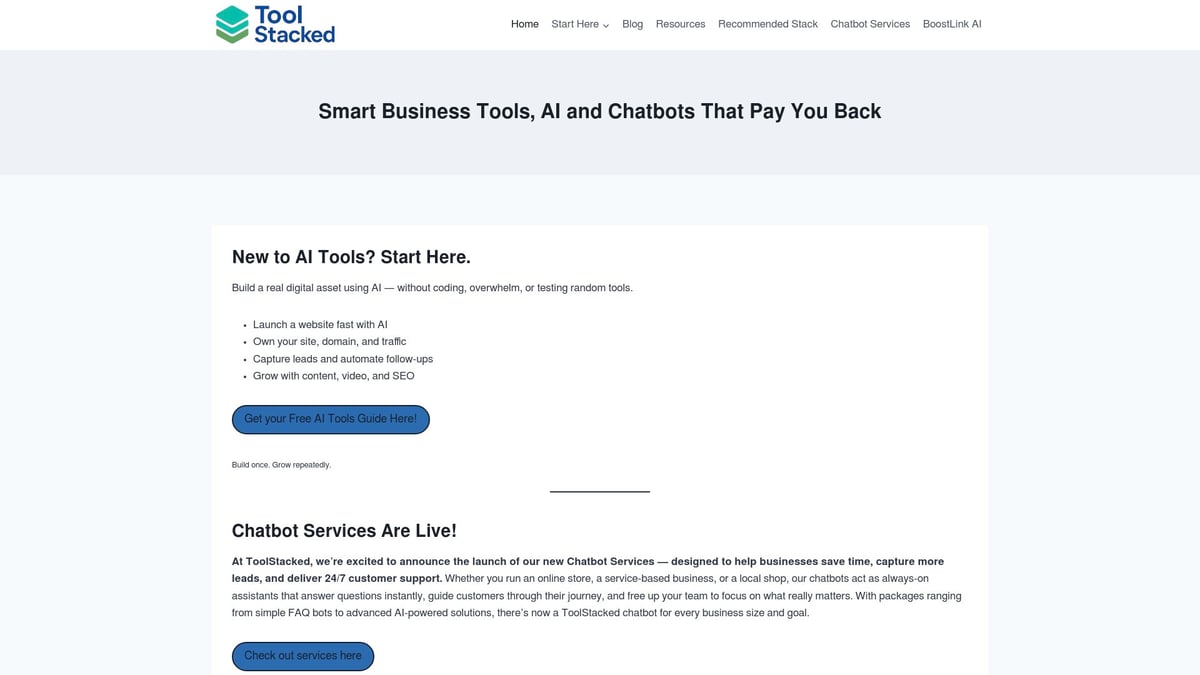
For organizations new to aiplus, ToolStacked emphasizes beginner-friendly, no-code options and practical guides to support digital transformation. Its comparison features allow decision-makers to assess ROI, scalability, and ease of use side by side.
Businesses leveraging ToolStacked report smoother AI adoption and measurable improvements in efficiency. The platform’s actionable insights and success stories highlight its real-world impact, making it an indispensable ally for navigating the evolving AI tool ecosystem.