
AI in Data Analysis Guide: Unlock Insights in 2025
AI in data analysis is reshaping how businesses uncover insights in 2025. With data volumes exploding, organizations face an urgent need for smarter, faster analytics. AI now automates complex processes, predicts trends, and transforms raw data into actionable intelligence that is accessible to everyone.
This guide will show you how AI empowers data analysis, from defining key concepts and exploring benefits to practical steps, essential tools, and real-world challenges. Ready to future-proof your data strategy? Dive in to unlock the full potential of AI-driven analytics.
Understanding AI in Data Analysis
Artificial intelligence is reshaping how organizations uncover value from their data. With 402.74 million terabytes generated every single day (Luzmo), the scale and complexity of information have grown beyond what manual or traditional methods can manage. AI in data analysis refers to the application of advanced algorithms, including machine learning, deep learning, and natural language processing, to extract insights from both structured and unstructured data.
Defining AI in Data Analysis
AI in data analysis encompasses several core technologies. Machine learning enables systems to learn from historical data, identify patterns, and make predictions. Deep learning handles complex data types, such as images or time-series, using layered neural networks. Natural language processing (NLP) allows AI to extract meaning from text, powering sentiment analysis or chat-based insights.
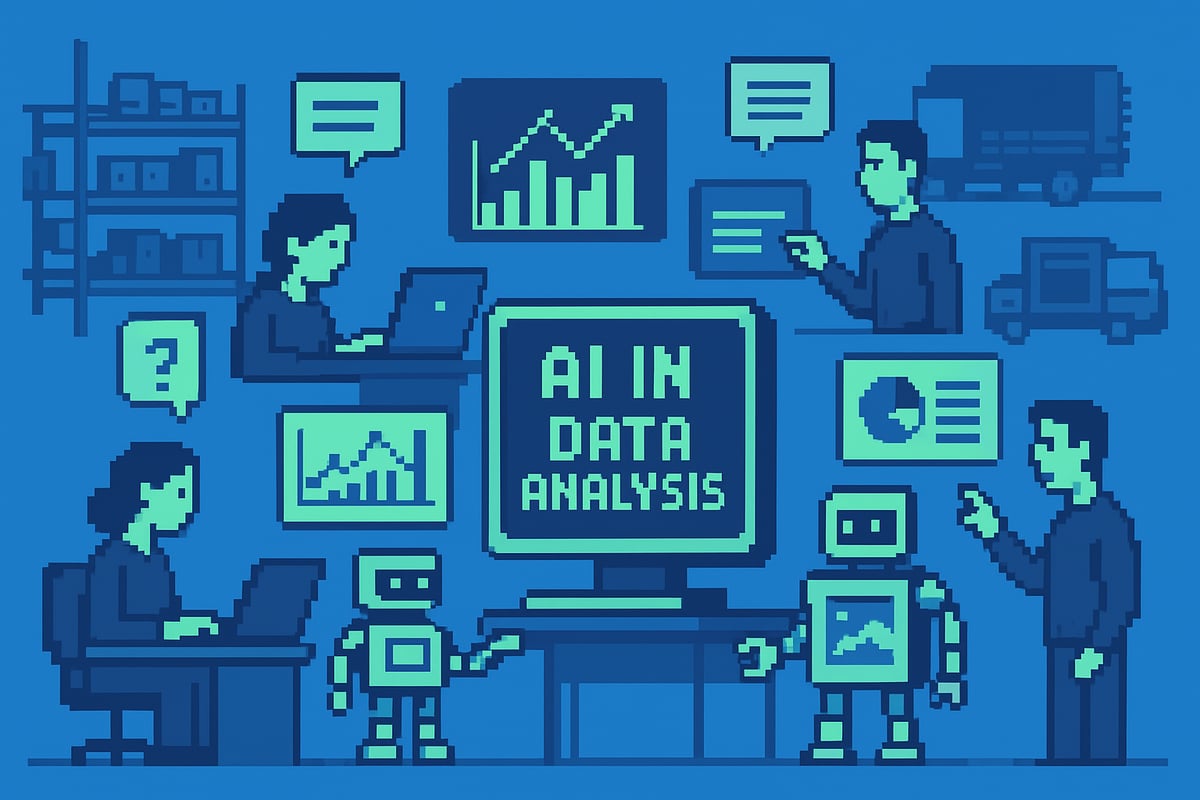
Traditional data analysis relies on manual processes and static queries, often limited to structured datasets. In contrast, AI-driven methods can process massive volumes of both structured and unstructured data at speed and scale. For example, in warehouse management, AI can answer operational questions by analyzing sensor data, inventory logs, and even customer feedback.
Generative AI is rapidly democratizing ai in data analysis for non-technical users. Tools like ChatGPT and generative BI platforms enable anyone to ask business questions in plain English and receive actionable insights. According to Luzmo, the adoption of these technologies is surging as they bridge the gap between data experts and business teams. For a hands-on perspective, see the First impressions of CustomGPT AI, which explores how generative AI is being integrated into analytics workflows.
Types of AI Technologies Used
Several AI technologies underpin the modern ai in data analysis landscape:
- Machine learning algorithms: Spot trends, outliers, and make accurate forecasts.
- Deep learning: Analyze complex data such as images, sensor streams, or time-series.
- Natural language processing: Extract and summarize insights from textual data, like reviews or support tickets.
- Generative AI: Create code snippets, summaries, or synthetic datasets for testing.
- AI-powered automation: Handle repetitive tasks such as anomaly detection or routine reporting.
In logistics, predictive analytics uses AI to forecast demand and optimize delivery routes. Healthcare organizations deploy deep learning for image analysis, detecting anomalies in scans faster than human experts. Each technology enhances the reach and efficiency of ai in data analysis.
How AI Integrates into the Analytics Workflow
AI now spans every stage of the analytics workflow, from data collection to visualization and decision-making. It automates data gathering, cleansing, and transformation, ensuring high-quality inputs for analysis. In modern BI platforms, AI-powered features generate interactive dashboards, surface hidden trends, and offer recommendations.
The shift from static reports to conversational and interactive analytics is evident in tools like Luzmo’s AI Chart Generator, where users create visualizations through simple prompts. Integration with business intelligence systems ensures that ai in data analysis delivers real-time, actionable insights directly to stakeholders. This seamless workflow empowers organizations to move from data to decisions with unprecedented speed and agility.
Key Benefits of AI-Driven Data Analysis
AI in data analysis is transforming how organizations operate, compete, and grow. By automating tedious tasks, accelerating insight generation, and making analytics accessible to everyone, AI is delivering measurable results across every industry. Let us explore the most important benefits businesses gain when they embrace ai in data analysis.

Operational Efficiency and Cost Savings
One of the most immediate benefits of ai in data analysis is dramatic improvement in operational efficiency. AI automates time-consuming chores like data cleaning and anomaly detection, freeing up analysts for more strategic work. According to Luzmo, 54% of businesses report cost savings after adopting AI.
For example, manual data cleaning that once took hours can now be accomplished in minutes. This shift not only reduces labor costs but also minimizes human error. By leveraging business smarts with AI tools, companies can reallocate resources to higher-value projects, accelerating growth and innovation.
Speed and Scalability
AI in data analysis enables organizations to process vast amounts of information at unprecedented speed. Real-time insights become possible, allowing teams to monitor operations and respond instantly to changes. Businesses no longer need to scale their analytics teams linearly with data growth, as AI handles increasing volumes with ease.
In manufacturing and healthcare, AI-powered real-time monitoring can prevent costly incidents before they escalate. This agility is essential for organizations that must adapt quickly to shifting market demands.
Enhanced Insight Generation
With ai in data analysis, companies move beyond basic reporting to uncover hidden patterns, correlations, and trends that traditional methods often miss. Predictive analytics powered by AI can forecast sales, inventory needs, and market shifts with impressive accuracy.
For instance, Luzmo’s soccer app uses AI to predict match outcomes, giving users actionable insights. This depth of analysis empowers leaders to make smarter, data-driven choices.
Democratization of Analytics
Generative AI is lowering the barrier to entry for data analysis. Now, non-technical users can interact with data using natural language, thanks to ai in data analysis platforms like ChatGPT-powered BI tools. This democratization reduces reliance on specialized data scientists and enables teams across the business to answer questions and generate reports independently.
As a result, organizations can foster a more data-literate workforce and speed up decision-making cycles.
Improved Decision-Making
Replacing static, hard-to-interpret reports with interactive, AI-driven dashboards revolutionizes decision-making. Stakeholders access clear, actionable insights in real time. Luzmo research found that 51% of users are frustrated by non-interactive dashboards, highlighting the need for more engaging analytics experiences.
By integrating AI into their workflows, organizations make faster, more confident decisions, staying ahead of competitors.
Real-World Impact Across Industries
The advantages of ai in data analysis extend to logistics, retail, healthcare, and finance. For example, AI-driven anomaly detection in financial transactions helps prevent fraud and protect assets. In logistics, predictive analytics optimizes supply chains and reduces delays.
These industry-specific gains demonstrate how AI is reshaping business outcomes and setting new standards for success.
Step-by-Step: How to Use AI in Data Analysis
Unlocking the full potential of ai in data analysis requires a structured approach. This step-by-step guide walks you through each phase, from data collection to making smarter business decisions. Whether you’re just starting or looking to optimize your current workflow, these best practices will help you harness the true power of ai in data analysis.

1. Data Collection
The first step in ai in data analysis is gathering high-quality, diverse data. Without a solid foundation, even the most advanced models will underperform.
Collect data from sources such as CRM systems, sales platforms, product analytics, and web trackers. External databases can supplement internal data, providing a broader context for analysis.
Automation tools are essential for handling large-scale or real-time data collection. For instance, virtual phone numbers and LinkedIn email finders streamline B2B research, while mobile proxies and AI voice agents gather specialized datasets efficiently.
Remember, the quality of your data directly impacts the effectiveness of ai in data analysis. Investing in robust data collection methods ensures accurate, actionable insights.
2. Data Cleaning
Clean data is the backbone of ai in data analysis. Even the most sophisticated AI algorithms struggle when faced with inconsistent or incomplete information.
AI-powered tools can automatically detect outliers, fill missing values, and normalize datasets. This reduces human error and accelerates the entire process. According to Editverse, analysts currently spend between 70% and 90% of their time cleaning data—a figure that AI is rapidly reducing.
The global market for AI-driven data cleaning is projected to reach $7.1 billion by 2032, underscoring its importance. With ai in data analysis, clean data becomes a competitive advantage, enabling reliable and reproducible results.
3. Data Analysis
Once your data is clean, ai in data analysis unlocks powerful new possibilities. Training AI models on this refined data reveals patterns, anomalies, and trends that humans might miss.
Generative BI tools allow users to ask business questions in natural language, receiving instant, plain-English insights. For example, Luzmo’s custom GPTs enable businesses to analyze complex datasets conversationally.
Monitoring AI outputs for accuracy and bias is crucial. AI can process structured data, like spreadsheets, as well as unstructured data from social media or customer reviews. Text analytics powered by AI can uncover customer sentiment, product feedback, and emerging trends.
For those seeking the best solutions, Top AI Data Analytics Tools for 2025 provides a comprehensive overview of platforms that simplify and enhance ai in data analysis.
4. Data Visualization
Transforming insights into clear, actionable visuals is a vital step in ai in data analysis. AI-powered tools now generate interactive dashboards and compelling visualizations with minimal manual effort.
Automated chart generators, like Luzmo’s AI Chart Generator, convert simple prompts into sophisticated graphs. These tools enable users to explore data visually, even without technical expertise.
AI video generators are also gaining traction, helping teams tell data-driven stories through engaging explainer videos. Seamless user experiences in customer-facing applications ensure that insights are accessible to all stakeholders.
By leveraging ai in data analysis for visualization, organizations bridge the gap between raw data and strategic action.
5. Predictive Analytics
Predictive analytics is where ai in data analysis truly excels. By learning from historical data, AI models forecast future trends, helping organizations stay ahead of market shifts.
Common applications include inventory forecasting, sales predictions, and risk analysis. In supply chain management, for example, predictive models optimize stock levels and prevent costly shortages.
Combining predictive analytics with interactive dashboards enables scenario planning, allowing teams to test different strategies before implementation. The result is more proactive, data-driven decision-making powered by ai in data analysis.
6. Data-Driven Decision-Making
The final step in ai in data analysis is translating insights into action. AI-generated dashboards and real-time alerts enable faster, more confident business decisions.
For instance, inventory management platforms can trigger automatic replenishment based on predictive models, preventing stockouts and lost revenue. Continuous improvement is possible as AI models learn from new data and adapt to changing business needs.
By closing the loop between analysis and action, ai in data analysis transforms raw information into measurable business value.
Essential Tools and Platforms for AI Data Analysis in 2025
The landscape for ai in data analysis is rapidly transforming, with a new generation of platforms making advanced analytics more accessible, automated, and actionable. The right tools empower organizations to work smarter, uncover deeper insights, and react in real time.

Leading AI Data Analysis Platforms
Selecting the right platform is crucial for leveraging the full potential of ai in data analysis. Today’s top solutions include Luzmo, ChatGPT, CustomGPT.AI, and Tableau enhanced with AI features. These tools offer robust natural language querying, automated data visualization, and predictive analytics.
Here’s a quick comparison of leading platforms:
| Platform | Key Feature | Integration |
|---|---|---|
| Luzmo | Prompt-based BI dashboards | Seamless BI |
| ChatGPT | Conversational analytics | API, plugins |
| Tableau + AI | Automated visual insights | Enterprise |
| CustomGPT.AI | Custom AI agent creation | Flexible API |
To explore more options, check this AI Tools for Data Analysis in 2025 roundup for a comprehensive overview.
Generative AI Tools
Generative AI is redefining how people interact with data. With ai in data analysis, teams can now generate code, summarize reports, and even create synthetic datasets using simple prompts. Tools like ChatGPT and CustomGPT.AI enable users to automate report writing or generate explanations for stakeholders.
Applications range from creating practice questions for training to synthesizing new data for testing. These capabilities make analytics more flexible and accessible for users at every skill level.
Automation and Data Cleaning Solutions
Efficiency is at the core of ai in data analysis. Automation tools now handle repetitive prep tasks like anomaly detection and normalization, allowing analysts to focus on strategic work. Platforms equipped with AI-driven cleaning features reduce manual errors and speed up processes.
Modern solutions integrate directly with data warehouses, flagging inconsistencies in real time and ensuring data quality remains high. This shift not only saves time but also improves the reliability of downstream analytics.
Real-Time Analytics and Monitoring Tools
Real-time data is essential for proactive decision-making. With ai in data analysis, organizations can monitor manufacturing lines or healthcare operations as events unfold. AI-powered dashboards provide instant alerts for anomalies or performance drops.
These tools ingest and analyze streaming data, updating visualizations and metrics in seconds. This capability helps businesses prevent costly incidents and respond to trends as they emerge.
Choosing the Right Tool for Your Business
Choosing the best platform for ai in data analysis starts with clear criteria. Consider scalability, ease of use, integration with existing systems, total cost, and ongoing support. Align tool features with your business goals and the technical abilities of your team.
A well-chosen tool will amplify insights, streamline workflows, and set the stage for continuous improvement. Take time to evaluate options and match them to your unique needs.
Skills and Best Practices for AI-Powered Data Analysis
The landscape of ai in data analysis is rapidly evolving, demanding new skills and best practices for professionals who want to stay ahead. Mastering both technical and strategic abilities is essential to capture the full value of AI-driven insights while maintaining data integrity and ethical standards.
Evolving Skill Sets for Data Analysts
To excel with ai in data analysis, analysts must expand their skill sets beyond traditional statistics. Proficiency in AI, machine learning, and programming languages like Python and R is crucial. Soft skills, such as critical thinking and strategic communication, are equally important to translate technical findings into business value.
- Technical skills: AI, machine learning, data engineering
- Programming: Python, R, SQL
- Soft skills: problem-solving, creativity, clear communication
For hands-on learning, consider exploring resources like Building a custom AI agent to understand how AI can be integrated into analytics workflows.
Continuous Learning and Industry Awareness
Keeping up with the fast-paced advances in ai in data analysis is vital. Analysts should routinely participate in online courses, webinars, and industry conferences to stay informed about emerging tools and methodologies.
- Major platforms: Google Generative AI Learning Path, ChatGPT courses
- Forums: Stack Overflow, Kaggle
- Events: local meetups, international summits
Staying current empowers teams to implement best practices and apply the latest AI trends effectively.
Collaboration and Cross-Functional Teams
Successful ai in data analysis initiatives require strong collaboration between data analysts, IT specialists, and domain experts. Cross-functional teamwork ensures AI models align with real business needs and that insights are actionable.
- Partner with business stakeholders to define objectives
- Involve IT and data engineers for integration
- Engage subject matter experts for context
Collaboration bridges technical and operational gaps, making AI projects more impactful.
Ensuring Data Quality and Ethical Use
Maintaining data quality and ethical standards is foundational in ai in data analysis. Analysts must implement best practices for data integrity, minimize algorithmic bias, and ensure transparency in AI models.
- Regularly audit datasets for bias and errors
- Use explainable AI techniques for transparency
- Monitor for AI hallucinations and system drift
Ethical practices not only build trust but also safeguard against unintended consequences in decision-making.
Maximizing Value from AI Investments
Organizations maximize value from ai in data analysis by setting clear objectives, tracking return on investment, and continuously optimizing processes. Aligning AI capabilities with business goals ensures sustainable impact.
- Define measurable outcomes before launching AI projects
- Measure ROI through efficiency and revenue gains
- Continuously refine models based on feedback
For additional strategies, see the latest AI Integration with Business Intelligence trends to align tools and practices with evolving business needs.
Challenges and Risks of AI in Data Analysis
Artificial intelligence is transforming modern analytics, but adopting ai in data analysis also introduces new risks and challenges. Understanding these pitfalls is crucial for organizations aiming to leverage AI effectively while safeguarding their data, privacy, and decision-making processes.
Data Privacy and Security Concerns
One of the most pressing issues with ai in data analysis is safeguarding sensitive information. AI systems often process vast volumes of personal and business data, which can increase the risk of breaches or unauthorized access. Compliance with regulations such as GDPR or HIPAA is essential for any organization handling protected data.
To mitigate risks, consider using synthetic data for testing, especially in sectors like healthcare. Regular audits and robust encryption protocols are critical for protecting data integrity and maintaining user trust.
Accuracy, Bias, and Explainability
AI models in ai in data analysis are only as reliable as the data they are trained on. Poor-quality or biased data can lead to inaccurate conclusions, perpetuating existing inequalities. Explainability is another challenge, as complex models may generate correct-looking but ultimately flawed outputs.
Organizations must validate and monitor models regularly. For more on how platform features impact explainability and accuracy, see this AI Predictive Analytics Platforms Comparison. Transparent reporting and diverse data sources help reduce bias and improve trust in AI-driven insights.
Over-Reliance on Automation
While ai in data analysis can automate many tasks, over-reliance on these systems can be risky. Critical decisions should not be left entirely to algorithms without human oversight. AI may miss contextual factors or ethical considerations that only experienced professionals can provide.
A best practice is to combine AI-generated recommendations with expert review. This balance preserves the benefits of automation while ensuring responsible decision-making.
Technical Integration and Skill Gaps
Integrating ai in data analysis tools with legacy systems is often complex. Many organizations face challenges aligning new AI platforms with existing databases, dashboards, and workflows. Skill gaps can also slow adoption, as staff may require training on AI concepts and best practices.
Continuous upskilling and collaboration between IT, analysts, and business teams are necessary to overcome these hurdles. Investing in user-friendly, well-supported platforms can ease the transition.
Cost and Resource Considerations
Implementing ai in data analysis requires substantial initial investment in software, hardware, and training. Costs can escalate if projects are not clearly scoped or if ongoing maintenance is overlooked. Balancing automation with human expertise is key to achieving a positive return on investment.
Organizations should evaluate platform capabilities and pricing structures carefully before committing. Clear business objectives and regular performance reviews help maximize value and control expenses.
Future Outlook and Adaptation
The landscape of ai in data analysis changes rapidly. Organizations must remain agile, continually adapting to new tools, regulations, and threats. Fostering a culture of experimentation, learning, and ethical awareness will help teams stay ahead.
Proactive monitoring, regular skills development, and openness to innovation are vital. By anticipating challenges and responding promptly, businesses can unlock AI’s full potential while minimizing risks.





One Comment