
Lead Generation for Tech Companies Guide: Strategies for 2026
In 2026, tech companies operate in a landscape where innovative products alone no longer guarantee success. The crowded marketplace pushes organizations to rethink how they capture attention and convert prospects into qualified leads.
This guide is designed to help you master lead generation for tech companies, blending time-tested tactics with the latest industry trends and technologies. Whether you are a tech leader, marketer, or founder, you will find actionable, data-driven strategies to attract, engage, and convert high-value leads.
Explore how to navigate the evolving world of tech lead generation, harness AI and automation, deploy multi-channel strategies, and measure results for continuous growth.
The 2026 Tech Lead Generation Landscape
In 2026, lead generation for tech companies is undergoing rapid transformation. The market is crowded, and buyers are savvier than ever. To succeed, tech firms must understand the evolving landscape, address new challenges, and harness emerging trends.

The Evolving Buyer Journey
Today’s tech buyers control their journey. A staggering 87% complete research online before reaching out to sales teams. Decision-making committees are larger, often involving IT, finance, and operations leaders.
These buyers expect tailored, value-driven interactions on every channel. For lead generation for tech companies, this means crafting content and outreach that speaks directly to each stakeholder’s needs and stage in the process.
Buyers increasingly seek educational resources, product comparisons, and authentic customer stories before considering a conversation with sales.
Key Industry Challenges
Tech companies face several hurdles as they compete for attention and qualified leads:
- Sales teams are stretched, managing long and complex sales cycles.
- Accessing decision-makers like CIOs or DevOps leaders is harder than ever.
- The market is saturated, with new startups and product lines appearing almost daily.
To keep lead generation for tech companies effective, organizations must overcome these barriers by refining their outreach and engagement tactics.
Longer buying cycles and increased scrutiny mean that generic approaches no longer work. Companies must innovate to stand out.
Trends Shaping 2026
Lead generation for tech companies is being shaped by several major trends:
- Short-form video and interactive content are now primary research tools.
- AI and automation enable hyper-personalization at scale, letting marketers tailor outreach based on real-time data.
- Over 70% of B2B marketers rely on third-party intent data to identify and engage active buyers.
For a deeper dive into how AI is transforming prospect research and outreach personalization, see AI-Powered Prospect Research and Personalization.
These trends help tech companies reach the right people, at the right time, with the right message.
The Importance of Data-Driven Lead Generation
Analytics are at the heart of successful lead generation for tech companies. Real-time data enables more precise targeting, higher conversion rates, and measurable ROI.
For example, Cloudreach leveraged data tools to empower their teams, resulting in 100-150 qualified leads per rep each week.
A data-driven approach means tracking buyer behavior, refining strategies based on performance, and continuously optimizing outreach.
Companies that invest in analytics tools gain a significant edge in identifying and converting high-value prospects.
Opportunities for Differentiation
Standing out requires more than following a static playbook. Agile and experimental approaches often outperform traditional methods.
Combining inbound, outbound, and account-based marketing creates a holistic strategy for lead generation for tech companies.
- Test new content formats and channels frequently.
- Blend automated and human touchpoints for personalized engagement.
- Use intent data to prioritize high-potential accounts.
Firms that embrace agility and experimentation will be best positioned to attract, engage, and convert leads in an ever-changing tech landscape.
Step 1: Define Objectives and Target Audience
Defining sharp objectives and understanding your target audience form the cornerstone of successful lead generation for tech companies. This step aligns marketing and sales, ensuring every effort is intentional and measurable. Let us break down the essential components.
Setting Clear Objectives with OKRs
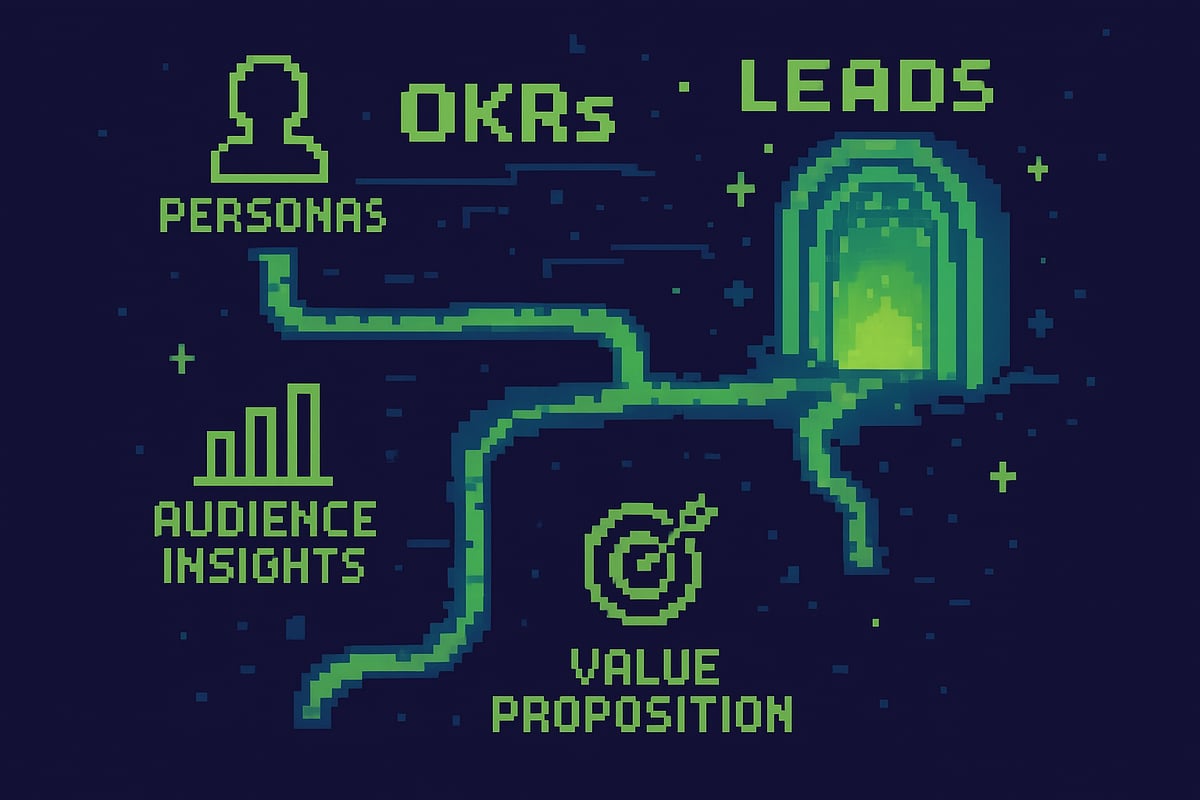
Begin by establishing clear, measurable goals to drive lead generation for tech companies. Use OKRs (Objectives and Key Results) to unify your marketing and sales teams around shared targets. For instance, set objectives such as increasing qualified leads by 25 percent or boosting demo appointments per quarter. Review and adapt these objectives quarterly, just as leading organizations like Spotify do, to respond swiftly to market changes. This approach ensures everyone is aligned, focused, and moving forward together.
Building and Refining Buyer Personas
Precise buyer personas are vital for effective lead generation for tech companies. Start by crafting detailed Ideal Customer Profiles (ICPs) for B2B and comprehensive personas for B2C. Segment your audience by company size, industry, job roles, and the specific pain points your solution addresses. Regularly update these personas to reflect feedback, evolving markets, and product shifts. Well-defined personas help tailor every campaign for maximum impact and resonance.
Addressing Audience Evolution
Today’s digital landscape shifts rapidly, making it essential for lead generation for tech companies to keep pace with changing buyer behaviors. Monitor how prospects research, communicate, and make decisions online. Capture the voice of the customer through surveys, reviews, and direct conversations. Forbes Tech Council highlights the importance of adapting to evolving customer expectations as a primary challenge. By staying attuned, you ensure your strategy remains relevant and effective.
Aligning Messaging and Value Propositions
To stand out in lead generation for tech companies, align messaging with each persona’s unique needs and journey stage. Customize communications to spotlight the product features, ROI, and use cases that matter most to each segment. Consistent messaging across channels builds trust and positions your brand as a solution provider. This tailored approach increases engagement and drives higher conversion rates.
Leveraging Data for Audience Insights
Harnessing data is the backbone of modern lead generation strategies. Use sales intelligence and analytics to pinpoint high-intent accounts and refine your targeting. Integrate CRM and marketing automation platforms for a unified view of every prospect. Embedding autonomous AI agents into your workflows, as discussed in AI Agents in Lead Generation Workflows, enables precise targeting, deep personalization, and scalable operations. This data-driven approach ensures your efforts are both efficient and impactful.
Step 2: Build a Multi-Channel Lead Generation Engine
In 2026, building a robust multi-channel lead generation for tech companies is essential. With buyers active across diverse platforms, relying on a single tactic is no longer effective. Companies that activate several channels can reach decision-makers early, nurture relationships, and convert leads more efficiently. Let’s break down the strategies powering successful lead generation for tech companies this year.

Outbound Strategies: Direct Outreach & Cold Calling
Outbound tactics remain foundational in lead generation for tech companies. While digital channels multiply, direct outreach through cold calling cuts through digital noise, especially for targeting C-level and VP executives.
Equip your sales teams with verified contact databases to maximize connection rates. Research shows that Cognism users connect with up to 87 percent of their lists. Equip sales development representatives with tailored scripts and leverage real-time buyer intent signals to personalize each call.
Key outbound best practices include:
- Prioritizing high-value target accounts.
- Calling at optimal times based on data insights.
- Tracking and iterating messaging based on conversation outcomes.
Outbound strategies, when executed with precision, can accelerate the initial stages of the buyer journey and drive key opportunities for lead generation for tech companies.
Inbound Strategies: Content Marketing & SEO
Inbound marketing is the engine behind sustainable lead generation for tech companies. Buyers research solutions online before engaging sales, so educational, SEO-optimized content is vital.
Develop pillar pages and topic clusters that answer common questions in your niche. Focus on clarity and accessibility, even for complex technical topics. High-value blogs, whitepapers, and solution guides help nurture top-of-funnel leads and position your brand as a thought leader.
To maximize inbound performance:
- Conduct keyword research tailored to your personas.
- Update content regularly for relevance.
- Optimize for featured snippets and voice search.
Well-executed inbound strategies continually attract and engage prospects, feeding your pipeline and supporting holistic lead generation for tech companies.
Short-Form Video & Interactive Content
Short-form video now dominates digital engagement, making it a must-have in lead generation for tech companies. Platforms like TikTok, LinkedIn, and YouTube Shorts are ideal for sharing product explainers, demos, and quick FAQs.
Short videos generate 2.5 times more engagement than long-form formats. Use video to simplify technical concepts, highlight use cases, or answer common buyer questions. For tech marketers seeking an efficient workflow, tools like Short-form video content with OpusClip can streamline content creation and repurposing.
Interactive content, such as calculators and quizzes, further boosts engagement and provides valuable lead data. Both approaches can humanize your brand and accelerate lead generation for tech companies.
Webinars, Virtual Events, and Live Demos
Webinars and virtual events are powerful for lead generation for tech companies, offering real-time education and engagement. Hosting live demos allows prospects to see your solution in action and ask questions directly.
Promote events through email campaigns, social media, and partner networks to maximize attendance. Use registration forms to capture key prospect data and follow up promptly with tailored content or meeting invitations.
Successful event strategies include:
- Featuring industry experts or customer success stories.
- Providing actionable takeaways.
- Recording sessions for on-demand viewing.
These events nurture trust, address buyer concerns, and move leads further down the funnel in lead generation for tech companies.
Gated vs. Ungated Content Balance
Striking the right balance between gated and ungated content is essential for optimal lead generation for tech companies. Gated content, such as eBooks and whitepapers, can drive lead capture by offering premium value in exchange for contact information.
However, too much gating can deter prospects. Ungated content builds credibility, trust, and SEO authority. Clearly communicate what readers gain by filling out a form to improve conversion rates.
Best practices include:
- Gating only high-value, in-depth resources.
- Offering previews or summaries before the gate.
- Testing different formats to optimize lead quality.
This balanced approach ensures your content attracts, educates, and converts in the context of lead generation for tech companies.
Social Selling and Community Engagement
Social selling is a critical component of lead generation for tech companies. Activate your sales and marketing teams on LinkedIn and niche communities where your buyers interact.
Encourage team members to share insights, participate in discussions, and build authentic relationships. Over time, these activities position your company as a trusted advisor and generate warm leads.
Community engagement tips:
- Join relevant groups and forums.
- Offer value before pitching.
- Recognize and amplify employee advocacy.
By nurturing digital relationships, you strengthen your brand and expand your reach, fueling lead generation for tech companies.
Account-Based Marketing (ABM)
Account-Based Marketing has revolutionized lead generation for tech companies by focusing efforts on high-value accounts. Personalize campaigns using intent data and coordinate outreach across multiple channels, including email, phone, social, and even direct mail.
ABM delivers higher ROI by aligning sales and marketing to pursue best-fit prospects. Key ABM tactics include:
- Developing tailored value propositions for each account.
- Synchronizing messaging and timing across touchpoints.
- Measuring account engagement and adjusting strategies as needed.
For modern tech companies, ABM transforms lead generation for tech companies from a numbers game into a targeted, strategic pursuit.
Step 3: Leverage Data, AI, and Automation for Smarter Lead Generation
In 2026, lead generation for tech companies is powered by a new wave of data, artificial intelligence, and automation. The right mix of these technologies can unlock smarter targeting, increased personalization, and superior conversion rates. Understanding how to blend these elements is essential for building efficient, scalable, and compliant lead generation systems.

Harnessing Intent Data and Buyer Signals
The foundation of lead generation for tech companies in 2026 is intent data. By tapping into third-party sources, you can identify prospects who are already researching solutions similar to yours. Gartner notes that over 70% of B2B marketers use intent data to pinpoint when buyers are most likely to engage.
With sales intelligence tools, teams can spot buying signals such as content downloads, technology stack changes, or recent funding events. These insights allow you to time your outreach perfectly and personalize your approach. For lead generation for tech companies, acting on real-time buyer signals increases both engagement and conversion rates.
AI-Powered Personalization and Chatbots
AI is transforming how tech companies interact with prospects. Deploying AI chatbots enables 24/7 lead qualification, instant FAQ responses, and seamless demo scheduling. These bots analyze user behavior, capture key information, and guide visitors through tailored journeys.
You can now build custom AI agents in minutes, automating lead capture and qualification at scale. For a practical example, see how you can create a custom AI agent in under 5 minutes. This level of automation is essential for lead generation for tech companies, allowing sales teams to focus on high-potential leads while reducing manual workload.
Marketing Automation and Nurture Sequences
Marketing automation is the backbone of scalable lead generation for tech companies. Automated email workflows nurture prospects based on their behaviors, such as content downloads or webinar attendance. Behavioral triggers ensure that the right follow-up goes out at the right time, maximizing touchpoint relevance.
Dynamic segmentation enables personalized messaging for every funnel stage. With automation, tech marketers can re-engage dormant leads, deliver targeted content, and steadily move prospects closer to conversion. This continuous engagement is crucial in the long and complex sales cycles typical in the tech sector.
Data Enrichment and CRM Integration
Precise lead generation for tech companies relies on rich, up-to-date data. Data enrichment tools enhance lead profiles with firmographic, technographic, and behavioral information. This data is then integrated with CRM systems for a unified, actionable view of every prospect.
Syncing sales and marketing platforms ensures seamless handoffs and eliminates data silos. Teams can track every interaction, measure outcomes, and refine targeting criteria in real time. This integrated approach supports better decision-making and higher conversion rates.
Predictive Analytics for Forecasting and Optimization
Predictive analytics brings a proactive edge to lead generation for tech companies. By analyzing historic and real-time data, predictive models score leads and forecast which accounts are most likely to convert. This enables sales teams to prioritize efforts and allocate resources more efficiently.
Continuous optimization is achieved by feeding campaign performance data back into the models, sharpening targeting and messaging over time. Predictive analytics not only accelerates pipeline growth but also reduces wasted spend.
Compliance and Data Privacy
As data-driven lead generation for tech companies expands, so do compliance requirements. Adhering to GDPR, CCPA, and other privacy regulations is non-negotiable. Transparency about data collection and use builds trust with prospects.
Best practices include obtaining explicit consent, providing easy opt-outs, and maintaining clear privacy policies. Tech marketers must regularly review compliance standards to avoid penalties and protect their brand reputation.
Step 4: Qualify, Nurture, and Convert Leads Effectively
Qualifying, nurturing, and converting leads is the pivotal stage in lead generation for tech companies. This is where data-driven processes, targeted communication, and seamless collaboration transform prospects into loyal customers. Let’s break down the core strategies that drive results in 2026.
Lead Qualification Frameworks
Efficient lead qualification is the backbone of lead generation for tech companies. Without a clear system, teams risk wasting time on prospects who are unlikely to convert. Frameworks like BANT (Budget, Authority, Need, Timeline) or CHAMP (Challenges, Authority, Money, Prioritization) offer structure to the process.
Here’s a comparison table for quick reference:
| Framework | Focus Areas | Best For |
|---|---|---|
| BANT | Budget, Authority, Need, Time | Enterprise Sales |
| CHAMP | Challenges, Authority, Money, Prioritization | Complex Solutions |
For organizations using account-based strategies, integrating real-time data and AI insights can elevate qualification. For a deeper dive, see the Modern Account-Based Marketing Framework, which explains how to layer intent data and analytics for higher ROI.
Multi-Touch Nurturing Strategies
Nurturing is essential in lead generation for tech companies, given the long and complex sales cycles. Multi-touch campaigns use a blend of email, phone calls, social engagement, and retargeting ads to stay top of mind with prospects.
A typical nurture sequence might include:
- Educational emails with relevant blog content
- Follow-up calls to answer technical questions
- Retargeting ads featuring case studies or ROI calculators
This approach ensures leads receive value at every stage, accelerating their journey from consideration to decision.
Personalization at Scale
Personalization is no longer optional in lead generation for tech companies. Buyers expect outreach to reflect their unique needs and pain points. Dynamic content, tailored emails, and personalized video messages are now standard practice.
Automating this process is crucial for scale. Chatbots, for example, can qualify leads, answer FAQs, and book demos 24/7. For a practical guide to deploying this tactic, explore the No-code chatbot setup with Tidio resource. Automation ensures every lead receives timely, relevant communication, even as your pipeline grows.
Sales and Marketing Alignment
Seamless collaboration between sales and marketing is vital for lead generation for tech companies. Misalignment leads to inconsistent messaging, missed opportunities, and lower conversion rates.
Best practices for alignment include:
- Shared OKRs and KPIs across teams
- Regular joint meetings to review lead quality and feedback
- Unified CRM for transparent handoffs and data tracking
When both teams operate as one, prospects receive a cohesive experience that builds trust and speeds up the decision process.
Leveraging Social Proof and Reviews
In 2026, social proof is a powerful lever in lead generation for tech companies. Prospects are more likely to engage with vendors who can demonstrate real-world results. Customer testimonials, case studies, and third-party reviews build credibility and reduce perceived risk.
Consider these strategies:
- Feature video testimonials on landing pages
- Share case studies in nurture emails and webinars
- Highlight industry awards or recognitions in outreach
Success stories from peers can tip the scale for undecided buyers.
Offering Free Trials, Demos, and Value-First Offers
Reducing friction is key in lead generation for tech companies. Offering free trials, interactive demos, or value-first consultations helps prospects experience your product’s benefits firsthand.
To maximize impact:
- Clearly communicate the value and next steps
- Make sign-up processes as simple as possible
- Provide support during the trial to address questions
These offers accelerate conversions by removing barriers and showcasing ROI early in the journey.
Continuous Feedback and Iteration
Ongoing feedback is the engine of improvement in lead generation for tech companies. Sales teams should regularly share insights on lead quality, objections, and conversion barriers with marketing.
Iterative steps include:
- Adjusting qualification criteria based on closed-won and lost analysis
- Refining nurture content to address emerging questions
- Testing new outreach tactics and measuring results
Continuous optimization ensures your strategies remain relevant and effective as buyer expectations evolve.
Step 5: Measure, Optimize, and Scale Your Lead Generation
Measuring and optimizing your lead generation for tech companies is essential to drive sustainable growth in 2026. With competition intensifying and buyer behaviors evolving, the ability to track, analyze, and improve every stage of your pipeline sets leaders apart. By implementing data-driven routines and embracing the right technologies, you can ensure your strategies remain ahead of the curve.
Key Metrics and KPIs
Effective lead generation for tech companies depends on tracking the right performance indicators. Focus on:
- Number of leads generated
- Conversion rates at each funnel stage
- Sales appointments set
- Pipeline value and ROI
Monitoring these KPIs helps you identify which channels and campaigns deliver the highest quality leads. Regularly review your dashboard to spot trends and make timely adjustments.
A/B Testing and Messaging Optimization
Continual improvement is rooted in experimentation. Use A/B testing to compare subject lines, CTAs, landing pages, and outreach scripts. Even small tweaks can yield significant gains in engagement and conversion rates.
Document results from each test. This not only informs future campaigns but also helps refine your overall lead generation for tech companies approach. Prioritize tests based on impact and feasibility.
Attribution and Funnel Analysis
Understanding the buyer journey is critical for optimizing lead generation for tech companies. Use attribution models to see which touchpoints most influence conversions. Multi-touch attribution highlights the combined effect of your channels.
Funnel analysis reveals drop-off points and bottlenecks. By mapping each stage, you can allocate budget and resources more effectively, ensuring no opportunity is missed.
Scaling What Works
Once you’ve identified your most successful tactics, scale them systematically. Double down on top-performing channels and replicate proven campaigns across new segments or regions.
Invest in technology and training to increase efficiency. For example, adopting AI tools for tech marketing can automate repetitive tasks and enhance targeting accuracy, supporting scalable lead generation for tech companies.
Staying Agile and Future-Proof
The landscape of lead generation for tech companies evolves rapidly. Stay agile by reviewing market trends, emerging platforms, and new buyer behaviors quarterly.
Foster a culture of experimentation and continuous learning. Encourage your team to test innovative approaches, adapt to feedback, and quickly pivot when needed. This agility ensures your strategies remain relevant and resilient.
Real-World ROI and Case Studies
Measuring ROI is the ultimate test of your lead generation for tech companies strategy. For example, Callbox clients report a 35 percent increase in qualified leads and over 50 appointments per quarter. Cloudreach’s $4.9 million pipeline growth showcases the impact of data-driven outbound strategies.
Regularly analyze your results and benchmark against industry standards. Use these insights to secure buy-in for future investments and demonstrate tangible value to stakeholders.





4 Comments