Services AI Guide: Unlocking Smart Solutions in 2025
In 2025, the explosive growth of services ai will set new standards for business innovation and operational excellence. As organizations race to gain a competitive edge, AI-driven services are rapidly changing how value is created and delivered.
This guide will help you navigate the evolving landscape of services ai, offering insights into the latest advancements, smart solutions, and practical strategies for success. See how industry leaders leverage AI to boost productivity, enhance customer experiences, and streamline efficiency.
No matter your organization’s size, the promise of services ai is within reach. Ready to unlock the full potential of AI in your operations? Let’s dive in.
The Evolution and Landscape of AI Services in 2025
In 2025, services ai is transforming the business landscape, offering unprecedented capabilities to organizations of all sizes. The evolution of these services is driven by rapid advancements and growing demand for intelligent automation, smarter decision-making, and scalable solutions. As enterprises navigate the digital shift, understanding the scope, players, trends, business value, and challenges of services ai is crucial for staying ahead.

Defining AI Services: Scope and Categories
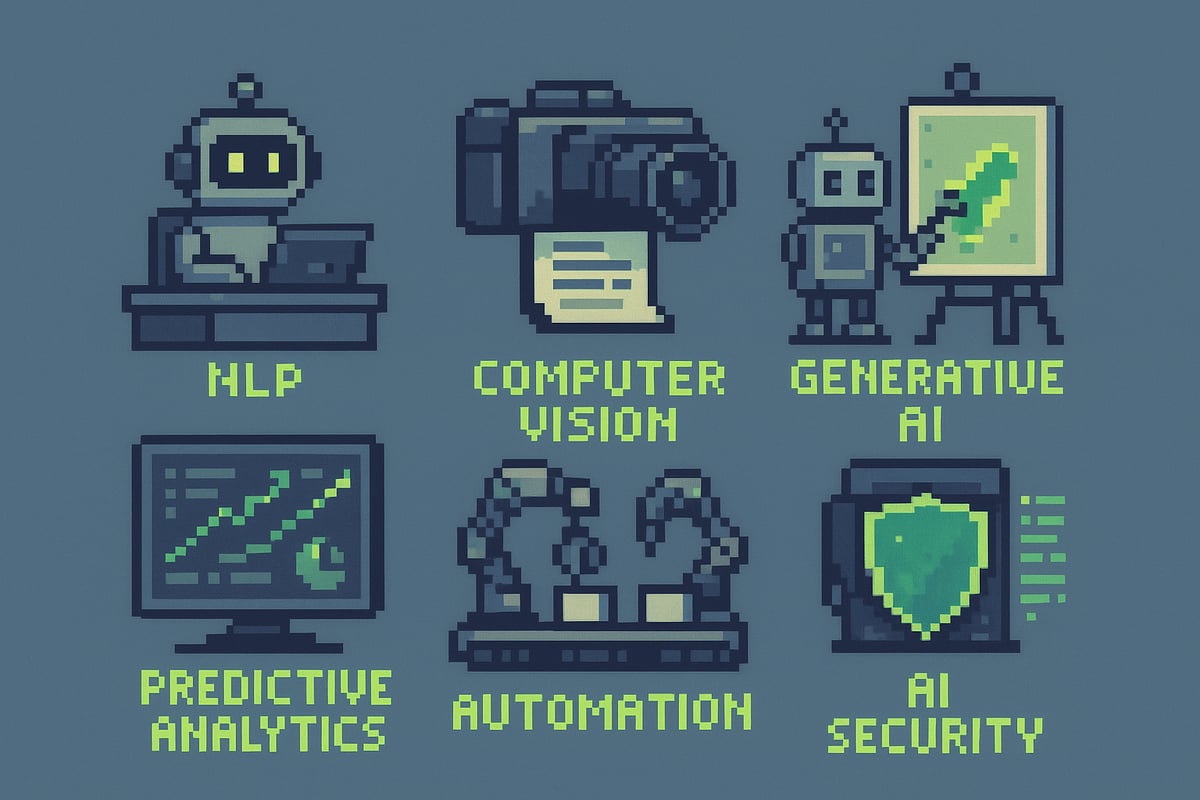
Services ai encompasses a broad spectrum of offerings, from APIs and cloud-based platforms to consulting and integration services. Key categories include natural language processing, computer vision, automation, generative ai, and agentic ai. Major providers like Azure AI and IBM Consulting deliver both foundational tools and tailored solutions.
The landscape has shifted from simple automation to complex, multi-agent systems capable of industry-specific customization. AI as a service (AIaaS) is making advanced technology accessible to more organizations. According to IBM, services ai could drive up to $4.4 trillion in productivity gains by 2030. This democratization is reshaping how businesses innovate, scale, and deliver value.
Major Players and Platforms Shaping the Market
The services ai market in 2025 is defined by giants such as Microsoft Azure, IBM, Google Cloud, and AWS. Their flagship platforms—Azure AI Foundry, IBM Watsonx, and Google Vertex AI—offer scalable, enterprise-grade solutions. Open-source ai and hybrid cloud models are gaining traction, while specialized consulting firms provide deep industry expertise.
IBM, for instance, employs over 75,000 AI consultants who design and deploy tailored GenAI solutions. Market analysis, such as Gartner’s evaluations, recognizes these leaders for their innovation and reliability. The global market is also seeing explosive growth, with Gartner’s AI Spending Forecast predicting $1.5 trillion in AI spending for 2025. Integration of services ai into business workflows is becoming the norm.
Key Trends and Innovations for 2025
Generative ai and agentic ai are moving into mainstream business operations, unlocking new efficiencies and creative possibilities. Services ai now integrates seamlessly with IoT, edge computing, and hybrid cloud environments. Responsible ai is a top priority, with governance, transparency, and ethics frameworks guiding development and deployment.
Custom ai models tailored to industries such as healthcare, finance, and retail are becoming standard. Automation powered by services ai is streamlining complex processes, while security and compliance are receiving increased attention. Providers like Azure and IBM are leading with innovations in content safety and ethical ai, ensuring trust and long-term value.
The Business Value of AI Services
Adopting services ai drives operational efficiency, reduces costs, and enables data-driven decision-making at scale. AI-powered solutions improve customer experience through personalization and always-available support. Automation of repetitive tasks leads to workforce augmentation and higher productivity.
For example, IBM and Arizona DCS achieved a 40% productivity gain in case management using services ai. Organizations leveraging ethical ai practices are seeing stronger ROI, as highlighted in IBM’s recent studies. Faster innovation, adaptability, and competitive differentiation are clear outcomes for businesses embracing services ai as a core strategy.
Challenges and Considerations in Adopting AI Services
Despite the promise, implementing services ai comes with challenges. Data readiness, integration complexity, and skills gaps are common hurdles. Security, privacy, and regulatory compliance require robust frameworks and ongoing oversight.
Scaling from pilot projects to enterprise-wide adoption demands strategic alignment and strong governance. Consulting and managed services can accelerate success, ensuring that services ai aligns with business objectives and delivers measurable results. Organizations must invest in both technology and change management to realize the full potential of services ai.
Core Types of AI Services and Smart Solutions
Artificial intelligence is powering a new era of innovation, and understanding the core types of services ai is essential for any organization aiming to stay competitive. Each category brings its own set of capabilities, benefits, and industry applications, allowing companies to tailor solutions to their unique needs.
Natural Language Processing (NLP) and Conversational AI
Natural language processing is at the heart of services ai that enable machines to understand, interpret, and respond to human language. From chatbots and virtual assistants to real-time translation tools, NLP is transforming customer interaction.
Banks, for example, use AI-powered virtual assistants to handle client inquiries around the clock. Solutions like Azure OpenAI and IBM’s banking chatbots automate up to 80 percent of routine queries, drastically improving efficiency and engagement. Services ai in this category are also being customized for multilingual support and sentiment analysis, making them vital for global businesses.
Key benefits include:
- 24/7 customer support
- Lead generation and qualification
- Enhanced accessibility for diverse users
As the demand for instant, personalized communication rises, services ai focused on NLP are becoming a standard across HR, marketing, and customer service sectors.
Computer Vision and Image Intelligence
Computer vision is another pillar of services ai, enabling systems to analyze images, videos, and documents with superhuman accuracy. Tools like Azure Custom Vision and IBM’s document processing can automate identity verification, scan invoices, or detect anomalies in medical images.
Use cases include:
- Security and facial recognition
- Healthcare diagnostics
- Retail shelf analytics
According to recent forecasts, the computer vision market will see record growth in 2025, driven by the integration of services ai into IoT devices and business workflows. Automated document extraction is streamlining finance operations, reducing manual work and errors.
The ability to process visual information quickly and at scale is making services ai in computer vision indispensable for industries prioritizing safety, compliance, and efficiency.
Generative AI and Agentic AI
Generative AI and agentic AI represent the creative and autonomous side of services ai. These technologies can generate text, images, and even orchestrate multi-agent workflows for complex business challenges.
IBM’s Agentic AI is a prime example, helping enterprises automate product design, marketing content, and business processes. Generative AI is now a top investment area, with events like the US Open using it to enhance customer experiences.
For organizations interested in rapid deployment, resources like Building a custom AI agent provide step-by-step guidance for integrating these advanced services ai.
Benefits include:
- Accelerated innovation cycles
- Creative problem-solving at scale
The trend is clear: agentic AI is moving from experimental to enterprise-ready, enabling smarter and more adaptive business operations.
Predictive Analytics and Decision Intelligence
Predictive analytics is a foundational element of services ai, empowering organizations to forecast trends, assess risk, and optimize resources. These systems draw on historical and real-time data to guide decisions.
Applications span:
- Supply chain forecasting
- Fraud detection in finance
- Personalized offers in retail
Healthcare providers use services ai to predict patient outcomes, improving care and reducing uncertainty. The adoption of AI-driven analytics is surging across industries, thanks to seamless integration with business intelligence platforms.
By reducing guesswork, services ai in predictive analytics help leaders make faster, more confident decisions.
Automation and Workflow Orchestration
Automation is where services ai deliver measurable gains in efficiency and cost savings. Robotic process automation (RPA) and AI-driven IT operations streamline repetitive tasks, from HR onboarding to procurement.
Platforms like Azure Automation and IBM AIOps are central to this transformation. End-to-end automation in finance, for example, minimizes errors and accelerates processing.
Key points:
- Cost reduction and error minimization
- Faster response times
- Integration with legacy systems
As the RPA market grows, services ai for automation are becoming a must-have for organizations seeking to optimize workflows and scale operations effortlessly.
AI Security and Content Safety Services
Security is a core focus for services ai, especially as threats grow more sophisticated. AI-driven solutions like Azure Content Safety and IBM’s cybersecurity offerings detect risks in real time, enforce compliance, and moderate digital content.
Use cases include:
- Monitoring social platforms for harmful material
- Enterprise threat detection
- Regulatory compliance in finance
According to the latest Cost of Data Breach Report, services ai reduce security breach costs significantly. Demand for explainable AI in security is rising, ensuring organizations can trust and audit their automated defenses.
With the increasing complexity of digital threats, robust services ai for security and content safety are critical for protecting assets and maintaining compliance.
Implementing AI Services: A Step-by-Step Guide for 2025
Successfully leveraging services ai in 2025 requires a clear, structured approach. This step-by-step guide walks you through every phase, from assessing readiness to ensuring responsible deployment. Whether you are new to services ai or scaling existing solutions, these steps will help you unlock sustainable value.

Step 1: Assess Your Business Needs and AI Readiness
Start by identifying where services ai can drive the most impact. Pinpoint operational bottlenecks, customer pain points, or data-rich processes that could benefit from automation or insight. Next, evaluate your current data infrastructure, data quality, and technology stack.
Review your team's skills and highlight any gaps in AI literacy or technical expertise. Align your services ai initiatives with core business goals to ensure strategic value. Stakeholder buy-in and robust change management are crucial for success.
For inspiration, see how organizations of all sizes are adopting AI solutions rapidly in Small Business AI Adoption. Preparation at this stage sets the tone for your entire services ai journey.
Step 2: Choose the Right AI Services and Providers
Compare leading platforms and vendors to find the best fit for your services ai needs. Assess options like Azure, IBM, AWS, and Google Cloud, keeping in mind industry-specific solutions and the potential for customization.
Evaluate each provider's pricing, scalability, and level of support. Security, compliance, and responsible AI practices should be integral to your decision-making. Consider how each service integrates with your existing technology stack, and whether a hybrid or multi-cloud approach may offer more flexibility.
Vendor reputation and proven expertise in services ai can accelerate your adoption and ensure smoother implementation.
Step 3: Data Preparation and Integration
Quality data fuels successful services ai initiatives. Begin by cleansing, structuring, and labeling data to make it AI-ready. Integrate data sources across departments to break down silos and enable holistic insights.
Address privacy, security, and governance from the outset. Many organizations leverage AI data services to automate ingestion and processing, ensuring ongoing data quality. For example, historical data can be a powerful asset when optimizing with services ai.
Automated pipelines and regular monitoring are key to maintaining data integrity as your AI solutions evolve.
Step 4: Pilot, Test, and Iterate AI Solutions
Before scaling services ai across the enterprise, launch small-scale pilots to validate use cases. Define clear KPIs and success metrics for each pilot. Collect feedback from users and stakeholders to refine your models and algorithms.
Use A/B testing and scenario analysis to measure effectiveness. Address bias, fairness, and explainability early in the process. Pilots should be designed for scalability, so successful initiatives can be rolled out more broadly.
Iterative testing ensures your services ai delivers measurable value and aligns with business objectives.
Step 5: Scale and Operationalize AI Across the Organization
Once pilots prove effective, develop robust governance frameworks and change management strategies to scale services ai. Automate deployment, monitoring, and maintenance to minimize manual intervention.
Invest in staff training and foster a culture that embraces innovation and continuous improvement. Integrate services ai into core business workflows and decision-making processes.
Monitor performance and adjust as necessary to optimize outcomes. Mature services ai operations can drive faster innovation cycles and sustained competitive advantage.
Step 6: Ensure Responsible, Secure, and Compliant AI
Implement ethical guidelines and transparent practices for all services ai deployments. Regularly audit models to detect bias, drift, or compliance issues. Use AI security and content safety tools to mitigate risks and ensure regulatory alignment.
Stay current with evolving standards, such as GDPR or industry-specific regulations. Engage cross-functional teams for oversight, and plan for incident response and risk management. Responsible services ai not only protects your organization but also enhances trust with customers and partners.
Real-World Use Cases and Industry Applications
Across industries, services ai is transforming business operations, customer engagement, and innovation. Let us explore how different sectors are leveraging AI to unlock smart solutions that drive measurable results.

Financial Services: AI for Risk, Compliance, and Customer Experience
In financial services, services ai is central to streamlining operations and enhancing client interactions. Firms use AI-powered virtual assistants, like Virgin Money’s solution developed with IBM, to deliver faster onboarding and personalized banking support. These tools automate routine tasks, freeing staff for strategic work and improving customer satisfaction.
AI-driven fraud detection and regulatory compliance solutions help banks reduce manual workloads and minimize risks. For example, services ai can cut compliance costs by up to 30 percent while enabling more accurate credit scoring and wealth management advice. Explainable AI is increasingly vital, ensuring transparency in financial decisions and fostering trust.
Healthcare: Intelligent Diagnostics and Patient Engagement
Healthcare organizations are rapidly adopting services ai to improve diagnostics, patient triage, and personalized care. AI models assist clinicians in making faster, more accurate diagnoses, leading to better patient outcomes and reducing diagnostic errors by up to 50 percent. Virtual health assistants and AI-powered telemedicine platforms expand access to care, especially in remote areas.
Responsible deployment is crucial. Frameworks like the Responsible Healthcare AI Framework guide health systems in implementing secure, ethical, and sustainable services ai. AI is also making strides in physical therapy, rehabilitation, and remote patient monitoring, all while addressing privacy and ethical challenges.
Retail and E-Commerce: Personalization and Smart Operations
Retailers leverage services ai for real-time recommendations, chatbot support, and inventory forecasting. AI-driven personalization engines increase sales and conversion rates by 10 to 15 percent, delivering tailored experiences across channels. Automated chatbots handle customer queries 24/7, boosting satisfaction and efficiency.
AI also streamlines supply chain and procurement processes, as seen in Coca-Cola’s transformation with AI-powered procurement. Visual search and omnichannel personalization are rising trends, helping retailers anticipate demand and reduce stockouts. Integration with supply chain AI ensures inventory is optimized, reducing waste and improving profitability.
Manufacturing and Supply Chain: AI for Optimization and Automation
In manufacturing, services ai powers predictive maintenance, demand forecasting, and quality control. Companies like British Sugar use historical data and AI optimization to minimize downtime and maximize efficiency. AI-driven robotics and IoT devices automate repetitive tasks, freeing human workers for more complex problem-solving.
Supply chain forecasting errors are reduced by 30 to 50 percent with services ai, resulting in significant cost savings. Human-in-the-loop systems remain crucial, blending machine intelligence with human oversight to ensure reliability and safety. As factories become more connected, AI will continue to drive operational excellence.
IT and Cybersecurity: AI-Driven Automation and Threat Detection
IT operations and cybersecurity are seeing major gains from services ai. Automated IT operations (AIOps) solutions speed up incident response, reduce downtime, and enable proactive maintenance. IBM’s AI security platforms help detect threats and minimize breaches, with AI-enabled security reducing breach costs by an average of $1.76 million.
Explainable AI is gaining ground, helping security teams understand and trust automated threat analysis. Managed security services powered by services ai are now integral to cloud and hybrid environments, allowing organizations to focus on core business while maintaining robust defenses.
Public Sector and Government: Smarter Services for Citizens
Government agencies are deploying services ai to improve case management, citizen engagement, and public safety. The Arizona Department of Child Safety achieved a 40 percent productivity gain using generative AI for case management, expediting service delivery and better allocating resources.
AI is also being used for regulatory compliance, fraud prevention, and benefits administration. By automating repetitive tasks, services ai can cut operational costs by up to 25 percent. Transparent, accountable AI systems are essential for building public trust and ensuring equitable access to government services.
Selecting the Right AI Services for Your Business
Choosing the right services ai options is essential for driving business value in 2025. With so many platforms and providers, a structured selection approach maximizes your ROI and futureproofs your operations.
Assessing Solution Fit: Custom vs. Pre-Built AI Services
When evaluating services ai, start by identifying if your organization requires a custom-built or pre-built solution. Custom services ai are tailored for specific workflows, industry needs, and integration with existing systems. Pre-built solutions offer out-of-the-box functionality, faster deployment, and lower upfront costs.
| Feature | Custom AI Services | Pre-Built AI Services |
|---|---|---|
| Time-to-Value | Longer (tailored dev) | Faster (ready-made) |
| Scalability | High (with investment) | High (with limits) |
| Integration Complexity | More complex | Simpler |
| Cost | Higher upfront | Predictable, subscription |
| Industry Fit | Highly specific | General purpose or vertical |
For many, a hybrid approach is ideal. For example, First impressions of CustomGPT AI illustrates how organizations can leverage customizable platforms for unique use cases, combining rapid deployment with tailored features.
Assess how each services ai option aligns with your strategic goals, technical resources, and scalability requirements. Consider the impact on integration timelines and ongoing maintenance.
Evaluating Vendor Capabilities and Support
Selecting a services ai provider goes beyond feature lists. Assess vendors based on technical expertise, industry experience, and support infrastructure.
Key criteria include:
- Number of AI specialists and consultants
- Training resources and documentation
- Service level agreements and uptime guarantees
- Commitment to responsible ai practices
Industry demand for services ai is rising rapidly, as seen in Accenture’s AI Services Demand, highlighting the importance of choosing partners with proven scalability. Strong vendor support ensures your team can adapt and thrive as your AI initiatives expand.
Cost, Scalability, and ROI Considerations
Cost structures for services ai vary widely. Evaluate pricing models, from pay-as-you-go platforms to consulting fees for bespoke solutions. Calculate total cost of ownership, including integration, training, and ongoing optimization.
Scalability is crucial. Assess whether your chosen services ai can grow with your business, supporting increased data volumes and more users. Measure ROI not just by cost savings, but also by productivity gains, risk reduction, and accelerated innovation.
Use business intelligence tools to track the impact of services ai over time. Ongoing performance reviews help maximize returns and guide future investments.
Ensuring Security, Compliance, and Responsible AI Practices
Security and compliance are non-negotiable when selecting services ai. Ensure vendors offer robust data encryption, access controls, and regular security audits.
Key considerations:
- Regulatory compliance (GDPR, HIPAA, industry-specific)
- Transparent AI model governance
- Explainability and bias monitoring
- Incident response protocols
Responsible AI practices build trust with stakeholders and customers. Review each provider’s commitment to ethical standards, transparency, and ongoing monitoring. Choose services ai that uphold your organization’s values and regulatory obligations.
Building an AI-Ready Organization: Skills, Culture, and Change Management
Success with services ai depends on your organization’s ability to adapt and learn. Invest in upskilling teams, fostering cross-functional collaboration, and encouraging experimentation.
Change management strategies are essential. Communicate clearly about the benefits of services ai, address concerns, and celebrate early wins. Foster a culture where innovation is rewarded and failure is seen as a learning opportunity.
Leadership buy-in and clear vision set the tone for continuous improvement. Organizations that embrace services ai as a core capability consistently outpace competitors in innovation and resilience.
Future Outlook: AI Services and Smart Solutions Beyond 2025
The future of services ai is rapidly unfolding, promising a new era of transformation for organizations across every sector. As we look beyond 2025, businesses must anticipate emerging trends, evolving regulations, and industry-specific breakthroughs to remain competitive. Let us explore the key areas shaping the next wave of services ai and smart solutions.
Emerging Technologies and Next-Gen AI Capabilities
The next generation of services ai will be defined by groundbreaking technologies such as quantum AI, edge AI, and autonomous agents. These advances will unlock new frontiers in speed, scale, and intelligence. For instance, quantum computing will accelerate complex problem-solving, while edge AI will enable real-time analytics at the source.
Integration with AR, VR, and the metaverse will further expand the reach of services ai, creating immersive business and customer experiences. Multi-modal AI will allow seamless collaboration between humans and machines. Organizations evaluating these advancements can benefit from resources like the Review of Predis AI tool, which highlights the importance of choosing the right AI-powered services for future growth.
Evolving Regulations, Ethics, and Trust in AI
As services ai becomes more deeply embedded in critical workflows, regulatory landscapes will continue to evolve. New requirements for explainability, auditability, and mandatory impact assessments are on the horizon, especially for high-stakes applications.
Organizations must prioritize responsible services ai, building trust through transparency and ethical practices. Public perception will increasingly influence adoption, making it crucial to demonstrate compliance and fairness. Industry leaders are already responding by investing in governance frameworks and regular model audits, balancing innovation with accountability.
The Expanding Role of AI Consulting and Managed Services
AI consulting and managed services ai are set to play a pivotal role in guiding organizations through complex transformation journeys. From strategy and governance to integration and ongoing optimization, these partners bring critical expertise and resources.
The rise of managed services ai will help both SMEs and enterprises access advanced capabilities without the need for extensive in-house teams. Consulting-led projects consistently deliver higher ROI by aligning technology with business objectives. Partnerships and ecosystems will become essential for scaling and sustaining innovation across diverse industries.
Industry-Specific AI Innovations on the Horizon
Tailored services ai solutions are driving industry-specific breakthroughs. In healthcare, AI will enable personalized medicine and accelerate drug discovery. Finance will see real-time risk management and smarter compliance tools. Retailers will benefit from hyper-personalization and advanced logistics, while manufacturers move toward self-optimizing factories.
Public sector innovation will focus on smart cities and data-driven policy making. Early adopters of industry-specific services ai are already gaining significant market share, setting benchmarks for AI maturity as we approach 2026.
Preparing for the Next Wave of AI-Driven Transformation
To capitalize on the future of services ai, organizations must invest in agile, scalable infrastructure and foster a culture of continuous learning. Upskilling teams and monitoring industry trends are crucial for staying ahead.
Building resilient AI strategies will help companies adapt quickly as technology evolves. Regular assessment and optimization will ensure that services ai solutions continue to deliver value. By embracing change and prioritizing readiness, businesses can position themselves at the forefront of the next AI-powered revolution.