7 Essential Tools Strategy Ideas for Success in 2025
As 2025 approaches, the pace of technological innovation and shifting market dynamics is accelerating. Organizations must adapt quickly, making smarter choices to stay ahead in an increasingly complex environment.
This article uncovers seven essential tools strategy ideas designed to help businesses face these challenges head-on. By leveraging the right mix of digital platforms, analytical frameworks, AI-powered solutions, and collaborative methodologies, you can streamline planning, boost performance, and secure your competitive edge.
Discover how top companies are already using these approaches. Get ready for actionable insights and proven strategies that work for every business size. Explore these seven ideas and future-proof your success.
Why Strategy Tools Matter in 2025
As organizations prepare for 2025, the pace of change in business is accelerating. Companies must rethink how they approach strategy, making the adoption of advanced tools strategy solutions more critical than ever.
The Evolving Business Landscape
Digital transformation, artificial intelligence, and automation are fundamentally reshaping industries. The pace of innovation means companies can no longer rely on old playbooks. Instead, agility, rapid adaptation, and data-driven decisions define success.
Competitive advantage increasingly depends on how quickly teams can respond to market shifts. According to Cascade’s 2025 State of Strategy Report, execution is now the top reason strategies fail, not planning. This makes the right tools strategy approach indispensable for staying ahead.
The Role of Strategy Tools
Modern tools strategy platforms provide critical structure and clarity for decision-making. They help organizations move from vision to execution, offering features like real-time dashboards and collaborative planning spaces.
These tools empower teams to align on objectives and measure progress continuously. For example, platforms now integrate AI capabilities, surfacing insights that drive smarter decisions. Adopting a robust tools strategy framework is essential for navigating complexity and maintaining focus.
Key Benefits for Organizations
Using advanced tools strategy solutions delivers measurable benefits:
| Benefit | Impact |
|---|---|
| Cross-team Alignment | Ensures everyone works toward shared goals |
| Accountability | Tracks progress and assigns clear owners |
| Early Risk Detection | Spots threats and opportunities proactively |
When strategy is supported by the right tools, organizations experience improved collaboration, better measurement, and the ability to pivot quickly in response to new information.
Common Challenges Without the Right Tools
Without effective tools strategy support, organizations face several obstacles. Siloed data leads to poor visibility, while misaligned objectives can slow down execution. Teams may waste resources on manual processes, missing deadlines and losing momentum.
These challenges make it difficult to sustain strategic progress. Investing in the right tools strategy approach helps overcome these barriers and builds a stronger foundation for growth.
The 2025 Imperative: Integrated, AI-Powered, and User-Friendly Solutions
Looking ahead, tools strategy platforms are becoming more intelligent and connected. AI-powered insights now help predict trends and automate reporting, reducing manual effort and improving accuracy.
Integration with existing business systems is key, providing a single source of truth for all teams. User-friendly design also drives adoption, making sure everyone can contribute to the strategic process. Platforms like the ToolStacked platform overview showcase how organizations can discover and implement AI-driven solutions tailored to their strategy needs.
Case Example
Industry leaders such as Porsche and AstraZeneca have embraced integrated strategy tools to accelerate execution. By centralizing planning and tracking, they outpace competitors and adapt more quickly to change.
These success stories highlight the transformative impact of a modern tools strategy approach, proving that the right solutions can deliver real, measurable results.
7 Essential Tools Strategy Ideas for Success in 2025
The right tools strategy can transform how organizations plan, execute, and measure success in 2025. Selecting and integrating the right platforms is essential for turning vision into reality. Let’s explore seven must-have tools strategy ideas that will set your business apart in an increasingly complex world.
1. Cascade
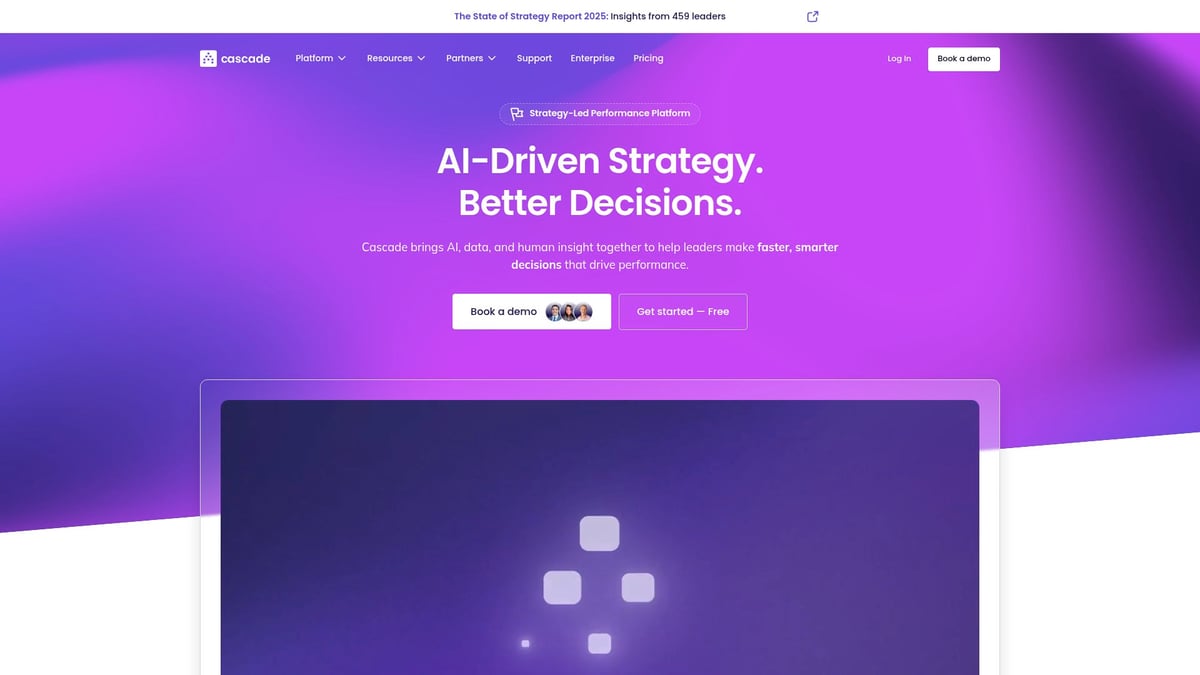
Cascade is a centralized platform that unifies your entire tools strategy in one intuitive environment. It combines strategic planning, OKRs, project portfolio management, and real-time metrics, offering leaders a holistic view of progress.
Core Features:
- Centralized planning and execution
- OKR and project portfolio integration
- Customizable dashboards with actionable AI-powered insights
- Robust reporting and real-time updates
Unique Selling Points:
Cascade stands out by bringing all major strategy methodologies into a single interface. Its AI engine highlights areas of strategy drift and alignment issues instantly, ensuring your tools strategy remains on track.
Pricing: Custom quotes for enterprises; free trial available.
Target Audience: Medium to large enterprises, strategy leaders, and cross-functional teams benefit most from a robust tools strategy using Cascade.
Ideal Use Cases:
- Organization-wide strategy execution
- Performance tracking
- Strategic alignment across departments
Pros:
- Powerful integrations with business apps
- Actionable AI insights
- Customizable templates
- High scalability for complex organizations
Cons:
- May be complex for small businesses
- Learning curve for advanced tools strategy features
Example:
UNICEF improved execution speed and transparency by centralizing its tools strategy within Cascade, resulting in more agile and accountable teams.
2. Miro
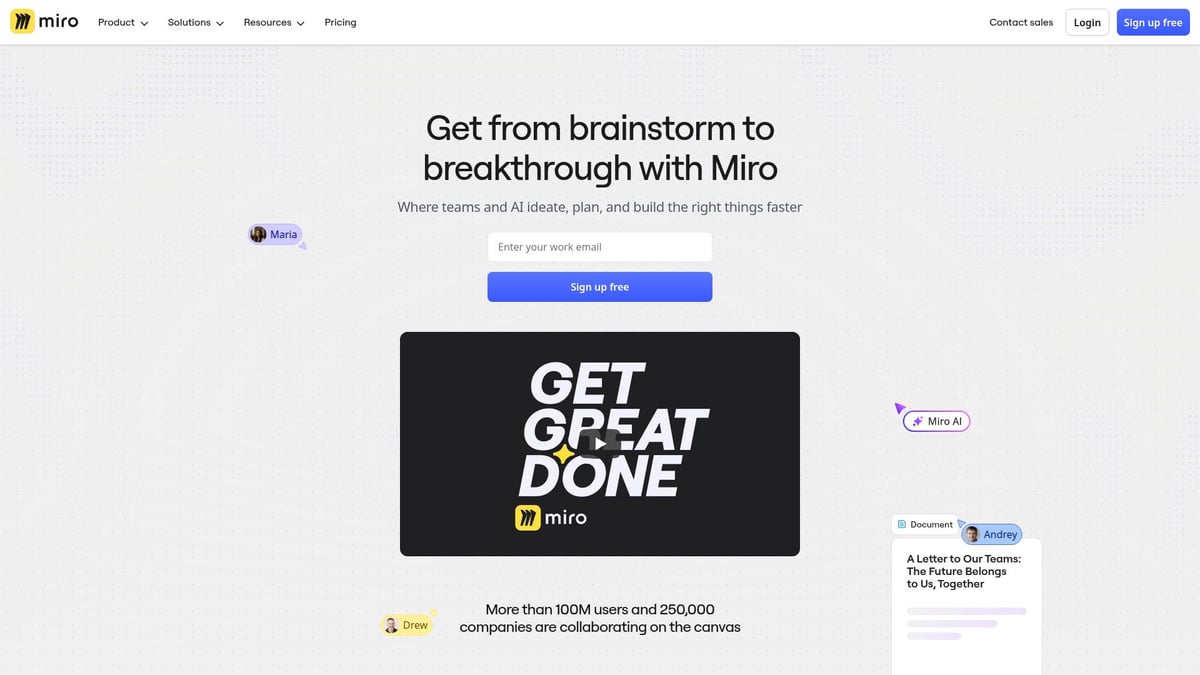
Miro transforms collaborative planning into a visual and engaging experience, making it a cornerstone of any modern tools strategy. Its digital whiteboard supports brainstorming, mind mapping, and strategic workshops for distributed teams.
Core Features:
- Collaborative whiteboarding and mind mapping
- Templates for SWOT, PESTLE, Value Chain, and more
- Real-time team collaboration and feedback
Unique Selling Points:
Miro empowers remote and hybrid teams to align on tools strategy through shared digital spaces, fostering creativity and strategic thinking.
Pricing: Free tier; paid plans start at $8/user/month.
Target Audience: Distributed teams, innovation managers, project leaders, and consultants seeking a dynamic tools strategy.
Ideal Use Cases:
- Virtual strategic workshops
- Scenario planning
- Iterative strategy development
Pros:
- User-friendly interface
- Extensive template library
- Seamless integrations with Slack, Jira, Teams
Cons:
- Advanced features require paid plans
- Can become cluttered with large teams
Example:
99% of Fortune 100 companies use Miro for collaborative tools strategy sessions, driving innovation and cross-team alignment.
3. AI-Driven Strategy Generators (e.g., Cascade AI Generator)
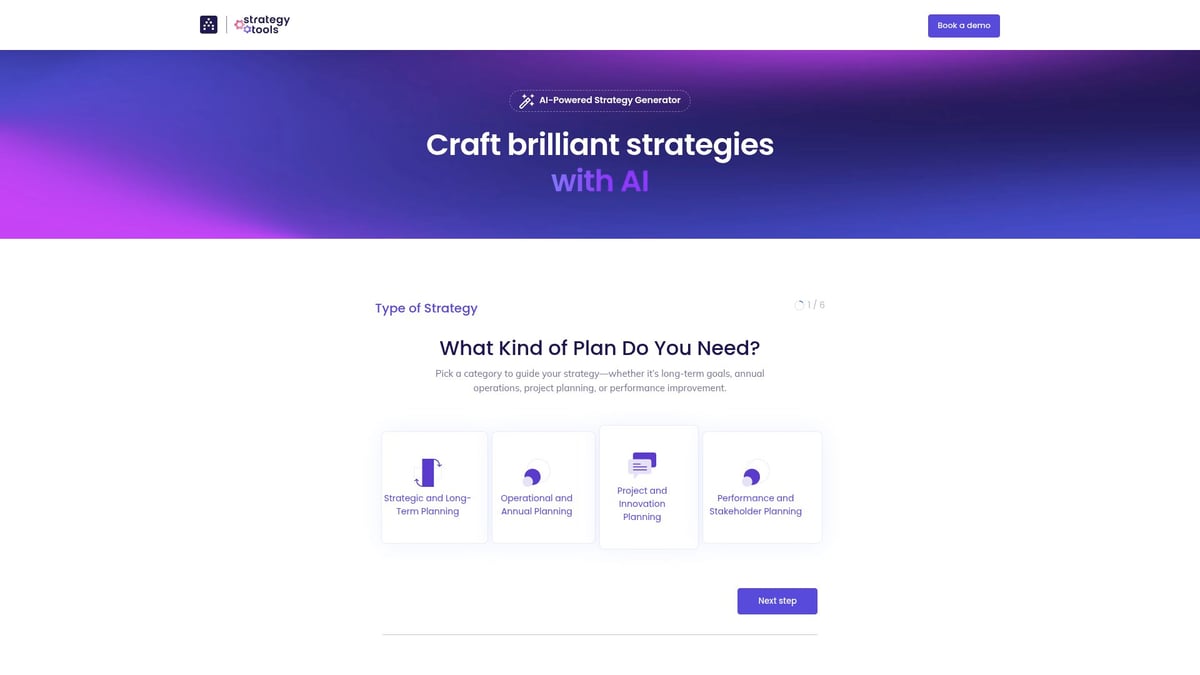
AI-driven strategy generators are revolutionizing the tools strategy landscape. Platforms like Cascade AI Generator automate SWOT, PESTLE analysis, and offer actionable recommendations, accelerating the entire strategic planning cycle.
Core Features:
- AI-powered strategy formulation
- Automated SWOT/PESTLE analysis
- Instant report generation and data-driven insights
Unique Selling Points:
By integrating AI into your tools strategy, you gain faster, unbiased insights and reduce manual effort. These tools can surface risks and opportunities that might otherwise be overlooked.
Pricing: Included with Cascade; standalone tools vary, some offer free trials.
Target Audience: Strategy consultants, business analysts, and executives who want a streamlined tools strategy.
Ideal Use Cases:
- Quick strategy drafts
- Competitor benchmarking
- Scenario simulations
Pros:
- Saves significant time
- Enhances objectivity in planning
- Democratizes access to strategic expertise
Cons:
- May lack nuanced context for unique industries
- Best as a supplement to human judgment
Example:
In Cascade’s 2025 survey, 459 business leaders cited AI insights as critical for identifying execution risks. For a deep dive into how AI-driven tools strategy is tested in real business environments, explore Testing CustomGPT AI for strategy.
4. Balanced Scorecard Software (e.g., ClearPoint Strategy)
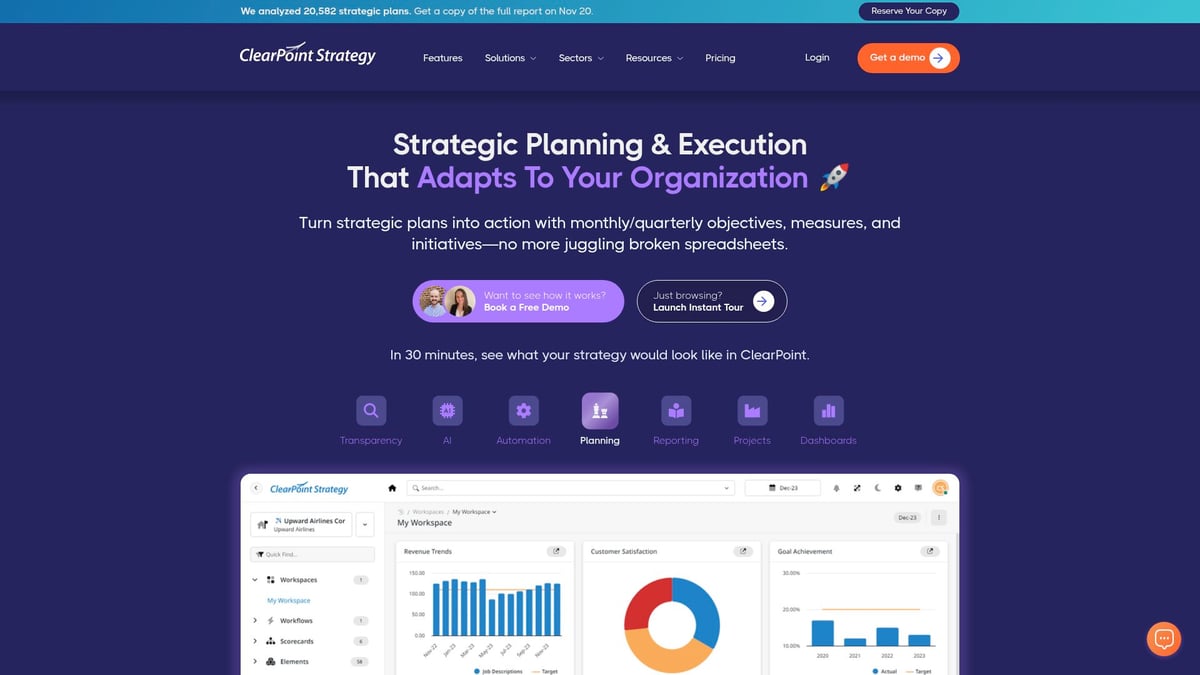
Balanced Scorecard software, such as ClearPoint Strategy, anchors your tools strategy to proven frameworks. It helps organizations connect vision, objectives, and performance metrics across all dimensions.
Core Features:
- Balanced Scorecard framework implementation
- KPI tracking and performance dashboards
- Automated reporting and analytics
Unique Selling Points:
This approach aligns financial, customer, process, and learning goals within your tools strategy, ensuring no area is overlooked.
Pricing: Starts at $250/month; custom enterprise pricing.
Target Audience: Mid-to-large organizations, performance managers, and C-suite leaders seeking a disciplined tools strategy.
Ideal Use Cases:
- Long-term performance management
- Strategy communication
- Goal alignment across business units
Pros:
- Proven methodology
- Robust analytics and customizable dashboards
Cons:
- May require initial training
- Higher cost for small teams
Example:
Government agencies and Fortune 500 firms rely on Balanced Scorecard software for strategic accountability and transparent tools strategy reporting.
5. Strategic Planning Templates & Frameworks Library (e.g., Strategyzer’s Business Model Canvas)
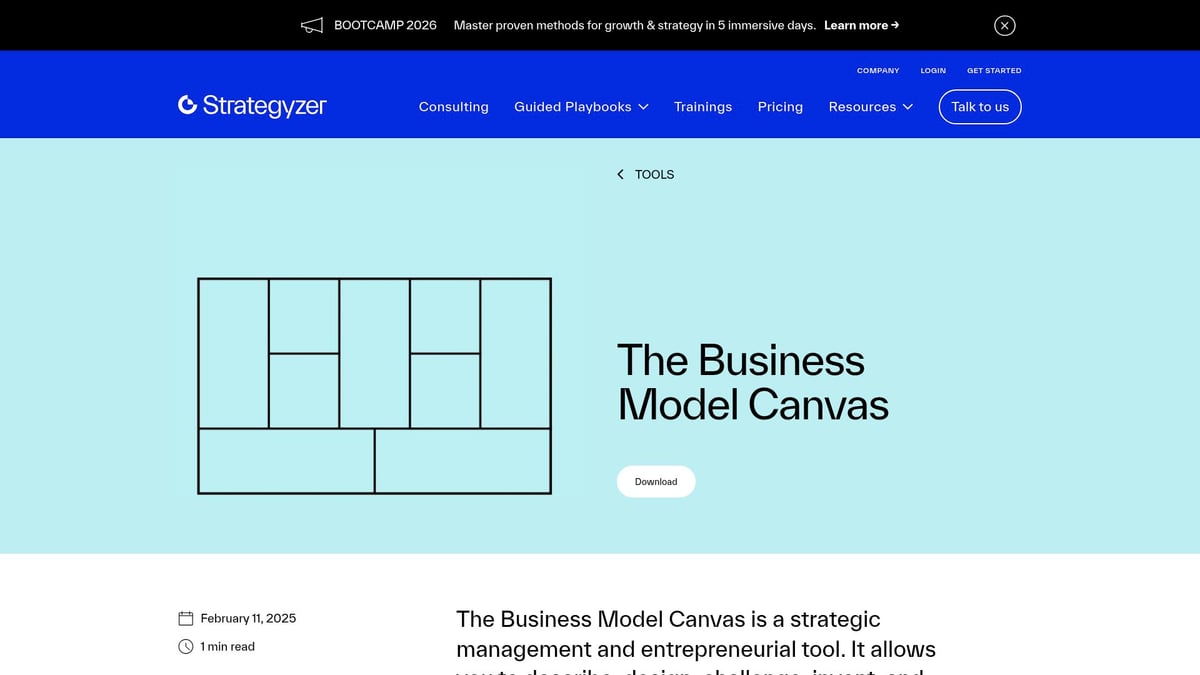
A versatile tools strategy often begins with the right frameworks. Strategyzer’s Business Model Canvas and related templates provide structured, visual tools for ideation and business modeling.
Core Features:
- Downloadable templates for Business Model Canvas, Value Proposition Canvas, SWOT, and more
- Visual frameworks for strategic analysis
- Free and premium options
Unique Selling Points:
These templates make it easy to kickstart your tools strategy by providing universally recognized and adaptable structures.
Pricing: Free for many templates; premium access for advanced features.
Target Audience: Startups, SMBs, educators, and consultants looking to simplify their tools strategy.
Ideal Use Cases:
- New business launches
- Pivot planning
- Investor presentations
Pros:
- Easy to use and adapt
- Recognized globally
- Supports rapid business model innovation
Cons:
- Templates alone do not ensure execution
- May need additional tools for tracking
Example:
Over 5 million strategy workshops worldwide have leveraged these frameworks to innovate and refine their tools strategy.
6. Project Portfolio Management Tools (e.g., monday.com)
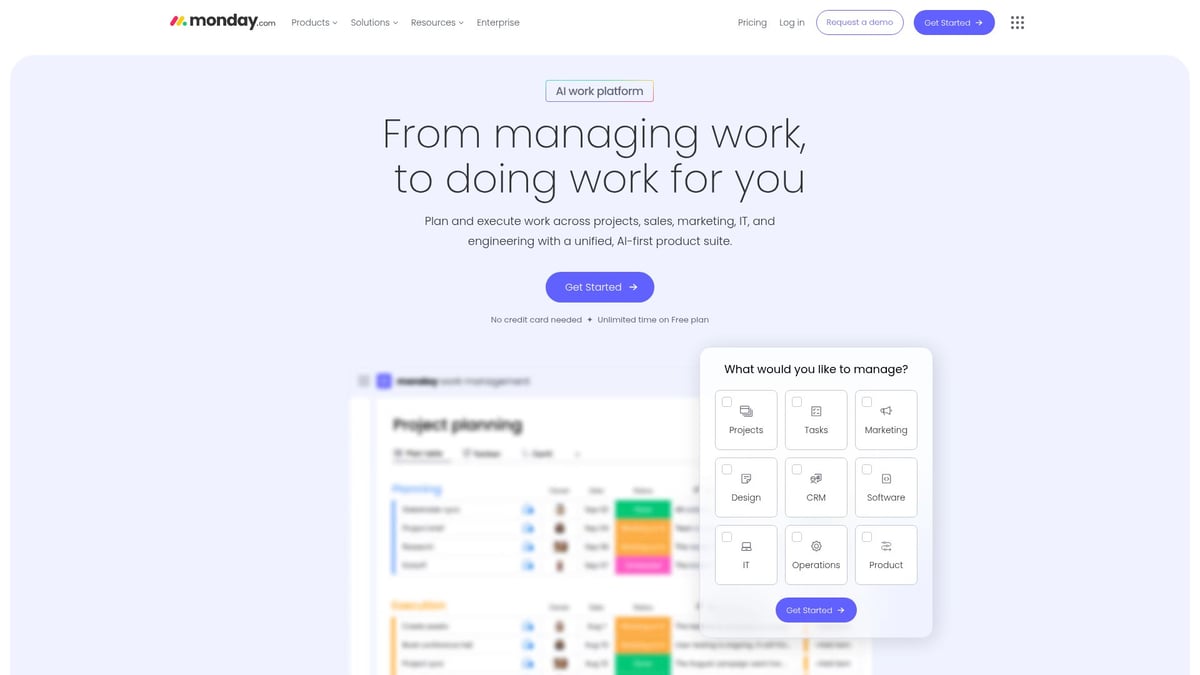
Project portfolio management (PPM) tools like monday.com visualize your tools strategy in action. They help teams track projects, allocate resources, and ensure alignment with strategic goals.
Core Features:
- Project tracking and resource allocation
- Goal setting and customizable dashboards
- Real-time collaboration and updates
Unique Selling Points:
PPM tools keep your tools strategy transparent and adaptable, allowing quick pivots and informed decision-making.
Pricing: Free trial available; paid plans start at $8/seat/month.
Target Audience: Operations managers, PMOs, and cross-functional teams managing an active tools strategy.
Ideal Use Cases:
- Managing multiple strategic initiatives
- Resource prioritization
- Progress monitoring
Pros:
- Highly flexible
- Integrates with business apps
- Automates routine tasks
Cons:
- Advanced reporting in higher-tier plans
- Time-intensive setup for complex portfolios
Example:
More than 180,000 organizations rely on PPM tools strategy to streamline execution and maintain strategic alignment.
7. ToolStacked
ToolStacked is your all-in-one hub for AI, automation, and chatbot tools strategy. The platform curates and compares the best solutions to fit your business needs, making digital transformation accessible to all.
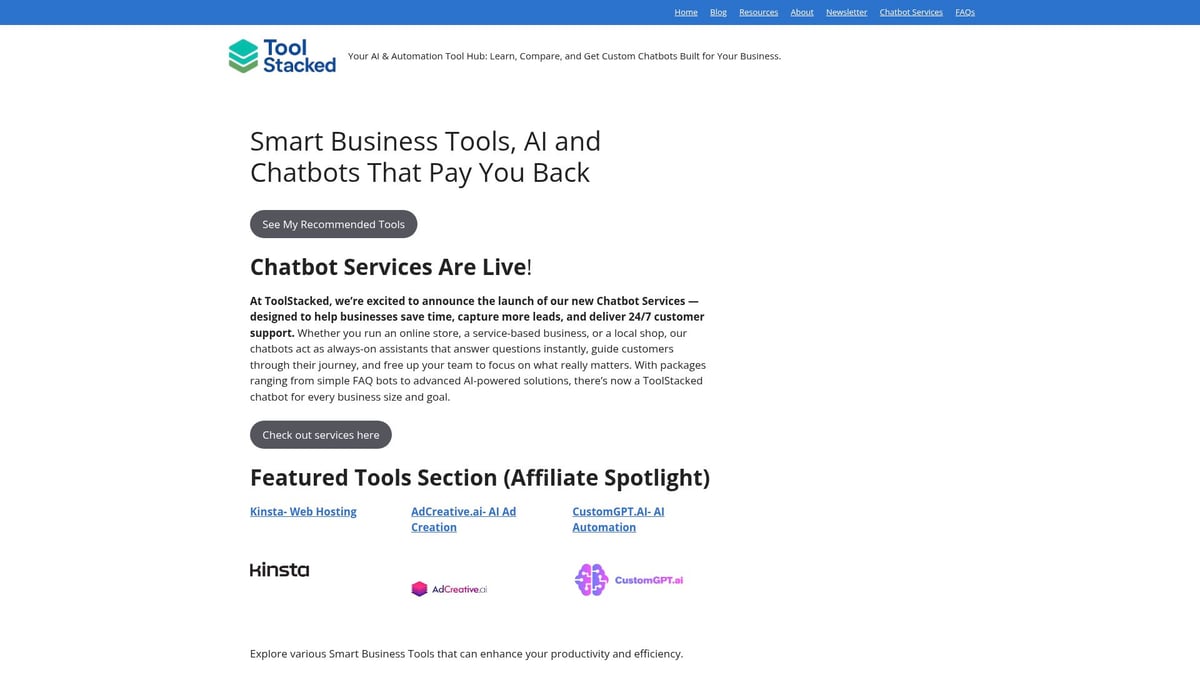
Core Features:
- Curated AI and automation tool recommendations
- Custom chatbot development
- Product comparisons and educational resources
Unique Selling Points:
ToolStacked simplifies your tools strategy selection process, offering personalized solutions and exclusive deals through its affiliate network.
Pricing: Chatbot services in tiered packages; free tool recommendations and newsletter.
Target Audience: SMBs, entrepreneurs, marketers, e-commerce stores, and agencies building an AI-powered tools strategy.
Ideal Use Cases:
- Automating customer support
- Enhancing lead capture
- Staying updated on tech trends
Pros:
- Personalized chatbot solutions
- Expert tool curation
- Actionable content and ongoing support
Cons:
- Chatbot pricing varies by needs
- Affiliate deals may not cover every niche
Example:
Businesses report streamlined support and higher conversions after integrating ToolStacked’s custom AI chatbots into their tools strategy.
How to Choose the Right Strategy Tools for Your Organization
Selecting the right tools strategy for your organization in 2025 is a mission-critical decision. The landscape is crowded and evolving, so a methodical approach will help you unlock the full value of digital transformation. By following a structured evaluation process, you can ensure your tools strategy aligns with your business goals, digital maturity, and future growth.
Assessing Organizational Needs and Maturity
Begin by analyzing your current tools strategy framework and identifying pain points. Are your teams struggling with fragmented data, or is execution lagging behind planning? Use a maturity assessment to benchmark your digital capabilities and highlight improvement areas. Many organizations benefit from quick, diagnostic quizzes to understand where their tools strategy stands and where it can evolve.
A clear-eyed assessment ensures you adopt solutions that match your readiness, not just the latest trends.
Key Selection Criteria
When comparing platforms, focus on criteria that drive long-term success. Use the table below to guide your evaluation:
| Criteria | Why It Matters |
|---|---|
| Integration | Seamless flow with CRM, ERP, analytics |
| Scalability | Accommodates future growth |
| User-friendly | Drives adoption across all roles |
| AI Capability | Delivers predictive insights |
| Security | Protects sensitive strategy data |
For advanced analytics and competitor analysis, consider platforms like Predis.ai for strategic insights to enrich your tools strategy.
Balancing Cost and Value
Weigh the upfront investment against the long-term ROI of your tools strategy. Consider how automation and improved execution can reduce manual work, accelerate timelines, and drive better outcomes. Always pilot free templates and trials before making a full commitment. A well-chosen tools strategy should deliver measurable business value and support sustainable growth.
Training and Change Management
Adopting new strategy tools is as much about people as technology. Prioritize onboarding and ongoing training to ensure your teams embrace the tools strategy. Encourage a culture of strategic thinking, and provide resources to build digital confidence. When everyone understands the “why” and “how,” adoption rates soar and your tools strategy delivers results.
Examples and Best Practices
Leading organizations often start by piloting a new tools strategy in one department before scaling. This approach minimizes disruption and allows for rapid feedback.
Common pitfalls to avoid include:
- Over-complicating your tools strategy with disconnected solutions
- Ignoring stakeholder input during selection
Action steps for 2025:
- Audit current tools strategy
- Define clear selection criteria
- Pilot top candidates with cross-functional teams
For a broader perspective, explore AI tools tested in 2025 to benchmark features and see what leading companies are adopting.
Maximizing the Impact of Strategy Tools: Implementation Tips
Implementing tools strategy effectively is essential for maximizing business impact. Success depends on aligning people, processes, and technology, ensuring everyone moves in the same direction. Thoughtful rollout and ongoing optimization make the difference between a collection of tools and a true strategy engine.
Foster Organization-Wide Alignment
To unlock the full value of tools strategy, engage all teams from the start. Use collaborative platforms to bring leadership, managers, and frontline staff together around shared goals.
- Schedule regular cross-functional workshops.
- Encourage open feedback loops.
- Assign clear ownership for every strategic initiative.
This approach ensures everyone understands their role and how their actions drive results.
Leverage AI and Automation
AI-powered solutions are transforming how organizations execute strategies. Integrating AI into your tools strategy automates routine analysis, surfaces actionable insights, and speeds up decision-making. For example, platforms reviewed in the AdCreative AI tool review show how automation can streamline campaign optimization and reporting.
Adopting AI tools can also reduce human error and enable teams to focus on high-value work.
Iterate and Adapt Strategies Continuously
Continuous improvement should be at the core of your tools strategy. Regularly review performance metrics and gather feedback to refine actions. Leverage scenario planning and predictive analytics to anticipate market shifts.
Recent trends, as highlighted in AI’s role in hyper-personalization, show that adaptive strategies outperform static plans.
Promote a Data-Driven Culture
Empower teams to use dashboards and scorecards for daily decision-making. Train staff on interpreting data so strategic adjustments are timely and effective.
- Celebrate data-driven wins.
- Provide ongoing analytics training.
- Make dashboards accessible to all stakeholders.
A strong data culture helps sustain momentum and accountability.
Measure and Communicate Success
Set clear KPIs for each initiative supported by your tools strategy. Share progress and lessons learned in regular updates, using internal case studies to inspire teams.
Highlighting quick wins builds enthusiasm and demonstrates tangible value to leadership and staff alike.
Example Implementation Roadmap
A structured rollout maximizes adoption and impact. Use this roadmap to guide your tools strategy journey:
| Stage | Action |
|---|---|
| Pilot | Test tools in one department |
| Train | Educate users on features and benefits |
| Integrate | Connect tools to existing workflows |
| Scale | Expand adoption organization-wide |
| Optimize | Refine usage and measure outcomes |
Monitor Tool Effectiveness
Establish KPIs to track adoption, engagement, and outcome improvements from your tools strategy. Regularly review tool performance and seek user feedback to identify gaps.
Continuously update your toolkit to stay ahead of evolving business needs and technological advances.