
Business Development Leads Guide: Strategies for 2026 Success
In a rapidly evolving digital landscape, mastering business development leads is the foundation for success in 2026’s fiercely competitive market. This comprehensive guide arms business leaders, sales professionals, and marketers with actionable, data-driven strategies to consistently generate, manage, and convert high-quality leads.
Discover the latest trends shaping business growth, proven tactics for lead generation, cutting-edge AI-powered tools, and advanced automation strategies. Explore step-by-step frameworks for nurturing leads and learn how to future-proof your pipeline against the challenges of tomorrow’s marketplace.
Understanding Business Development Leads in 2026
Business development leads are evolving rapidly as digital transformation accelerates and buyer behaviors change. Understanding the nuances of these leads is essential for organizations aiming to stay ahead in 2026’s competitive landscape. Let’s explore what defines business development leads, how the generation landscape is shifting, key challenges and opportunities, and how modern qualification frameworks are setting new standards.

Defining Business Development Leads
Business development leads are distinct from marketing-qualified leads (MQLs) and sales-qualified leads (SQLs). While MQLs show initial interest and SQLs are ready for direct sales engagement, business development leads bridge the gap, focusing on nurturing relationships and uncovering real intent. In 2026, the emphasis is shifting from sheer volume to the quality of business development leads.
Evolving buyer behaviors mean longer decision cycles, more research, and higher expectations for personalization. For example, B2B SaaS companies are prioritizing high-intent business development leads over generic lists to maximize ROI. For more industry-specific strategies, explore lead generation for tech companies, which details approaches tailored to the unique needs of technology businesses.
The Evolving Lead Generation Landscape
The landscape for business development leads has transformed due to digital acceleration and the normalization of remote work. Multi-channel lead capture is now standard, utilizing social platforms, email, live events, and AI-powered chatbots to engage prospects. Organizations must meet buyers where they are, often before a sales conversation begins.
A notable trend is the rise of AI chatbots and automation tools, streamlining the collection and qualification of business development leads. According to Gartner, 74% of B2B buyers now research online before reaching out to sales, highlighting the need for robust digital presence and proactive engagement strategies.
Key Challenges and Opportunities in 2026
Competition for business development leads is fiercer than ever, and information overload can make it difficult to stand out. Data privacy regulations such as GDPR, CCPA, and emerging global standards add layers of complexity to how leads are captured and managed.
Yet, these challenges create opportunities. Businesses that leverage personalization and automation can cut through the noise. For instance, some companies use AI-driven tools to predict lead intent, helping teams focus on the most promising business development leads. The ability to quickly adapt to regulatory changes and harness smart technology will define success in 2026.
Lead Qualification Criteria for Modern Businesses
Qualifying business development leads in 2026 requires updated frameworks like BANT, CHAMP, and MEDDIC, which now integrate behavioral and firmographic data. Modern organizations employ predictive analytics to score leads based on actual engagement and fit, not just demographic information.
Top-performing firms utilize AI-driven lead scoring to prioritize business development leads, resulting in up to 30% higher conversion rates. These advancements enable teams to focus resources on prospects most likely to convert, ensuring a more efficient and effective pipeline.
Step-by-Step Strategies for Generating Business Development Leads
Unlocking sustainable growth in 2026 starts with a systematic approach to business development leads. Each step below is tailored to help you attract, engage, and convert the right prospects, ensuring your pipeline remains robust in a competitive environment.
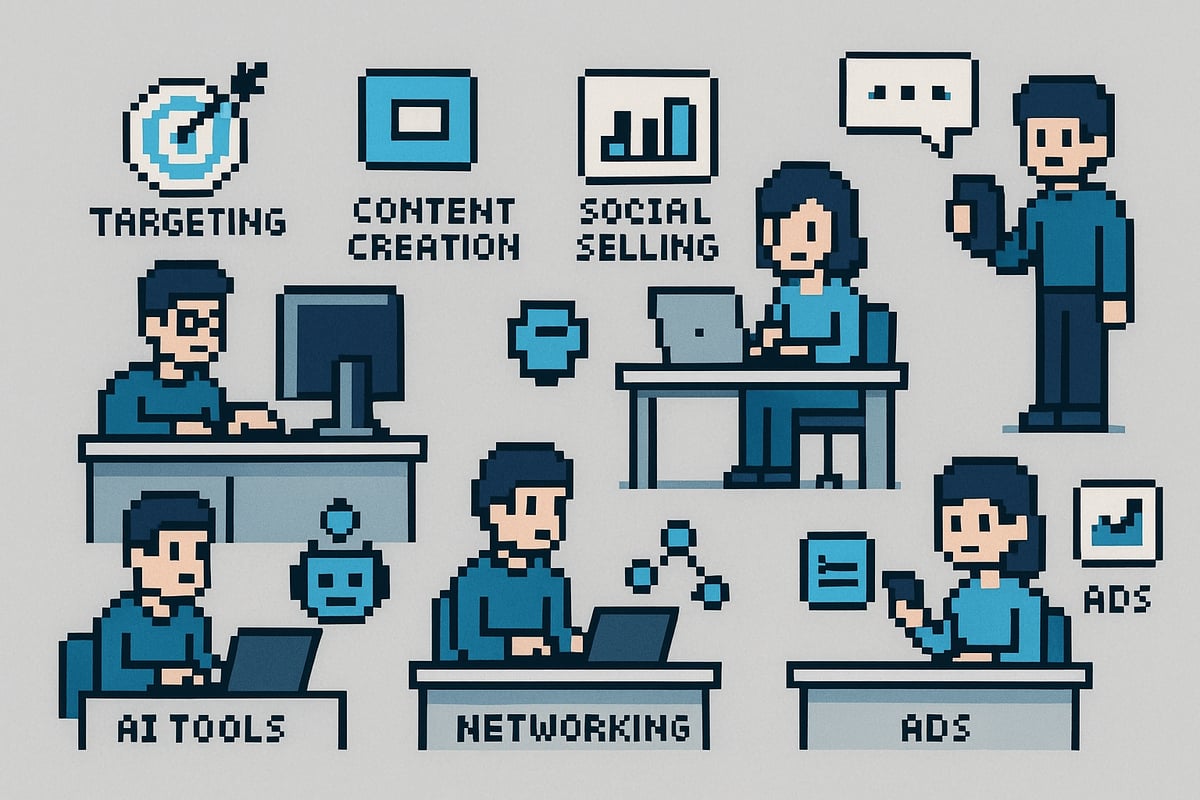
Step 1: Identifying Target Audiences and Ideal Customer Profiles
The foundation of any successful business development leads strategy is a deep understanding of your target audience. Advanced segmentation tools and AI-driven persona creation allow you to define and refine your ideal customer profile (ICP) with precision.
Regularly updating your ICP is vital. Companies that review personas quarterly often see significant improvements in lead quality. For instance, a SaaS provider reported a 22 percent increase in high-quality leads after adjusting their ICPs. For a practical approach to building and managing lists, explore these business lead lists strategies. Accurate targeting ensures your business development leads are always relevant and conversion-ready.
Step 2: Leveraging Content Marketing and Thought Leadership
Content remains a powerhouse for generating business development leads in 2026. High-value assets like interactive guides, webinars, and video series attract and educate prospects at every stage of the buyer journey.
Personalization is key. Tailor content to address specific pain points and industry trends. With 65 percent of buyers engaging with video before making decisions, integrating multimedia is no longer optional. Thought leadership builds trust, positioning your brand as a go-to resource for business development leads and driving consistent engagement.
Step 3: Multi-Channel Outreach and Social Selling
Expanding outreach across multiple platforms is essential for maximizing business development leads. LinkedIn, X (Twitter), and emerging platforms allow for targeted engagement with decision-makers.
Social listening tools and engagement automation streamline interactions. One B2B company tripled its lead volume by leveraging LinkedIn automation tools for personalized outreach at scale. Adopting a multi-channel approach ensures your business development leads strategy reaches the widest and most relevant audience segments.
Step 4: AI and Automation in Lead Generation
Artificial intelligence and automation have revolutionized how companies generate business development leads. AI-powered chatbots handle inquiries 24/7, instantly qualifying and nurturing prospects.
Automated email sequencing and predictive analytics optimize follow-up timing and content. Organizations using AI chatbots report 40 percent faster response times, speeding up the lead qualification process. Embracing these technologies helps you capture business development leads efficiently and stay ahead of competitors.
Step 5: Strategic Partnerships and Networking
Collaborating with industry partners is a proven way to expand your reach and generate business development leads. Co-marketing initiatives, joint webinars, and referral programs introduce your brand to new audiences.
Virtual and hybrid events have made networking more accessible. A tech startup gained over 300 leads from a single virtual summit. Building strong alliances accelerates your business development leads pipeline and fosters long-term growth opportunities.
Step 6: Paid Advertising and Retargeting
Paid advertising remains a core tactic for acquiring business development leads. Advanced targeting, powered by programmatic ads and AI-driven bidding, ensures your message reaches the right prospects at the right time.
Cross-channel retargeting increases conversion rates by re-engaging visitors who previously interacted with your brand. Data shows that retargeted visitors are 70 percent more likely to convert. Investing in smart ad strategies guarantees your business development leads efforts are both scalable and cost-effective.
Leveraging AI, Automation, and Smart Tools for Lead Success
Staying ahead in business development leads requires fully embracing AI, automation, and data-driven tools. In 2026, these technologies are not optional, but essential for identifying, qualifying, and nurturing high-value prospects at scale. Let us break down how modern businesses can leverage these advancements to maximize results and outpace the competition.

The Role of AI in Lead Identification and Qualification
Artificial intelligence is revolutionizing how companies identify and prioritize business development leads. AI-powered algorithms analyze vast datasets, uncovering patterns in buyer behavior and firmographics. This enables sales teams to focus on prospects with the highest conversion potential.
For example, enterprise sales teams now deploy AI models that halve the time spent on lead qualification. These systems assess intent signals, engagement history, and demographic data in real time.
- AI detects high-intent leads through digital footprints.
- Predictive scoring models streamline lead prioritization.
- Machine learning adapts to evolving customer journeys.
By leveraging AI for smarter targeting, organizations ensure their business development leads pipeline remains high in quality and relevance.
Automation Tools for Lead Capture and Nurturing
Automation tools are critical for capturing, managing, and nurturing business development leads efficiently. Automated email workflows, CRM integrations, and AI chatbots eliminate manual tasks and ensure consistent follow-up.
Businesses leveraging tools and automation for leads save time and improve engagement rates. Automated nurturing campaigns, for instance, generate 50% more sales-ready leads compared to manual processes.
Key benefits include:
- 24/7 lead capture via chatbots
- Triggered email sequences based on user actions
- Seamless data flow between platforms
These solutions empower teams to focus on meaningful interactions, while automation handles repetitive steps in the business development leads journey.
Custom Chatbots and Conversational AI for Business Development
Custom chatbots and conversational AI are transforming business development leads engagement. These smart assistants interact with website visitors, answer questions instantly, and qualify leads around the clock.
An e-commerce brand recently boosted lead capture by 35% using AI-driven chatbots tailored to their audience. These bots provide personalized experiences, collect valuable data, and hand off warm prospects to sales.
Advantages include:
- Immediate response to inquiries
- Personalized lead qualification
- Integration with CRM for seamless follow-up
Implementing conversational AI ensures no business development leads slip through the cracks, regardless of time zone or business hours.
How ToolStacked Empowers Business Development with AI Tools
ToolStacked delivers a suite of AI tools designed specifically for business development leads. The platform offers custom chatbot solutions, automation strategies, and curated tool comparisons to help businesses automate their lead management workflows.
Companies using ToolStacked gain access to educational resources and expert guidance for optimizing their automation stack. SMBs report higher conversion rates and faster response times after deploying ToolStacked chatbots.
- Compare leading AI tools side-by-side
- Access practical guides for automation
- Tailor solutions to unique business needs
With ToolStacked, organizations can future-proof their approach to business development leads and stay ahead in a competitive market.
Integrating Data Analytics for Smarter Lead Management
Data analytics plays a pivotal role in managing business development leads intelligently. Real-time dashboards and pipeline analytics offer a comprehensive view of lead performance, while predictive analytics forecast conversion likelihood.
Companies using analytics platforms see a 20% boost in lead-to-customer conversion rates. By tracking key metrics, sales teams can optimize every stage of the funnel.
| Metric | Impact on Business Development Leads |
|---|---|
| Lead Source | Identifies top-performing channels |
| Conversion Rate | Measures effectiveness of outreach |
| Pipeline Velocity | Tracks speed from lead to customer |
Integrating analytics ensures business development leads are managed with precision, maximizing ROI and growth potential.
Lead Nurturing and Conversion Frameworks for 2026
In 2026, businesses face a rapidly shifting landscape for business development leads. Effective nurturing and conversion frameworks are essential for turning prospects into loyal customers. By embracing advanced tactics and aligning sales and marketing, organizations can unlock higher engagement and conversion rates.

Advanced Lead Nurturing Tactics
Modern business development leads require more than basic email campaigns. Multi-touch nurturing combines email, SMS, retargeting, and AI chatbots to engage prospects at every stage. Personalization at scale is now possible, with AI delivering tailored content based on buyer behavior.
- Interactive webinars and guides
- AI-driven email sequences
- Dynamic retargeting ads
According to interactive content in lead generation, quizzes and calculators are driving higher engagement. Personalized nurturing campaigns now deliver 4x higher engagement, making advanced strategies a must for 2026.
Sales and Marketing Alignment for Seamless Lead Handoffs
Aligning sales and marketing is critical for managing business development leads efficiently. Shared KPIs, integrated technology stacks, and collaborative SLAs ensure that teams work toward common goals. This alignment minimizes friction and speeds up lead progression through the funnel.
Organizations with strong alignment achieve up to 36% higher customer retention. When both teams collaborate, business development leads experience a seamless journey from initial contact to closed deal.
Behavioral Scoring and Predictive Lead Conversion
Understanding prospect behavior is key to prioritizing business development leads. By tracking digital body language and engagement signals, companies can score leads with greater accuracy. Predictive models use historical data to forecast conversion probability.
| Criteria | Data Source | Impact on Lead Score |
|---|---|---|
| Email opens | CRM analytics | Moderate |
| Webinar attendance | Event platforms | High |
| Content downloads | Website tracking | High |
| Social interactions | Social listening | Moderate |
Predictive lead scoring improves sales productivity by 20%, ensuring sales teams focus on the most promising business development leads.
Automated Follow-Up and Lead Recycling
Automation is transforming how organizations handle follow-up and recycling of business development leads. Drip campaigns, re-engagement workflows, and automated reminders keep prospects warm. AI and automation in business processes streamline these efforts, reducing manual workload and driving consistency (AI and automation in business).
- Automated email reminders
- Scheduled re-engagement sequences
- Lead recycling triggers for dormant contacts
A SaaS company recently recycled 15% of dormant business development leads into an active pipeline using these tactics.
Optimizing the Lead-to-Customer Journey
Optimizing the customer journey for business development leads means mapping every touchpoint and reducing friction. Streamlined onboarding, personalized touchpoints, and fast response times are essential for conversion.
Businesses that optimize the lead journey see a 10% increase in customer lifetime value. Mapping out and refining each stage ensures business development leads transition smoothly from prospect to satisfied customer.
Measuring, Analyzing, and Scaling Lead Generation Efforts
Effectively measuring, analyzing, and scaling business development leads is essential for long-term growth and adaptability in 2026. By tracking the right metrics, leveraging analytics, and embracing the latest technologies, organizations can consistently optimize their lead generation performance.
Key Metrics for Business Development Lead Success
To gauge the effectiveness of your business development leads strategy, focus on a set of actionable metrics:
- Lead volume: Number of new leads entering the pipeline.
- Conversion rates: Percentage of leads moving from one stage to the next.
- Cost per lead: Total spend divided by number of leads acquired.
- Pipeline velocity: Speed at which leads progress through the funnel.
Tracking the source and attribution of business development leads helps identify which channels deliver the highest ROI. For example, a B2B firm increased ROI by 18% after prioritizing high-performing channels. Consistently monitoring these metrics enables you to spot trends, respond quickly to changes, and maximize the impact of your lead generation efforts.
Using Analytics to Refine Strategies
Analytics play a pivotal role in refining business development leads generation. Employ A/B testing to compare outreach methods and messaging. Use cohort analysis to understand how different segments respond over time. Regular campaign optimization, based on real-time data, ensures that your strategies remain effective and efficient.
Data-driven decision-making is key. Marketing teams that embrace iterative analytics can boost marketing qualified leads (MQLs) by up to 25%. Leveraging advanced analytics tools provides clarity on what works and where to allocate resources for the best results. This approach transforms raw data from business development leads into actionable insights, driving continuous improvement.
Scaling Lead Generation with Technology and Talent
Scaling business development leads requires a blend of cutting-edge tools and skilled teams. Onboarding automation platforms streamlines repetitive tasks, while agile team structures adapt quickly to market shifts. Companies must weigh the benefits of outsourcing versus building in-house capabilities for rapid expansion.
Recent advances in AI-powered tools are revolutionizing how organizations scale lead generation. According to AI tools for lead generation in 2025, adopting intelligent automation enables companies to achieve 30% faster pipeline growth. By combining technology with talent, businesses can handle increased lead volume without sacrificing quality or responsiveness.
Future Trends in Business Development Leads
Looking ahead, several trends will shape the future of business development leads. Conversational AI, hyper-personalization, and intent data are becoming standard. Regulatory changes, such as stricter data privacy laws, will require adaptable strategies.
AI-driven solutions are expected to dominate, with predictions that 60% of qualified leads will be generated through automated processes by 2026. Innovations like Meta’s AI-driven ad automation by 2026 highlight how major platforms are integrating AI to transform ad targeting and lead capture. Staying ahead means continually investing in technology and remaining agile as buyer expectations evolve.