
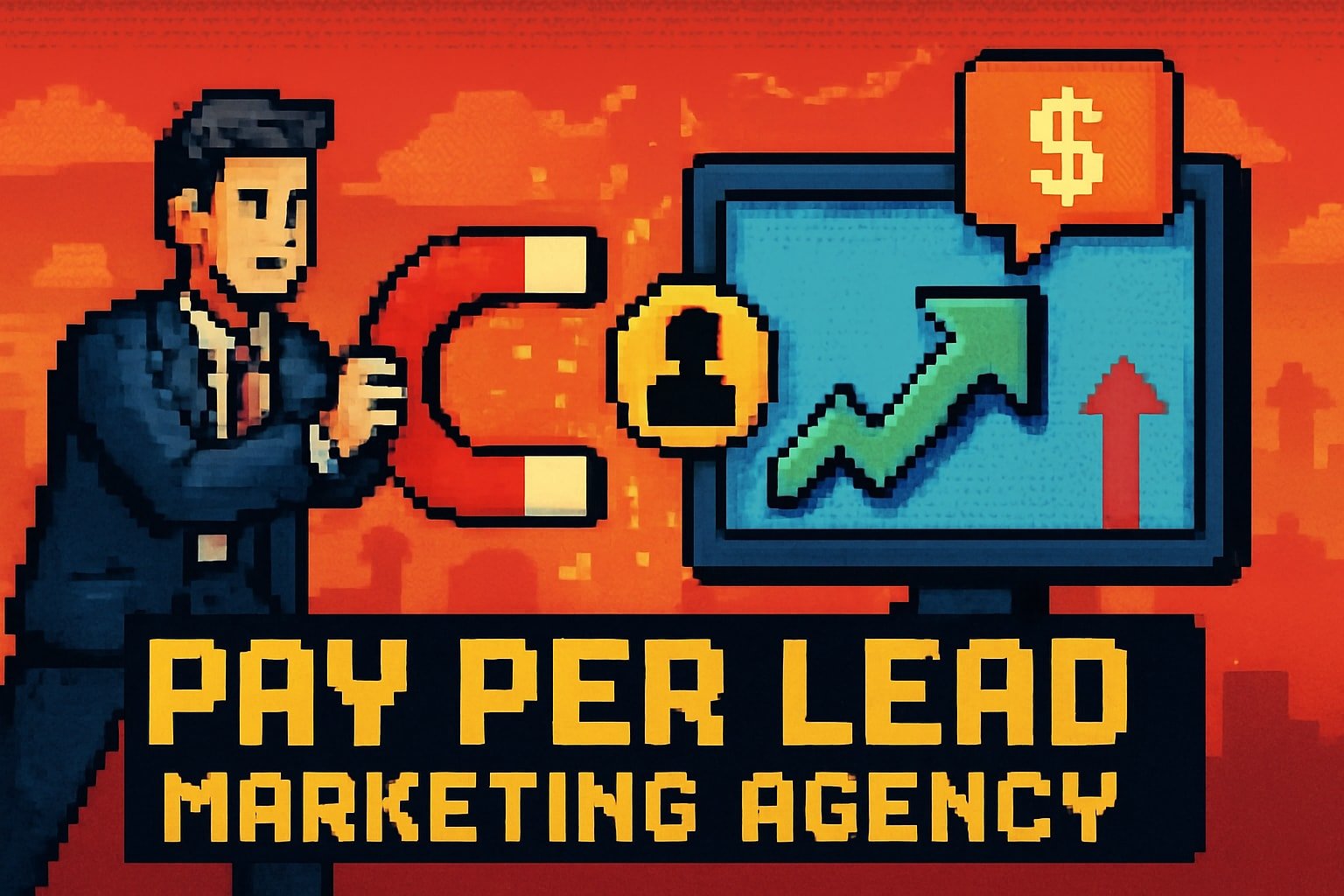
7 Powerful Pay Per Lead Marketing Agency Strategies for 2026
The digital marketing landscape is evolving at lightning speed, driving a surge in demand for measurable, performance-based lead generation. Brands now require a pay per lead marketing agency that can deliver results, not just impressions or clicks.
In this article, you will discover seven powerful strategies set to define success for every pay per lead marketing agency by 2026. From AI-driven lead qualification to seamless omnichannel automation, these tactics are reshaping how agencies operate.
Get ready to explore future-focused trends, proven results, and actionable steps. If you want to stay ahead in the competitive world of pay per lead marketing agency services, each strategy outlined here is a must-know.
The Rise of Pay Per Lead Marketing in 2026
The digital marketing world is witnessing a fundamental shift as agencies and advertisers demand more measurable outcomes. This change is fueling the rapid evolution of pay per lead marketing agency models, setting new standards for accountability and growth.

Evolution of Pay Per Lead Models
Over the past decade, the pay per lead marketing agency model has steadily replaced traditional pay-per-click campaigns. As brands seek predictable revenue, they increasingly value leads over impressions or clicks. This transition is driven by the need for demonstrable ROI, forcing agencies to restructure their offerings toward outcome-based billing.
Privacy regulations now play a crucial role, making accurate lead tracking more complex but also more essential. For example, B2B SaaS companies are turning to pay per lead marketing agency solutions to ensure scalable, predictable growth while staying compliant. Agencies are leveraging innovative lead generation strategies to keep pace with these industry changes. For an in-depth look at how agencies are adapting, see Lead Generation for Agencies.
Key Industry Statistics and Market Projections
By 2026, the pay per lead marketing agency market is projected to see significant global expansion. Recent data suggests that PPL models deliver higher lead quality, with a 20% improvement over traditional models. Conversion rates for pay per lead marketing agency campaigns consistently outperform pay-per-click, giving marketers a clear edge.
According to HubSpot, 65% of marketers now prioritize lead quality over quantity, reflecting a shift in industry goals. Verticals like finance, SaaS, and healthcare are experiencing the fastest adoption rates, as these sectors demand measurable outcomes and compliance with evolving regulations.
Challenges Facing Agencies and Advertisers
Despite its growth, the pay per lead marketing agency landscape faces persistent challenges. Lead fraud, attribution issues, and inconsistent quality remain top concerns for both agencies and advertisers. Multi-touch attribution is especially complex in 2026, as customer journeys span more channels and devices.
Client education is another major hurdle. Agencies must clearly communicate how leads are defined and verified. Many firms now combat bot-generated leads with advanced verification tools, focusing on compliance and ethical sourcing. Staying ahead of regulatory changes is key for every pay per lead marketing agency seeking long-term success.
Opportunities for Innovation and Differentiation
To stand out, each pay per lead marketing agency must develop unique value propositions. AI and automation are emerging as critical differentiators, enabling real-time lead qualification and seamless campaign execution. Cross-industry partnerships allow agencies to broaden their reach and tap into new lead sources.
For example, integrating chatbots for instant lead engagement is becoming standard practice. Data-driven personalization further enhances the client experience, ensuring that every lead interaction feels relevant and timely. The future belongs to agencies that combine technology, compliance, and creativity to deliver measurable results.
7 Powerful Pay Per Lead Marketing Agency Strategies for 2026
The future of the pay per lead marketing agency landscape will be defined by advanced technology, data-driven tactics, and a relentless focus on measurable results. As 2026 approaches, agencies that master these seven strategies will stand out in a competitive, rapidly changing environment. Let’s explore each strategy in detail and discover how to future-proof your agency’s lead generation engine.
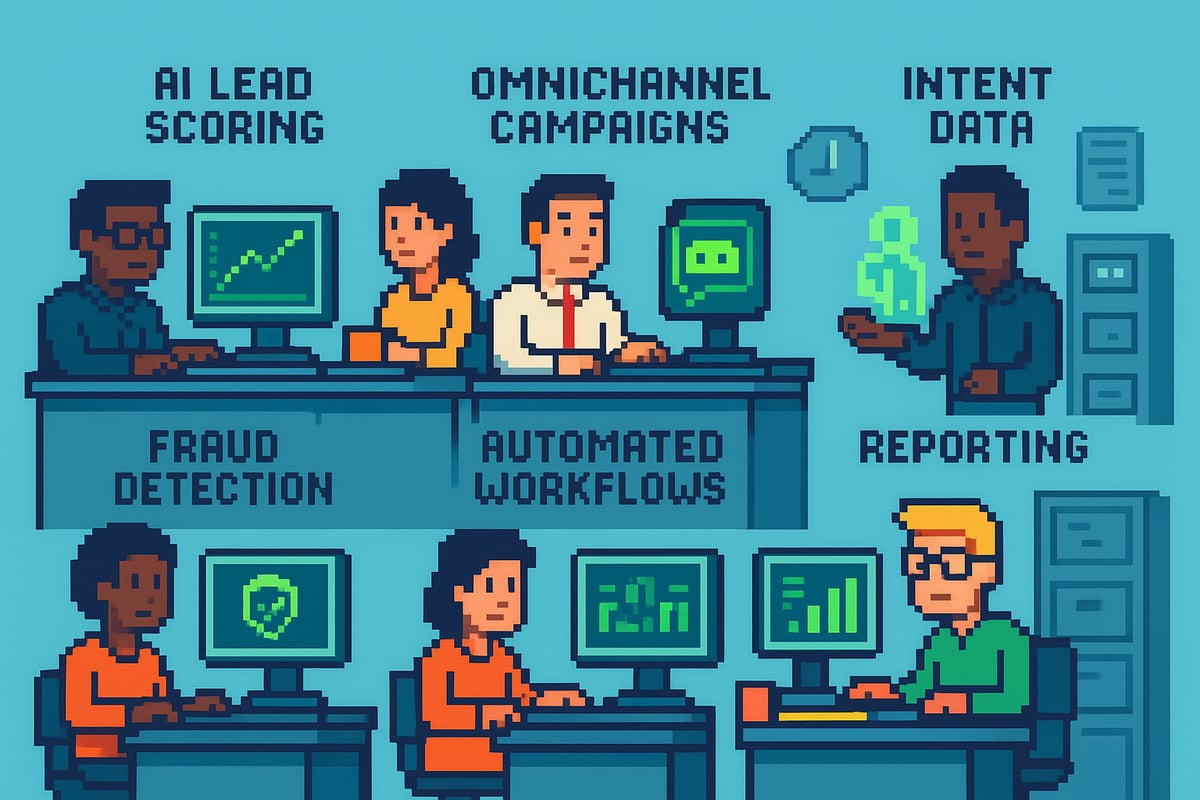
1. AI-Driven Lead Qualification and Scoring
Artificial intelligence has become the backbone of every high-performing pay per lead marketing agency in 2026. Machine learning algorithms now analyze vast datasets to assess lead intent and fit, instantly qualifying prospects with far greater accuracy than manual methods.
By integrating AI with CRM systems, agencies streamline the entire sales funnel. AI models, trained with industry-specific data, automatically prioritize leads based on predictive analytics. This ensures faster response times, higher close rates, and seamless handoff between marketing and sales teams.
For example, agencies now deploy AI-driven lead scoring to identify purchase-ready prospects, reducing manual vetting and aligning sales efforts. In fact, AI-driven lead scoring boosts conversion rates by 35–50%, driving measurable gains for agencies and clients alike.
A recent Statista report found that 78% of top-performing agencies use AI for lead scoring. By focusing on continuous model training and refinement, agencies maximize the value and reliability of every lead generated.
Key Benefits:
- Accelerated lead qualification
- Improved sales alignment
- Consistent, data-driven decision making
For any pay per lead marketing agency, embedding AI in lead qualification is no longer optional—it’s essential for scalable, predictable growth.
2. Hyper-Personalized Omnichannel Campaigns
The modern buyer’s journey is fragmented across multiple platforms. A pay per lead marketing agency must now orchestrate hyper-personalized omnichannel campaigns, leveraging rich customer data to deliver relevant messaging at every touchpoint.
Omnichannel marketing integrates email, SMS, chat, and social media, ensuring a consistent and cohesive brand experience. Agencies use real-time data to personalize content dynamically, adapting campaigns based on user behavior and preferences.
For example, if a prospect engages with a social ad, the agency can trigger a personalized email follow-up and a tailored chatbot conversation. Dynamic content and unified customer journey mapping tools drive up engagement and conversion rates.
According to Salesforce, personalized campaigns generate 20% more qualified leads. Agencies that master omnichannel personalization outperform competitors by creating seamless, memorable experiences.
Key Tactics:
- Cross-channel audience segmentation
- Behavioral triggers for content delivery
- Unified analytics for holistic optimization
These strategies enable a pay per lead marketing agency to reach the right audience, at the right time, with the right message—every time.
3. Automated Lead Nurturing Workflows
Automation is revolutionizing how pay per lead marketing agency teams nurture prospects. By deploying automated workflows, agencies ensure consistent engagement and timely follow-ups, significantly boosting conversion rates.
Segmentation is key. Agencies group leads by stage, interest, and behavior, then deliver targeted content through drip campaigns. For instance, a lead who clicks a product demo link receives a relevant case study and a prompt for a sales call, all triggered automatically.
Integration with sales teams is critical. Automated alerts notify sales reps when a lead reaches a high-intent stage, ensuring no opportunity slips through the cracks.
A Marketo study found that automated workflows increase lead conversion by 30%. Best practices include regular workflow optimization, A/B testing of email sequences, and continuous alignment between marketing and sales.
Workflow Optimization Checklist:
- Define clear lead stages
- Map content to each stage
- Automate multi-channel touchpoints
- Monitor and refine based on performance
For a pay per lead marketing agency, automation means less manual effort, reduced lead drop-off, and a scalable path to consistent results.
4. Intent Data and Predictive Analytics for Targeting
Targeting high-potential prospects is the foundation of effective pay per lead marketing agency performance. Leveraging intent data and predictive analytics, agencies can now identify and engage leads at the perfect moment.
Intent signals are gathered from web activity, content consumption, and firmographic data. Agencies aggregate and analyze this information to predict which leads are most likely to convert. Predictive models then guide outreach timing and messaging, increasing lead quality and campaign ROI.
For example, when a prospect repeatedly visits a product comparison page, the agency’s system triggers a personalized outreach. This approach leads to more efficient targeting and better use of marketing resources.
Privacy and compliance are paramount. Agencies must ensure data collection follows all regulations while still extracting actionable insights.
Forrester reports that predictive analytics boosts lead conversion rates by 25%. The pay per lead marketing agency that masters intent data will maintain a competitive edge in identifying and prioritizing high-value opportunities.
5. Advanced Lead Verification and Fraud Prevention
Lead fraud remains a costly challenge for every pay per lead marketing agency. To guarantee authentic, high-quality leads, agencies now deploy advanced verification techniques and AI-powered fraud detection.
Verification methods include CAPTCHA, phone and email validation, and behavioral analysis. AI scans for patterns typical of bots or fraudulent actors, flagging suspicious leads in real time.
For example, agencies use real-time lead verification tools to instantly check the accuracy and legitimacy of each submission. This not only preserves client trust but also maximizes campaign ROI.
According to ClickCease, lead fraud costs advertisers $1.2 billion annually. Implementing robust fraud prevention best practices—such as regular monitoring, updating verification protocols, and transparent reporting—protects both agency reputation and client investment.
Best Practices Table:
| Technique | Purpose | Benefit |
|---|---|---|
| CAPTCHA | Bot prevention | Blocks automated entries |
| Email/Phone Check | Validates contact info | Reduces fake leads |
| AI Analysis | Detects fraud patterns | Minimizes risk |
For a pay per lead marketing agency, excellence in lead verification is crucial for long-term client retention and sustainable growth.
6. Performance-Based Creative Testing and Optimization
Creative assets are the fuel for lead generation campaigns. A pay per lead marketing agency must constantly test and optimize ad creatives and landing pages to maximize engagement and minimize acquisition costs.
Agencies use A/B and multivariate testing to experiment with headlines, images, calls to action, and form layouts. Automated creative optimization tools rapidly identify top performers and scale winning variations.
For instance, if a new ad image drives higher conversions, the agency quickly shifts budget and focus to that creative. This data-driven approach ensures continuous improvement and efficient use of resources.
WordStream found that ongoing creative testing increases lead volume by 18%. The process not only boosts results but also helps agencies understand what resonates with each audience segment.
Creative Testing Tips:
- Test one variable at a time
- Monitor results in real time
- Scale high-performing creatives quickly
By making creative optimization a core practice, a pay per lead marketing agency delivers more qualified leads at lower costs.
7. Data-Driven Attribution and Transparent Reporting
Accurate attribution and transparent reporting are essential for building trust and optimizing campaigns. Every pay per lead marketing agency must provide clients with clear, actionable insights into lead sources and conversion paths.
Multi-touch attribution models track leads across channels, revealing which touchpoints drive results. Agencies use real-time dashboards, such as Google Analytics 4 or custom platforms, to present data in a client-friendly format.
For example, clients can view up-to-the-minute metrics on lead volume, quality, and ROI. Transparent reporting not only informs optimization but also strengthens client relationships.
According to AgencyAnalytics, 72% of agencies consider transparent reporting critical for client retention. Best practices include regular reporting, clear explanations of methodology, and open communication about campaign performance.
Reporting Essentials:
- Real-time dashboards
- Clear attribution models
- Actionable insights and recommendations
By prioritizing transparency and data-driven attribution, a pay per lead marketing agency ensures clients see the full value of their investment and remain loyal partners.
Integrating AI and Automation Tools for Scalable Lead Generation
The rapid evolution of technology is transforming how every pay per lead marketing agency approaches scalable lead generation. With vast data streams and rising client expectations, agencies are turning to AI and automation to boost results, reduce manual work, and deliver qualified leads at scale.
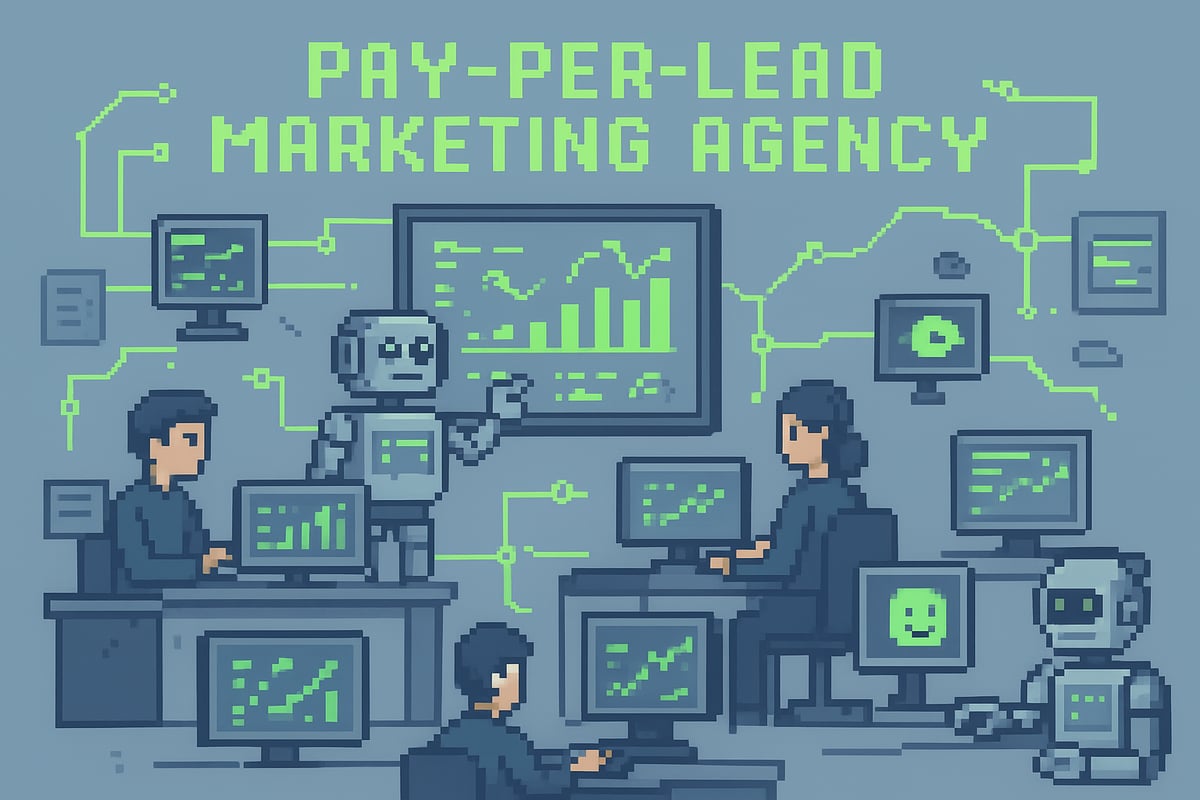
The Role of AI in Scaling PPL Campaigns
AI is revolutionizing how a pay per lead marketing agency manages high volumes of data and prospects. Machine learning algorithms can analyze behaviors, predict purchase intent, and segment audiences far faster than manual processes. For example, AI chatbots now qualify leads on websites around the clock, delivering immediate responses and capturing rich intent signals.
AI-powered ad optimization also ensures campaigns are continually refined for maximum impact. According to Gartner, AI adoption in lead generation has surged 45 percent year-over-year. By leveraging these technologies, agencies achieve both scalability and improved lead quality, positioning themselves ahead in a competitive market.
Automation Platforms and Tool Selection
Selecting the right automation platform is crucial for any pay per lead marketing agency aiming for sustainable growth. Leading tools like HubSpot, Zapier, and Marketo offer seamless integration across CRM, email, and advertising stacks. The best platforms are evaluated based on ease of use, scalability, and compatibility with existing workflows.
Upcoming solutions for 2026 promise even tighter integration and advanced analytics. Agencies should prioritize platforms that unify data, facilitate real-time reporting, and support omnichannel engagement. For a deeper dive into how AI and automation tools can streamline lead generation, visit AI Automation in Marketing.
Building Custom Solutions for Unique Agency Needs
Off-the-shelf tools do not always meet every pay per lead marketing agency requirement. Many agencies are investing in proprietary automation platforms tailored to their unique processes. Building custom lead distribution or qualification systems offers a competitive advantage and full data ownership.
Deciding whether to build or buy depends on the agency’s long-term vision and resource availability. In fact, MarTech reports that 60 percent of agencies plan to develop custom solutions by 2026. Tailored tools enable flexibility, deeper integration with internal systems, and the ability to quickly adapt to client demands.
Training Teams for AI and Automation Success
No pay per lead marketing agency can unlock the full benefits of AI and automation without ongoing staff training. Agencies are launching internal workshops, certifications, and knowledge-sharing sessions to keep teams updated on best practices.
This commitment leads to faster adoption, fewer implementation errors, and consistently better campaign results. According to LinkedIn, 70 percent of high-performing agencies invest in AI and automation training for their teams. Documenting and sharing learnings further accelerates growth and innovation, ensuring sustainable success.
Future Trends Shaping Pay Per Lead Marketing Agencies
The future of the pay per lead marketing agency landscape will be shaped by rapid shifts in technology, regulation, and consumer behavior. Agencies that adapt to these trends will gain a competitive advantage, while those that lag risk falling behind.
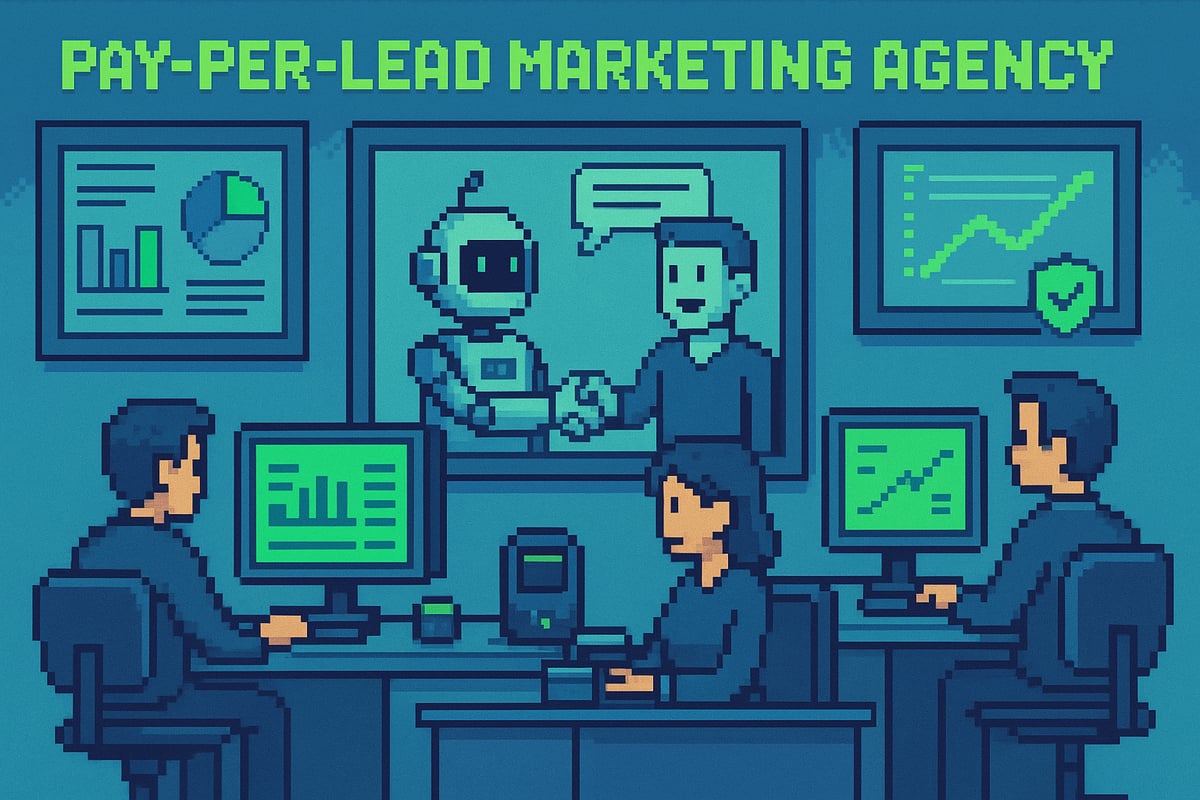
The Impact of Privacy and Data Regulations
Privacy laws such as GDPR, CCPA, and new international standards are reshaping how every pay per lead marketing agency collects and uses data. Agencies must adapt their lead capture forms and internal processes to ensure full compliance, which impacts targeting and personalization strategies.
The emergence of zero-party data, where users willingly provide information, is becoming essential for building trust and maintaining performance. Agencies are also refining their data sourcing and verification methods to avoid regulatory pitfalls. For practical insights on sourcing compliant and high-quality leads, see Business Lead Lists and Sources.
The Rise of Voice and Conversational Lead Generation
Voice search and smart assistants are unlocking new opportunities for the pay per lead marketing agency model. With more consumers using voice-activated devices, agencies are deploying conversational chatbots that can qualify and engage leads in real time.
These tools not only increase accessibility but also tap into entirely new market segments. By 2026, it is estimated that 40% of B2C leads will originate from voice and conversational interfaces. Agencies that integrate these technologies into their pay per lead marketing agency strategies will drive higher engagement and conversion rates.
Cross-Channel Attribution and Customer Journey Mapping
As user journeys become increasingly fragmented, a pay per lead marketing agency must invest in advanced attribution models to track leads across multiple touchpoints. Journey mapping tools now provide a holistic view of where leads originate and how they convert, revealing valuable insights for optimization.
However, accurately attributing leads remains a challenge, especially with privacy restrictions and diverse channels. Agencies are turning to unified attribution platforms to connect the dots, ensuring every pay per lead marketing agency campaign is measured and refined for maximum impact.
Partnerships and Ecosystem Expansion
Growth for any pay per lead marketing agency increasingly relies on forming strategic partnerships with martech vendors, publishers, and data providers. Joint ventures create access to exclusive lead sources and expand reach across industries.
Affiliate and influencer partnerships are also gaining traction, delivering diversified lead quality and volume. In fact, 55% of agencies now form new partnerships each year. By building a robust ecosystem, a pay per lead marketing agency can unlock new revenue streams and maintain a sustainable competitive edge.
Agency Best Practices for Sustainable Pay Per Lead Growth
Sustainable growth for any pay per lead marketing agency hinges on a robust foundation of best practices. As competition intensifies, agencies must focus on transparency, continual improvement, skilled teams, and building lasting client partnerships. Let us explore proven strategies that keep agencies ahead in a dynamic market.
Setting Transparent Client Expectations
Clear communication is the backbone of a successful pay per lead marketing agency relationship. Agencies should define what constitutes a qualified lead, establish service level agreements, and outline timelines from the outset.
Typical methods include detailed onboarding documents, regular check-ins, and easily accessible reporting dashboards. These tools help align client and agency goals, reducing misunderstandings and disputes. For example, some agencies use contract clauses to specify lead dispute processes and volume guarantees.
A transparent approach not only builds trust but also empowers clients to make informed decisions. Agencies can further support local businesses by referencing practical tactics, such as those found in Generating Leads for Local Business.
Continuous Process Optimization and Feedback Loops
Ongoing analysis is vital for every pay per lead marketing agency striving for long-term success. Monthly performance reviews, data-driven insights, and regular feedback sessions create a culture of improvement.
Agencies should establish feedback loops, gathering client input through surveys or structured meetings. This approach enables quick adaptation to shifting trends and client needs. Leveraging these insights often leads to service refinement and higher retention rates.
A simple table can help agencies track optimization efforts:
| Practice | Frequency | Outcome |
|---|---|---|
| Performance Reviews | Monthly | Improved Results |
| Client Feedback | Quarterly | Service Refinement |
| Trend Analysis | Ongoing | Faster Adaptation |
Continuous optimization ensures that the agency remains agile and client-centric.
Investing in Talent and Technology
The pay per lead marketing agency landscape demands skilled professionals and cutting-edge tools. Investing in data scientists, AI specialists, and marketing technologists drives innovation and campaign performance.
Balancing human expertise with automation is essential. Training programs, certifications, and ongoing education help teams stay current with evolving technologies.
Agencies that prioritize talent and technology gain a competitive edge, adapt quickly to market changes, and deliver exceptional client outcomes. Increasing technology budgets year-over-year is no longer optional but a necessity for maintaining leadership in the industry.
Building Long-Term Client Relationships
Turning single projects into lasting partnerships is a hallmark of a top pay per lead marketing agency. Agencies achieve this by offering value-added services like consulting, training, or exclusive insights.
Loyalty programs and regular strategy sessions foster trust and create opportunities for referrals. Agencies also benefit from focusing on client lifetime value, as long-term clients often yield higher revenue and greater stability.
By nurturing these relationships and consistently exceeding expectations, agencies secure a sustainable growth path and strengthen their reputation in the market.





One Comment