Kai Fu Lee Guide: Insights, Innovations, and Influence 2026
In the fast-evolving world of artificial intelligence, kai fu lee stands out as a visionary leader shaping tomorrow’s technology landscape. His journey from academic prodigy to global tech executive captures the imagination of innovators and entrepreneurs alike.
This guide delves into his groundbreaking insights, transformative contributions, and far-reaching impact on AI. You will discover how his early life, roles in industry giants, entrepreneurial ventures, and thought leadership have influenced the future of artificial intelligence.
Unlock strategies for innovation and global influence by exploring the life and work of kai fu lee. Ready to gain actionable insights? Dive into this comprehensive guide.
Kai-Fu Lee’s Early Life and Academic Foundations
Kai fu lee’s journey began in Taipei, Taiwan, where he was born in 1961 into a family shaped by scholarship and public service. His father, Li Tianmin, was both a historian and legislator, instilling in kai fu lee a respect for education and civic responsibility from an early age.
When kai fu lee was just 12, his family made the significant move to the United States in 1973. The transition required adaptability, as he navigated a new culture and language. Settling in Oak Ridge, Tennessee, he was quickly drawn to the world of science and technology, influenced by the town’s scientific community and resources. Early access to computers and a supportive environment helped foster his fascination with computing and innovation.

Early Life in Taiwan and Move to the U.S.
Kai fu lee’s early experiences were shaped by both his Taiwanese heritage and his American upbringing. Born into a family that valued learning, his father’s intellectual pursuits left a lasting impression on him. The move to the U.S. brought its own challenges, but it also opened doors to new opportunities.
In Oak Ridge, kai fu lee encountered the emerging world of personal computing. He quickly became adept at programming, encouraged by his parents and access to school labs. This blend of cultural influences and early technological exposure set the stage for his future academic and professional path.
Academic Achievements and Research
Academically, kai fu lee excelled from the outset. He graduated summa cum laude from Columbia University in 1983 with a Bachelor of Science in Computer Science. He then pursued his Ph.D. at Carnegie Mellon University, working under the mentorship of Raj Reddy, a renowned figure in artificial intelligence.
Lee’s doctoral thesis led to the development of the SPHINX system, a pioneering project in large-vocabulary, speaker-independent continuous speech recognition. This work laid important groundwork for modern voice and language technologies. He also explored machine learning, pattern recognition, and computational linguistics, contributing to the field’s early growth. Notably, his “Bill” project, which applied Bayesian learning to the game Othello, won the US national computer tournament in 1989.
For readers interested in how foundational research like Lee’s continues to influence today’s technology, the Conversational AI in Business resource offers valuable context on speech and language innovations.
Summary Table: Academic Credentials and Key Research
| Degree | Institution | Year | Notable Work |
|---|---|---|---|
| B.S. Computer Science | Columbia University | 1983 | Summa cum laude |
| Ph.D. Computer Science | Carnegie Mellon University | 1988 | SPHINX, "Bill" Othello project |
Significance of Academic Work
The academic impact of kai fu lee is evident in his prolific output: over 60 published papers and two foundational books on speech recognition. As co-editor of "Readings in Speech Recognition" (1990) with Alex Waibel, he helped shape the curriculum for future AI researchers.
Lee’s early work established a bridge between academic theory and practical application. His research in speech recognition not only advanced the science but also became the launchpad for his later influence in the tech industry. This foundation empowered kai fu lee to drive innovation across both academia and industry, setting new standards for what AI could achieve.
Pioneering Roles in Tech: Apple, Silicon Graphics, and Microsoft
Kai fu lee’s journey from academic research to industry leadership began with pivotal roles at some of the world’s most innovative tech companies. Each phase of his career built on his expertise in artificial intelligence and user-centric design, laying the groundwork for his lasting impact across the global technology sector.

Apple: Driving Innovation in Early Computing
At Apple, kai fu lee served as principal research scientist from 1990 to 1996. He led groundbreaking research and development projects, including the Apple Bandai Pippin game console, the PlainTalk speech recognition system, and the Casper and GalaTea user interface initiatives. These efforts pushed the boundaries of how everyday users interacted with computers, introducing early forms of voice recognition and text-to-speech that would become industry standards.
Lee’s work at Apple was instrumental in integrating natural language processing and speech technologies into mainstream consumer products. His focus on making computers more intuitive and accessible foreshadowed the AI-driven interfaces we use today.
Notably, the PlainTalk system set a benchmark for real-time speech processing, influencing subsequent generations of voice assistants. For readers interested in the foundational concepts that powered such advances, the Artificial Intelligence and Data Science page offers a deeper look at the core technologies behind these innovations.
Silicon Graphics: Multimedia and Web Products
Kai fu lee transitioned to Silicon Graphics (SGI) in the late 1990s, where he took on the role of Vice President of the Web Products division and President of Cosmo Software. At SGI, he managed teams developing advanced multimedia software and pioneering web technologies.
Under his leadership, the company launched products that enabled rich 3D graphics and interactive media experiences on the web. These innovations were crucial at a time when the internet was rapidly expanding and multimedia content was in high demand.
Kai fu lee’s strategic vision at SGI helped bridge the gap between high-performance computing and accessible consumer applications. His influence extended to shaping how digital content was created, shared, and experienced in the early days of the internet.
Microsoft: Building Research Powerhouses
In 1998, kai fu lee founded Microsoft Research China, later renamed Microsoft Research Asia. This lab quickly gained international recognition for its excellence in computer science research. Lee’s leadership transformed the center into a powerhouse, attracting top talent and fostering a culture of innovation.
He was promoted to Corporate Vice President and led the Interactive Services Division from 2000 to 2005. During this period, Microsoft Research Asia became a training ground for a new generation of Chinese AI scientists and engineers. Many alumni have gone on to lead major AI projects and global companies.
Lee championed collaborations between academia and industry, elevating research standards and promoting knowledge exchange. His initiatives strengthened the pipeline of AI talent across Asia and established Microsoft Research Asia as a global leader in artificial intelligence.
Legacy and Long-Term Influence
Kai fu lee’s pioneering roles at Apple, Silicon Graphics, and Microsoft left a profound mark on the technology landscape. He set new standards for collaboration between research and industry, especially in the Asia-Pacific region.
His mentorship has empowered countless innovators, and his efforts to connect East and West have fostered greater cooperation in AI research. Through his work, kai fu lee demonstrated how visionary leadership and technical excellence can shape both products and people.
Today, his legacy endures in the user interfaces we interact with daily, the AI-driven applications that power our devices, and the vibrant research communities he helped cultivate. Kai fu lee’s story is a testament to the transformative power of innovation, mentorship, and cross-cultural understanding.
Transition to Google and the Birth of Sinovation Ventures
Kai fu lee’s career took a defining turn in 2005 when he made headlines by leaving Microsoft for Google. This move was not only a personal milestone but also a significant moment in the global technology sector. As the newly appointed President of Google China, kai fu lee faced immense expectations to expand Google’s presence in a complex and rapidly evolving market.

High-Profile Move to Google
When kai fu lee joined Google from Microsoft, the tech community took notice. His leadership credentials, built over years at Microsoft Research Asia, set the stage for Google’s ambitions in China. The transition sparked legal disputes and media attention, highlighting the intense competition for top talent in artificial intelligence.
At Google China, kai fu lee implemented strategies to tailor products for local users. He prioritized language adaptation, mobile search optimization, and partnerships with domestic players. His approach reflected a deep understanding of both Western technology and Chinese consumer behavior.
Despite the promise, kai fu lee encountered fierce competition from entrenched local companies. Still, his tenure marked a period of rapid innovation and growth for Google’s operations in China.
Navigating Challenges in China’s Tech Landscape
Operating Google China was not without its hurdles. Kai fu lee had to address strict regulatory requirements, censorship policies, and a highly competitive landscape dominated by domestic giants like Baidu. Navigating these obstacles demanded both technical expertise and cultural sensitivity.
He fostered a collaborative environment, recruiting top talent and building teams adept at bridging global and local perspectives. Kai fu lee’s leadership style emphasized transparency and adaptability, qualities crucial for success in China’s unique business climate.
Even as Google faced setbacks, including regulatory pushback and market share challenges, kai fu lee’s efforts laid the groundwork for future cross-border tech ventures.
Founding Sinovation Ventures (Innovation Works)
In 2009, kai fu lee left Google to launch Sinovation Ventures, a venture capital firm dedicated to nurturing the next generation of Chinese technology startups. His vision was to combine Silicon Valley’s spirit of innovation with the scale and dynamism of China’s market.
Sinovation Ventures quickly established itself as a leader in AI, robotics, education, and big data investments. The firm’s philosophy centers on hands-on mentorship, ecosystem building, and a commitment to responsible AI development. For more details on its focus and portfolio, you can visit the Sinovation Ventures official website.
Kai fu lee’s ability to identify emerging trends and back promising entrepreneurs has been instrumental in shaping China’s startup landscape.
Impact and Portfolio Highlights
By 2026, Sinovation Ventures, under kai fu lee’s leadership, had incubated and invested in over 400 companies. The firm boasts a diverse portfolio, including several AI unicorns and sector leaders.
Here’s a quick summary of Sinovation Ventures’ impact:
| Metric | Value (2026) |
|---|---|
| Companies Invested | 400+ |
| AI Unicorns Fostered | 10+ |
| Focus Areas | AI, Robotics, EdTech, Big Data |
| Notable Success Stories | Megvii, Mobvoi, Horizon Robotics |
Kai fu lee’s influence extends beyond capital. He has played a direct role in mentoring founders, shaping business models, and advocating for ethical AI. His work continues to inspire innovation and global collaboration across the technology sector.
Kai-Fu Lee’s Innovations and Thought Leadership in AI
Kai fu lee stands at the forefront of artificial intelligence innovation, offering a unique blend of technical expertise, business acumen, and cross-cultural perspective. His influence is seen not only in breakthrough technologies but also in the way he communicates AI’s future to a global audience. Each of his major initiatives has shaped both industry trends and public understanding.
Defining AI Superpowers and Global AI Race
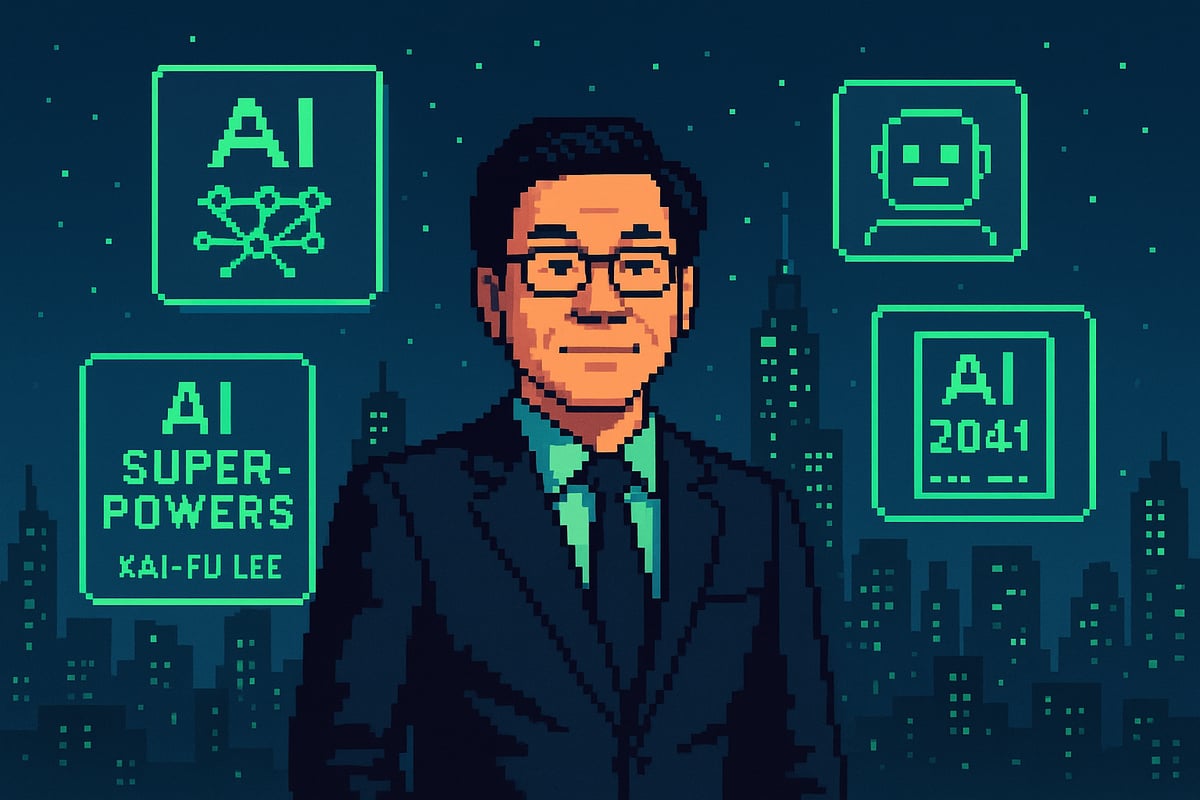
When kai fu lee published "AI Superpowers" in 2018, he ignited a global conversation about the future of artificial intelligence. In the book, he argued that the United States and China were locked in a race for AI dominance, each bringing unique strengths to the table. The US excelled in research and foundational theory, while China’s rapid scaling and application-driven approach set new standards for innovation.
Lee’s analysis provided a roadmap for policymakers and business leaders, outlining how each country’s ecosystem could shape the next era of technology. For a deeper look at his comparative insights, the AI Superpowers book overview offers summaries and key takeaways from this influential work.
This perspective from kai fu lee continues to inform debate on global competitiveness, economic transformation, and the ethical use of AI.
AI 2041 and Future Scenarios
Expanding his vision, kai fu lee co-authored "AI 2041" with Chen Qiufan in 2021. This book combined speculative fiction with grounded analysis, describing ten possible futures shaped by AI. Each scenario painted a vivid picture of how healthcare, education, employment, and ethics might evolve by 2041.
By using storytelling, kai fu lee made complex concepts accessible to a wider audience. Readers could imagine the societal shifts that emerging technologies might bring. His predictions have sparked discussions among technologists, educators, and policymakers eager to understand what lies ahead.
01.AI and the Next Generation of AI Companies
In 2023, kai fu lee launched 01.AI, a company dedicated to advancing large language models and enterprise AI. The mission was clear: democratize access to cutting-edge tools and foster transparency through open-source initiatives. This approach quickly set industry benchmarks and attracted major partnerships.
01.AI’s early achievements include releasing competitive language models and building collaborations with both startups and established enterprises. Kai fu lee’s leadership at 01.AI highlights his ongoing commitment to practical, scalable AI solutions that empower organizations worldwide.
Key Innovations Attributed to Lee
Throughout his career, kai fu lee has driven several breakthroughs that have shaped the AI field:
- Speech recognition systems, such as SPHINX, which influenced modern voice assistants.
- Practical applications of machine learning in consumer products.
- Business model innovation, bridging research and commercialization.
- Advocacy for responsible AI, emphasizing ethics and transparency.
- Mentorship programs to develop the next generation of AI talent.
These contributions have established kai fu lee as both a visionary and a pragmatic leader in technology.
Global Influence and Policy Advocacy
Beyond technology, kai fu lee has become a respected voice in global AI policy. As co-chair of the World Economic Forum’s Global AI Council, he advises governments and organizations on best practices for AI governance and ethics. His keynote speeches at international conferences highlight the need for inclusive, human-centered development.
Kai fu lee’s role in shaping cross-border collaboration is especially significant. He promotes dialogue between East and West, encouraging shared standards and mutual understanding in the rapidly evolving AI landscape.
Data Points and Recognition
The impact of kai fu lee’s work is measurable and widely acknowledged. He was named to TIME’s 2023 list of the 100 most influential people in AI. His books have become bestsellers and are cited in academic research, business strategy, and public policy debates.
A summary table of his major recognitions:
| Year | Recognition |
|---|---|
| 2018 | Publication of "AI Superpowers" |
| 2021 | Co-authored "AI 2041" |
| 2023 | TIME 100 Most Influential in AI |
| 2023 | Launched 01.AI |
These milestones reinforce kai fu lee’s enduring influence on the AI ecosystem and his role as a thought leader guiding the next generation.
Influence on AI Ecosystems: China, U.S., and Beyond
Kai fu lee has left a profound mark on the global AI landscape, shaping ecosystems in China, the United States, and beyond. His strategic vision and hands-on involvement have fostered innovation, talent, and collaboration across borders. Let us explore how his influence extends through different facets of the AI world.
Shaping China’s AI Boom
Kai fu lee played a pivotal role in catalyzing China’s AI revolution. By establishing Microsoft Research Asia and later founding Sinovation Ventures, he built essential research infrastructure and nurtured a new generation of AI talent.
His mentorship of leading scientists and entrepreneurs has created a ripple effect, enabling China to develop cutting-edge technologies and world-class startups. Sinovation Ventures, under kai fu lee’s leadership, became a launchpad for hundreds of innovative companies, accelerating regional innovation clusters and strengthening China’s global AI standing.
Bridging East and West in AI
A defining aspect of kai fu lee’s career is his commitment to bridging the technological and cultural gap between East and West. He has facilitated cross-border investments, fostered joint research initiatives, and promoted the adoption of international best practices.
By advocating for open dialogue and ethical standards, kai fu lee encourages mutual understanding and collaboration. His efforts have helped align AI development priorities, making it possible for diverse teams to address common challenges and share breakthroughs across continents.
U.S.-China AI Competition and Cooperation
Kai fu lee’s perspective on the U.S.-China AI dynamic is both nuanced and pragmatic. He recognizes the competition for technological leadership but also highlights opportunities for synergy. Through joint ventures, research partnerships, and thoughtful navigation of regulatory hurdles, kai fu lee demonstrates how collaboration can drive progress.
For deeper insights on building AI-driven companies and navigating this complex landscape, consider the McKinsey interview with Kai-Fu Lee, which explores his strategies and cross-border experiences.
Impact on Global AI Policy
Kai fu lee has contributed significantly to international conversations on AI governance. As a policy advisor and global thought leader, he advocates for inclusive, human-centered development of artificial intelligence.
His input has influenced discussions at major forums, guiding stakeholders to consider ethical frameworks, societal impacts, and the need for cooperation in regulating emerging technologies. Kai fu lee’s policy advocacy ensures that AI advances align with broader human values.
Influence on Education and Workforce Development
Recognizing the societal shifts brought by AI, kai fu lee has championed initiatives to prepare the workforce for the future. He supports STEM education, AI literacy, and targeted upskilling programs.
Through public outreach, workshops, and partnerships with educational institutions, kai fu lee empowers individuals to adapt and thrive in an AI-driven world. His vision emphasizes accessibility and lifelong learning as keys to shared prosperity.
Measurable Outcomes
The impact of kai fu lee’s ecosystem-building efforts can be measured in several ways:
| Metric | Result (2026) |
|---|---|
| AI Startups Incubated | 400+ |
| Research Publications | Significant increase |
| Talent Mobility | High cross-border flow |
These results highlight the tangible growth in startups, research output, and talent exchange, all closely linked to kai fu lee’s enduring influence.
Publications, Media Presence, and Public Engagement
Kai fu lee is recognized not only for his pioneering work in artificial intelligence but also for his far-reaching influence in public discourse. Through bestselling books, global media appearances, and active outreach, kai fu lee has shaped how the world understands and approaches AI.
Major Books and Writings
Kai fu lee’s writing has reached a global audience. His book "AI Superpowers" compares the AI trajectories of the US and China, offering insights into economic and technological shifts. In "AI 2041," co-written with Chen Qiufan, kai fu lee presents ten stories predicting how AI will impact daily life. The book’s scenarios, from healthcare to education, have sparked worldwide discussion. For a deeper look at his predictions, see this TIME article on AI’s future impact. His autobiography, "Making a World of Difference," details his personal and professional journey.
Media and Thought Leadership
Kai fu lee is a trusted voice in international media. He regularly writes columns and op-eds for top publications, sharing his expertise on AI, ethics, and innovation. Interviews with kai fu lee appear in outlets such as The New York Times and BBC, where he discusses the societal effects of AI. His social media presence, especially on platforms like Twitter and Weibo, allows kai fu lee to engage directly with a global audience, answer questions, and clarify trends.
Keynote Appearances and Panels
As a keynote speaker, kai fu lee has addressed audiences at the World Economic Forum, TED, and leading tech summits. He is known for translating complex AI topics into accessible language and actionable insights. At these events, kai fu lee often discusses the ethical challenges of AI and the need for responsible innovation. His panel contributions have influenced industry standards and prompted international dialogue on AI governance.
Educational Outreach
Kai fu lee is passionate about making AI education accessible. He supports online courses, youth workshops, and public lectures designed to demystify AI for non-experts. His outreach includes sponsoring AI literacy programs and collaborating with educators to introduce practical AI concepts in schools. By empowering the next generation, kai fu lee ensures that more people can participate in the digital future.
Awards and Recognition
Kai fu lee’s impact is reflected in numerous awards and honors. He has been named to the TIME 100 AI list and featured in Forbes for his leadership in technology. Academic institutions have recognized kai fu lee with honorary degrees and appointments. These accolades highlight the breadth of his contributions to AI, business, and society.
Controversies, Challenges, and Personal Philosophy
Navigating the world of artificial intelligence has never been simple, and kai fu lee’s journey highlights just how complex the landscape can be. His career is marked by high-profile disputes, global challenges, and a personal philosophy shaped by both triumphs and setbacks.
High-Profile Legal and Industry Disputes
kai fu lee’s transition from Microsoft to Google in 2005 was one of the most watched legal battles in tech history. Both companies entered a dispute over non-compete agreements and intellectual property. This lawsuit was widely reported and sparked a debate about talent mobility in the tech sector.
The public followed the case closely, as it questioned how companies protect innovation while encouraging individual growth. kai fu lee maintained his professional integrity throughout, advocating for fair competition and the free movement of talent.
This episode did not deter him but rather reinforced his resolve to foster collaboration in the industry. The case remains a reference point for discussions on leadership and intellectual property in technology.
Navigating Geopolitical Tensions
Operating at the intersection of U.S. and China tech spheres, kai fu lee has consistently faced geopolitical challenges. These range from issues of data privacy to censorship and national security, especially during his leadership at Google China and later at Sinovation Ventures.
He has often spoken about the need for dialogue and mutual understanding between nations. Navigating these dynamics requires a nuanced approach, as policies and regulations shift rapidly. kai fu lee’s ability to adapt and find common ground has helped bridge the East-West divide in AI development.
His experiences illustrate the importance of flexibility and diplomacy for tech leaders in a changing world.
Health, Resilience, and Leadership Style
In 2013, kai fu lee publicly shared his battle with lymphoma, offering a rare glimpse into his personal life. His openness about his health journey inspired many, and he emphasized the values of resilience and empathy.
Through this adversity, kai fu lee adopted a purpose-driven leadership style, focusing on supporting others and fostering well-being in his teams. He believes that personal setbacks can become sources of strength, shaping how leaders respond to professional challenges.
His story demonstrates that vulnerability and perseverance can coexist in the world of innovation.
Ethical Stance on AI
Ethics are central to kai fu lee’s philosophy. He advocates for responsible AI development, urging companies and governments to prioritize human well-being. His public talks and writings stress the need for transparency, fairness, and inclusivity in the design of intelligent systems.
kai fu lee often discusses the intersection of machine learning and business intelligence, highlighting the importance of aligning AI progress with societal values. He encourages industry leaders to think beyond profits and consider the broader impact of technology.
His approach sets a standard for ethical leadership in a rapidly evolving field.
Personal Life, Legacy, and Lessons for Innovators
kai fu lee’s personal journey includes a deep commitment to lifelong learning and mentorship. In 2011, he voluntarily relinquished U.S. citizenship to reconnect with his roots, reflecting his dedication to cross-cultural understanding.
He encourages future innovators to cultivate adaptability, vision, and a global perspective. Drawing on his experience, kai fu lee stresses the value of leveraging new technologies, such as AI tools for startups, to drive meaningful change.
His legacy is not only in technological advancement, but also in the wisdom he shares with the next generation.